


 English
 中文简体
Author: WeiBo
Date: Nov 23, 2026
Cincinnati Injection Molding Machine Screw and Barrel Replacement Sourcing Guide
Content
- 1 Why the Screw and Barrel Decide What a Cincinnati Injection Molding Machine Can Still Do
- 2 What a Real Replacement Screw Specification Should Contain
- 3 Matching Screw Geometry to the Resin You Actually Run
- 4 Nitriding, Bimetallic or Coating: Where the Money Actually Goes
- 5 How to Vet a Screw and Barrel Manufacturer Before You Order
- 6 Installation and First-Article Verification
- 7 Frequently Asked Questions
- 7.1 What wearing parts should I expect on a Cincinnati injection molding machine?
- 7.2 Can I replace the screw without replacing the barrel?
- 7.3 How do I measure barrel wear without pulling the whole assembly?
- 7.4 How long does a replacement screw and barrel take to arrive from an overseas manufacturer?
- 7.5 Is a bimetallic barrel worth the extra cost for unfilled resin?
- 7.6 What should I send with an inquiry to a screw barrel supplier?
- 7.7 Should I buy from a local distributor or directly from a manufacturer?
- 8 Where to Look Next
An Ohio Valley custom molder pulls the screw out of a 1990s Cincinnati injection molding machine during a scheduled weekend shutdown. The feed section is worn smooth, the barrier flights are rounded over, and the barrel bore in the metering zone measures 0.4 mm over nominal. The machine still cycles. It just cannot hold a 2-gram shot tolerance from the first hour of a shift to the last.
That gap between "still running" and "still capable" is what most plant engineers find when they start pricing screw and barrel replacement. The iron is usually fine. The parts that touch molten plastic are not.
The short answer: on a Cincinnati injection molding machine, the frame, toggle clamp and hydraulic package typically outlast two or three screw-and-barrel sets. Money and downtime live almost entirely in the screw, the barrel, the screw tip, the check ring and the nozzle, which is also where a buyer's decisions actually change the outcome.
The screw and barrel decide what a Cincinnati injection molding machine can still produce; the frame only decides how big the part can be.
Why the Screw and Barrel Decide What a Cincinnati Injection Molding Machine Can Still Do
The machines built in and around Cincinnati from the 1970s through the 1990s were engineered around heavy, slow-cycling hydraulic architecture. That design is forgiving of a lot: dirty oil, loose tolerances, operators who push settings around. It is not forgiving of a worn screw and barrel, because wear changes the machine's output without setting off a single alarm.
The loss shows up in small, expensive ways first:
- Shot weight drifts through the shift, and the operator starts chasing it with back pressure
- Melt temperature swings 5 to 10 degrees between cycles because the metering section no longer homogenizes the melt
- Black specks or light streaks appear on parts that were clean last month
- Recovery time creeps up, and the cycle time follows it
- Cushion becomes unstable, so the process window narrows until someone has to intervene mid-run
A practical field rule: if you need 10 to 15 percent more back pressure than you did two years ago to hold the same cushion, or shot weight varies more than 1 percent within a shift, put a bore gauge in the barrel before ordering anything. Bore wear in the metering section is the most common root cause, and it is measurable in minutes with a standard internal micrometer and a good light.
Wear also concentrates where you would expect. The compression and metering sections take the abrasion. The feed section takes the mechanical abuse. On machines running filled or reinforced resins, the check ring and screw tip often wear faster than the screw itself, which is why a "screw replacement" quote that ignores the tip and ring usually fails the first quality check after installation.
Treat the screw, barrel, screw tip and check ring as one wear assembly; replacing only part of it moves the problem downstream instead of solving it.
What a Real Replacement Screw Specification Should Contain
Most sourcing problems start with an incomplete spec sheet, not a bad supplier. A replacement screw for a Cincinnati injection molding machine is a precision part, and every dimension below changes how the machine behaves on the floor.
- Screw diameter and tolerance, including the permitted clearance against the barrel bore
- Effective length and L/D ratio, measured from the feed throat rather than from the drive end
- Compression ratio and feed depth, because feed depth drives conveying and a starved metering section cannot be fixed downstream
- Flight pitch and helix angle, which affect shear history and residence time more than most buyers expect
- Barrier or mixing section geometry, the part that decides color change time and melt uniformity
- Check ring type, whether two-piece, three-piece or sliding ring, together with the matching seat angle
- Screw tip, nozzle and flange interface, down to thread, seat radius and face dimensions
- Barrel bore, feed opening and vent layout, including the feed throat profile and its wear sleeve
Two mistakes come up over and over. The first is mixing inch and metric values on the same drawing, then converting a tolerance instead of re-deriving it. A plus-or-minus 0.02 mm callout is not the same as plus-or-minus 0.0008 inch once you round it in the wrong direction. The second is measuring L/D from the wrong reference point. A screw that is 40 mm short looks correct on paper and will not seat properly in the barrel.
When the original drawing is gone, which happens often on older platforms, a screw barrel manufacturer will reverse-engineer from the worn part, the barrel bore and a small set of critical reference dimensions. Ask what they measure, which instruments they use, and how the final drawing is verified before release. A supplier who answers that question in detail is usually a supplier who measures twice.
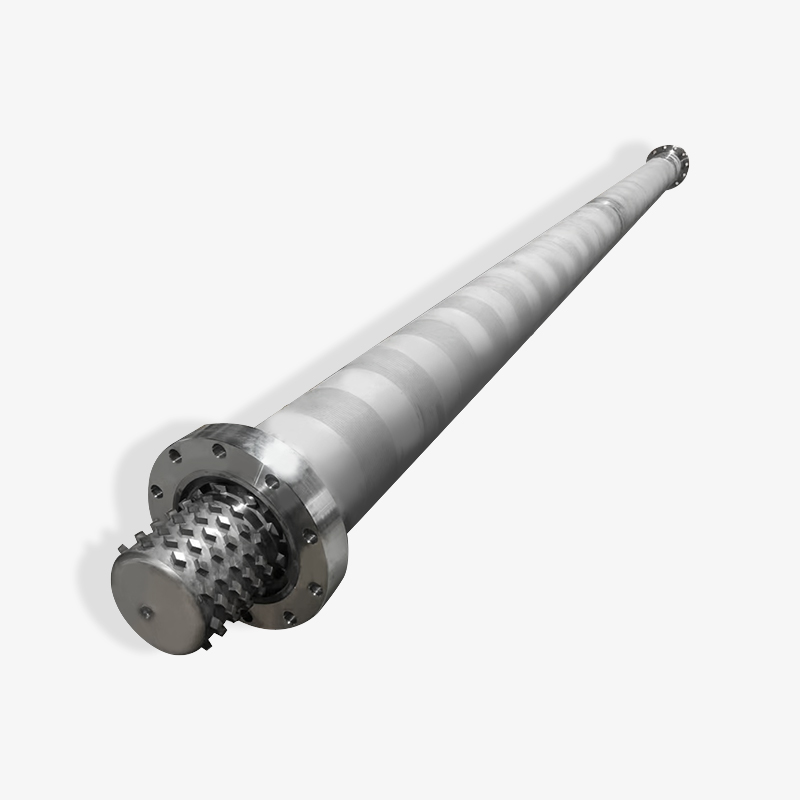
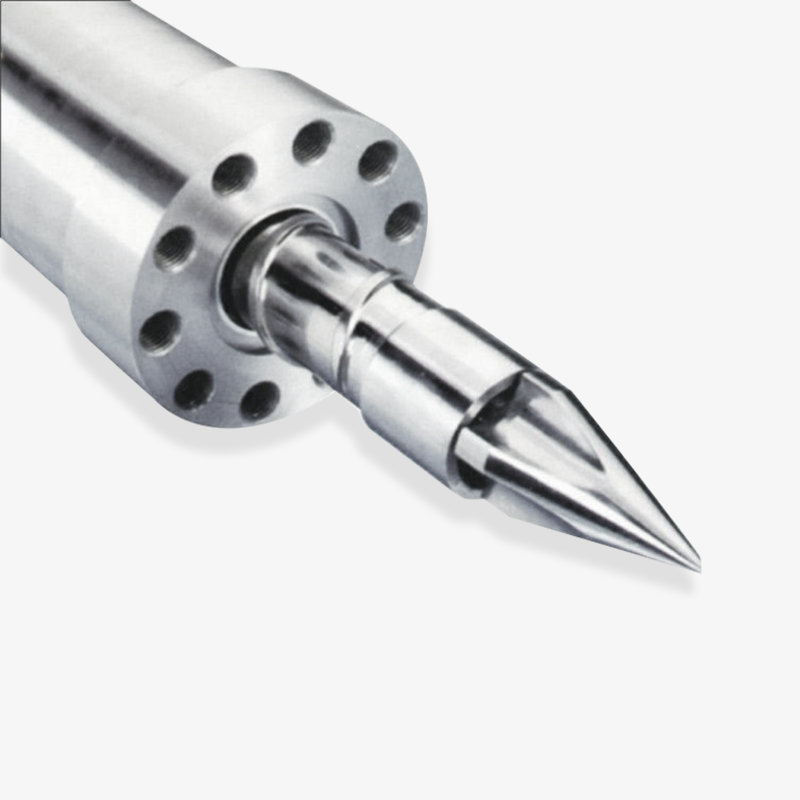 Custom Injection Molding Machine Screw BarrelCustom screw and barrel set for injection molding plasticization, with matched geometry and treated bore; relevant when replacing worn parts or optimizing for a dominant resin.View Product →
A replacement screw is only as good as the specification behind it, so get diameter, L/D, compression ratio, flight geometry and tip interface in writing before a single piece of steel is cut.
Matching Screw Geometry to the Resin You Actually Run
The same barrel may run three different resins on three different days, and the screw has to compromise somewhere. Where a plant runs one dominant resin, matching geometry to it pays back within a few months of production.
General-purpose polyolefins: PP, PE and HDPE
A compression ratio between 2.5:1 and 3:1, a long metering section and a mild mixing head covers most grades. The target is stable plasticating without localized overheating, and a slightly conservative metering depth usually beats an aggressive one.
PVC and heat-sensitive compounds
Lower the compression ratio toward 1.5:1 to 2:1, keep flights deep and rounded, and avoid every dead corner and sharp transition you can. Both screw and barrel need corrosion protection because degradation by-products are acidic, and a nitrided surface alone is often not enough on a machine that runs rigid PVC daily.
Engineering resins: PC, PA and PBT
High melt viscosity and a narrow window. A gradual-transition screw with a barrier or pin mixing section gives you dispersive mixing without dumping excess shear heat into the melt. Recovery stability matters more here than raw output.
Glass-filled and mineral-filled compounds
This is where the money goes. In a 30 percent glass-filled PA66, abrasive wear dominates everything else. A bimetallic barrel and a hardened screw are the baseline rather than an upgrade, and the check ring and screw tip should be designed as consumables from day one rather than treated as an afterthought.
Flame-retardant and corrosive grades
Halogenated systems release acidic species at process temperature. Surface finish matters as much as the alloy choice, because once pitting starts on a flight flank it spreads along the whole metering section.
Transparent and optical parts
Any dead spot that holds material shows up as a streak. Flow surfaces need polishing, transitions need to be as short as the design allows, and the check ring seat needs to be verified for leakage before the first production run.
Choosing screw geometry is really choosing what the machine will tolerate, so a single-resin plant should specify for that resin rather than buy a general-purpose compromise.
Nitriding, Bimetallic or Coating: Where the Money Actually Goes
Hardening options are where quotes diverge most between suppliers, and also where the least technical information is usually shared. The chart below compares how common builds hold up in relative abrasion resistance when running a glass-filled polyamide, using a standard gas-nitrided 38CrMoAlA screw and barrel as the index of 100.
Relative abrasion resistance index (standard gas-nitrided build = 100)
Standard gas-nitrided 38CrMoAlA screw and barrel
100
Nitrided with deeper case and polished flow surfaces
130
Centrifugal-cast bimetallic barrel with hardened screw
220
Tungsten carbide or PVD coating over hardened base
260
The index is a working guide rather than a warranty, because actual life depends on filler loading, melt temperature, screw speed and how often the machine runs dry. What the numbers do show is the shape of the trade-off: doubling abrasion resistance typically costs well under double the screw price, while the downtime avoided by a longer interval is usually worth several times the part cost. For a molder running glass-filled resin three shifts a day, that arithmetic almost always favors the bimetallic route. For a shop running unfilled PP, the standard nitrided build frequently delivers the best cost per kilogram of resin processed.
It is also worth separating the screw from the barrel in your decision. The barrel is the harder part to replace and the one that sets the clearance your new screw must work against, so putting the budget into the barrel and keeping the screw straightforward is a legitimate strategy. Our own product range splits along exactly these lines, with bimetallic barrels supplied as matched sets against a specified bore and roundness tolerance.
| Item | Gas-nitrided 38CrMoAlA | Centrifugal-cast bimetallic | Carbide or PVD coating |
|---|---|---|---|
| Surface hardness | Around HV 900 to 1000 | Around HRC 58 to 62 through the liner | HV 2000 and above on the coated layer |
| Abrasion resistance | Baseline for unfilled resins | Substantially better in filled compounds | Highest, best suited to severe fillers |
| Corrosion resistance | Moderate | Moderate | Good, useful for flame-retardant grades |
| Relative cost | Lowest | Clearly higher | Highest |
| Repairability | Can be reground and re-nitrided | Limited once the liner wears through | Limited, coating must be stripped |
| Best fit | Unfilled PP, PE, PS, general molding | Glass and mineral filled production | Highly abrasive or corrosive duty |
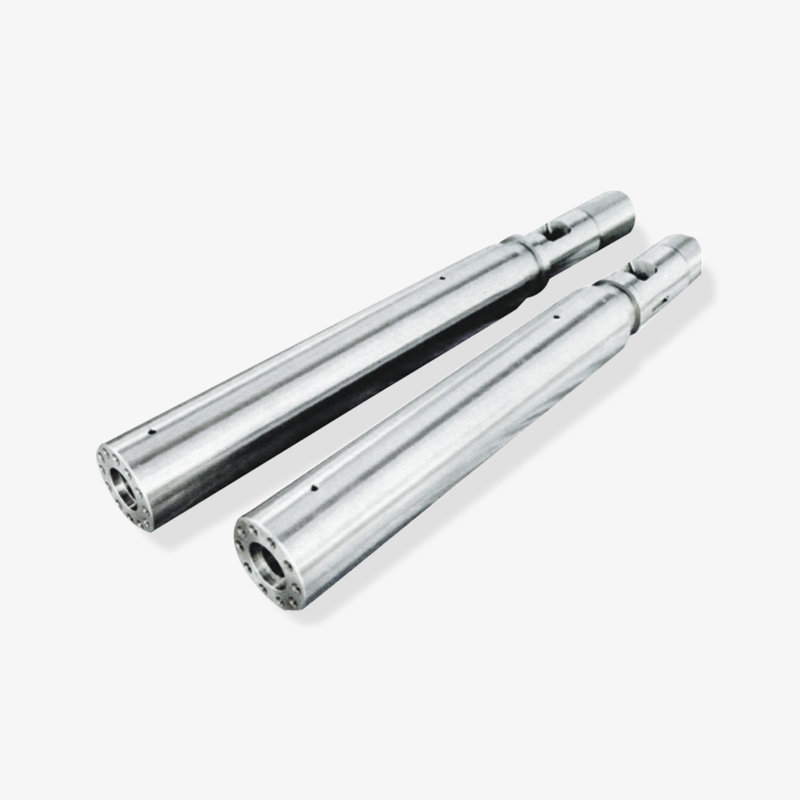
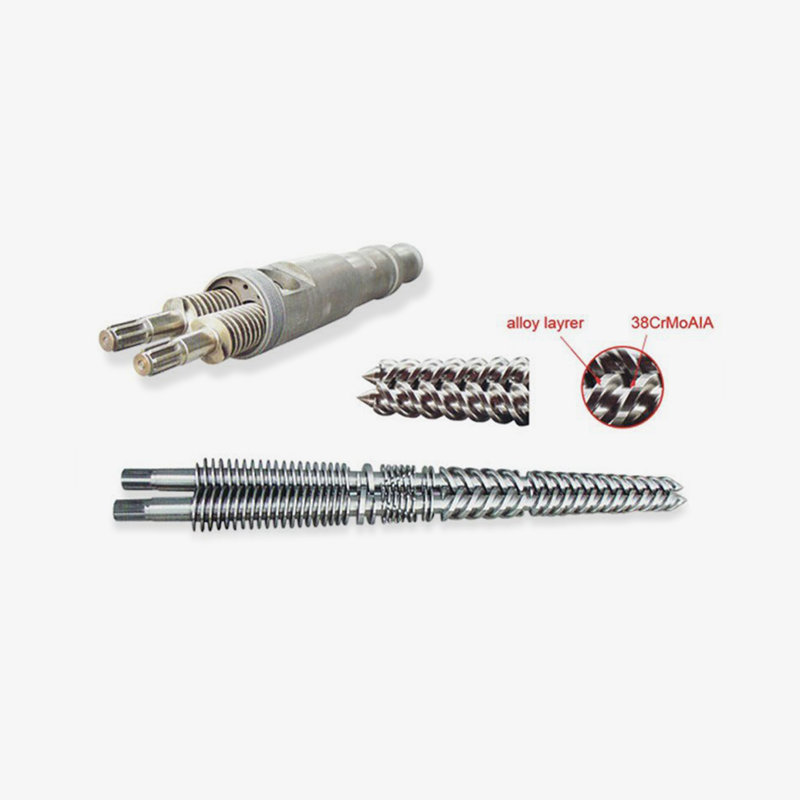 Custom Bimetallic Screw Barrel for Injection MoldingBimetallic barrel with wear-resistant inner layer and matched screw options, suited to demanding resins and replacement decisions where bore clearance and process control matter.View Product →
Put the budget where the abrasion actually happens, because a plain nitrided screw inside a bimetallic barrel usually outperforms a coated screw inside a worn bore.
How to Vet a Screw and Barrel Manufacturer Before You Order
Buying a replacement screw is closer to buying a machined casting than to buying a catalog part. The evaluation should be about process control, not brochure claims, and a short list of questions separates serious suppliers from trading companies quickly.
- Ask what they machine in-house. Screw milling, nitriding, honing and grinding should be traceable to specific equipment or to a named partner, not described as "advanced technology".
- Request the material certificate. Grade, heat number and supplier should match the grade you specified, and the certificate should arrive with the shipment rather than after a complaint.
- Ask for the inspection record. Diameter, roundness, straightness, bore tolerance and hardness readings on the actual part, not a generic sample report.
- Confirm the reverse-engineering process. Which dimensions do they take from the old part, which from the barrel, and what do they do when the two disagree.
- Check the warranty terms. A realistic warranty covers hardness and dimensional conformity; a warranty that promises unlimited life is not a warranty, it is marketing.
- Ask about export packaging. A screw that arrives with a bent flight or a chipped nitride layer costs more in rework than the freight saved by a cheap forwarder.
The commercial side matters too. A screw barrel supplier who quotes in two days, confirms the drawing in five and ships in six weeks is worth more than one who quotes 8 percent lower and answers emails on the third follow-up. For plants running older Cincinnati platforms, the practical constraint is usually the shutdown window rather than the unit price, so confirm the promised lead time against your maintenance schedule in writing.
Also ask about the small parts in the same breath. Screw tips, check rings, nozzles and feed throat sleeves are the items that turn a planned two-day job into a two-week one, and buying them from the same source as the screw usually means they arrive dimensionally matched.
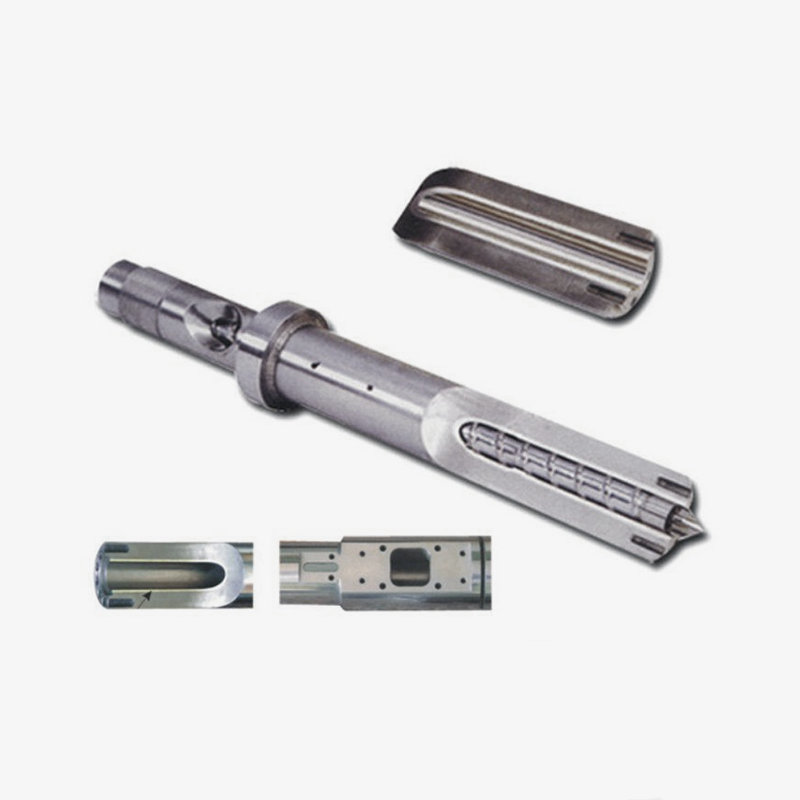
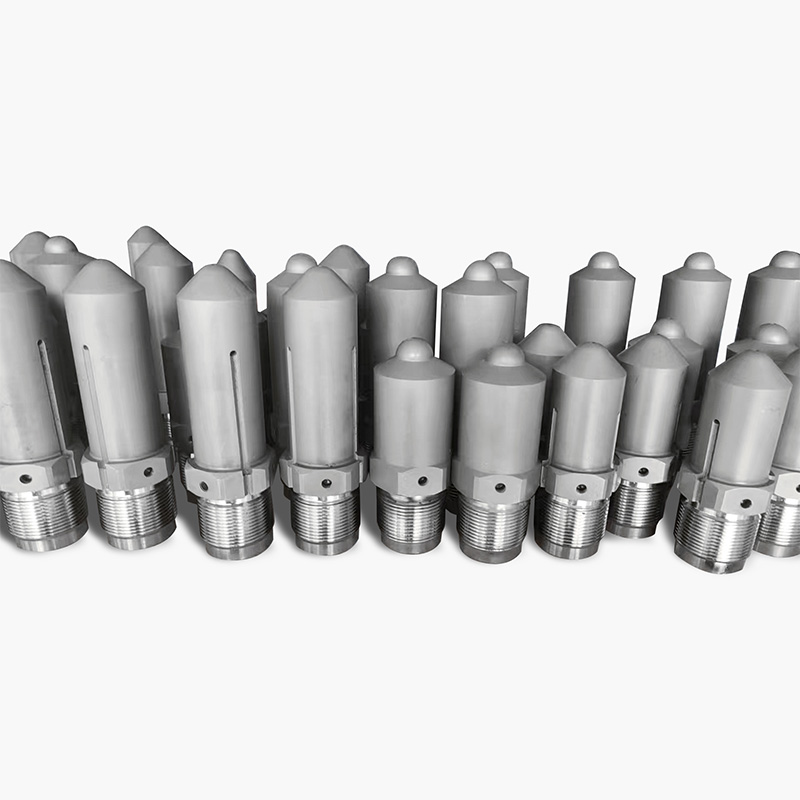 Injection Molding Machine Screw and Nozzle AccessoriesSKD61 front body, screw components, and nozzle accessories designed for matched fit and stable plasticizing; useful when replacing small parts alongside a screw.View Product →
Judge a supplier on the paperwork they volunteer before the order, because inspection records and material certificates cost nothing to send and reveal a great deal.
Installation and First-Article Verification
A correctly made screw installed badly will look like a bad screw for the first week of production. The installation sequence matters as much as the part.
- Clean the barrel bore and check it for scoring before the new screw goes in, because a scored bore will wear the new flights quickly
- Verify the screw tip, check ring and seat make proper contact with a light and a feeler check before assembly
- Torque the tip and ring assembly to the manufacturer's figure and confirm it again after the first heat cycle, since thermal expansion loosens joints
- Bring the barrel up to temperature gradually and hold at soak temperature before rotating the screw, particularly on large-diameter barrels
- Run a purge on the intended resin and inspect the purge slug for streaks and unmelted particles
Then verify the result with data rather than feel. Check cushion stability over 30 consecutive cycles, shot weight repeatability across a full shift, and melt temperature consistency at three points in the cycle. A new screw that shows more than 1 percent shot weight variation at steady state usually points to a check ring seating issue rather than a screw geometry problem, which is useful to know before you call the supplier.
Give the assembly a running-in period at moderate screw speed. The first few hundred cycles establish the wear pattern between flights and bore, and pushing full speed immediately can shorten the life of an otherwise sound part.
Verify a new screw and barrel with cushion stability and shot weight data over a full shift, not with a visual inspection on the day of installation.
Frequently Asked Questions
What wearing parts should I expect on a Cincinnati injection molding machine?
The screw, barrel, screw tip, check ring and nozzle seat carry almost all of the wear. The clamp, frame and hydraulic system generally last far longer than the plasticating components.
Can I replace the screw without replacing the barrel?
Yes, if the bore is still within tolerance and free of scoring. Measure the bore in the metering section first. Installing a new screw into a worn bore restores far less performance than most buyers expect, because the clearance is already too large.
How do I measure barrel wear without pulling the whole assembly?
Use an internal micrometer or a bore gauge at three positions along the barrel and at two axes. Record the values against the original bore dimension. A difference of 0.3 mm or more in the metering section is usually enough to justify replacement or re-honing.
How long does a replacement screw and barrel take to arrive from an overseas manufacturer?
For a standard configuration, six to ten weeks is a realistic range including machining, heat treatment and shipping. Custom reverse-engineered screws and bimetallic barrels typically run longer, so confirm the schedule against your planned shutdown rather than assuming a catalog lead time.
Is a bimetallic barrel worth the extra cost for unfilled resin?
Usually not. For unfilled PP, PE or PS, a well-made nitrided barrel gives the best cost per unit of production. The bimetallic premium pays back when fillers, corrosive additives or very high melt temperatures are part of daily operation.
What should I send with an inquiry to a screw barrel supplier?
The machine model and year, screw diameter, L/D ratio, the dominant resin and its filler content, target shot weight, a photograph of the worn part, and any original drawing. Where no drawing exists, a dimensional sketch of the barrel bore and screw interface is enough for most suppliers to prepare a quotation.
Should I buy from a local distributor or directly from a manufacturer?
A distributor is convenient for small accessories. For a machined screw or bimetallic barrel, buying from the manufacturer shortens the communication chain on tolerances and inspection records, which is where most quality problems actually originate.
Most sourcing failures on a Cincinnati injection molding machine come from an incomplete measurement package, not from the machine itself.
Where to Look Next
If you are working through a replacement decision, the two resources below cover the technical background and the full component range without leaving this site.
Related reading and product references
Every screw and barrel decision ultimately comes back to three numbers: the bore dimension you measured, the geometry the resin needs, and the interval between shutdowns you can live with. Get those right and the rest of the specification follows naturally.
Measure the bore, define the resin, and set the shutdown window before you ask anyone for a price.
Selected Bearing Display


 浙公网安备33090202000520号
