


 English
 中文简体
中文简体
Author: WeiBo
Date: Jun 22, 2026
How to choose conical screw barrel for WPC board production?
Content
- 1 Why Conical Geometry Matters for WPC Processing
- 2 Key Specifications for WPC Conical Screw Barrels
- 3 Material and Surface Treatment: The Foundation of Wear Resistance
- 4 Compression Ratio Selection Based on WPC Formulation
- 5 Twin Screw Barrel Geometry and Its Role in WPC Homogeneity
- 6 China Screw Barrel Supplier Qualification: What to Check Before Ordering
- 7 Maintenance and Service Life Extension for WPC Screw Barrels
- 8 About Zhoushan Microwave Screw Machinery
- 9 Frequently Asked Questions
Selecting the right conical screw barrel for WPC (Wood-Plastic Composite) board production is a critical engineering decision that directly affects output quality, throughput efficiency, and equipment longevity. The key conclusion is straightforward: for WPC board extrusion, a nitrided conical barrel with a compression ratio between 2.5 and 3.2, combined with a wear-resistant bimetallic liner, delivers the most consistent plasticization, the lowest degradation rate for wood fiber, and the longest service life. Understanding why this combination works requires examining material properties, processing parameters, and barrel metallurgy in depth.
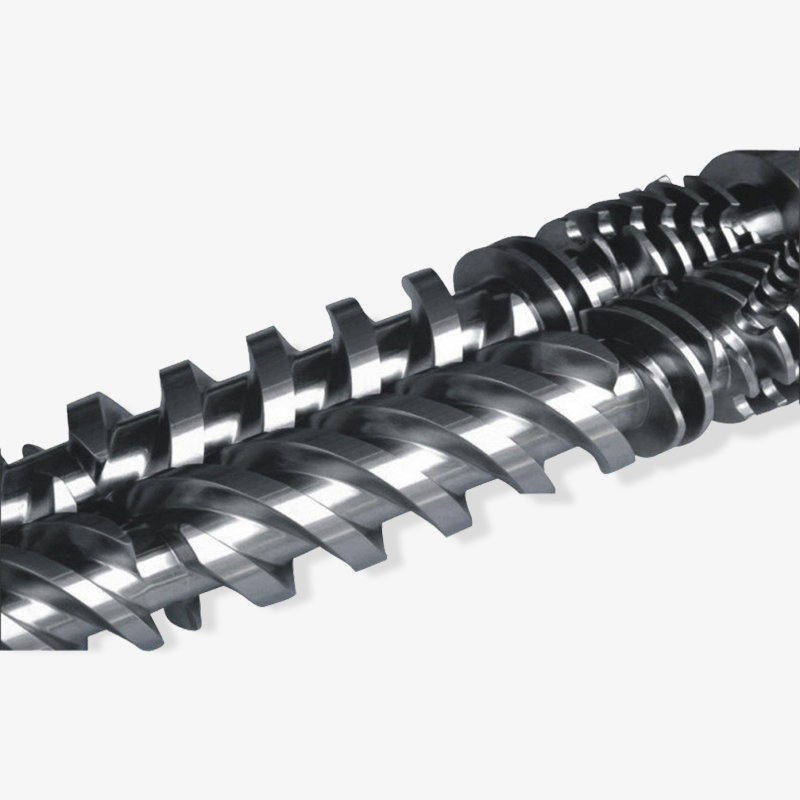
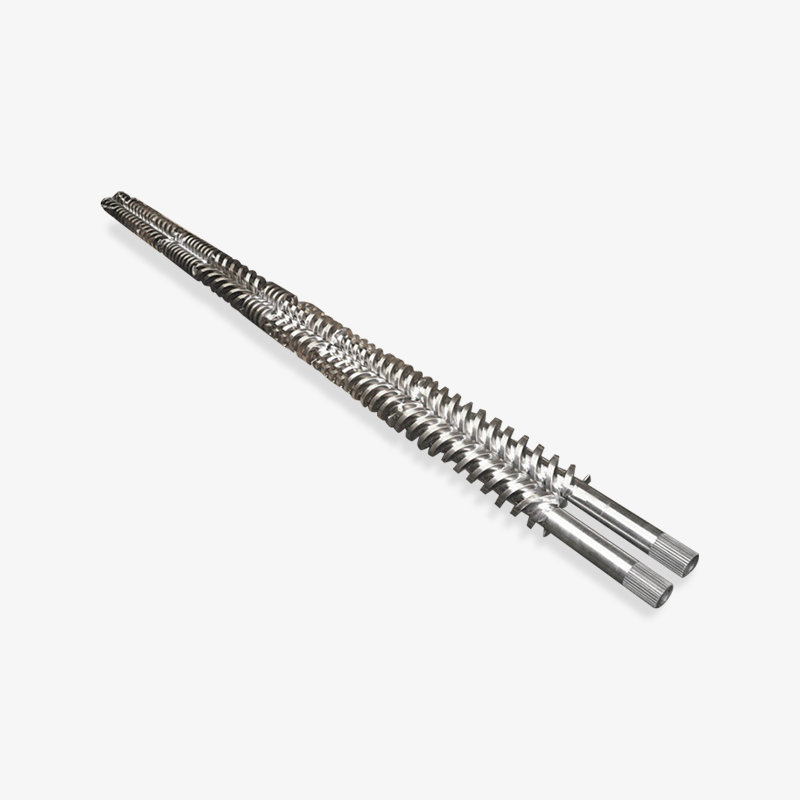
WPC compounds typically contain 50–70% wood flour or bamboo fiber blended with thermoplastic carriers such as PE, PP, or PVC. This blend is abrasive, moisture-sensitive, and prone to thermal degradation if residence time is excessive. A well-engineered WPC screw barrel must simultaneously melt the polymer matrix, disperse the wood filler homogeneously, and convey the melt at controlled pressure without overheating or causing fiber charring. The conical twin screw assembly excels in this role because its geometry progressively compresses material from feed to discharge, building pressure gradually rather than abruptly.
This guide provides a comprehensive framework covering material selection criteria, dimensional specifications, surface treatment options, compression ratio selection, and maintenance strategies, drawing on technical data from production practice and material science.
Why Conical Geometry Matters for WPC Processing
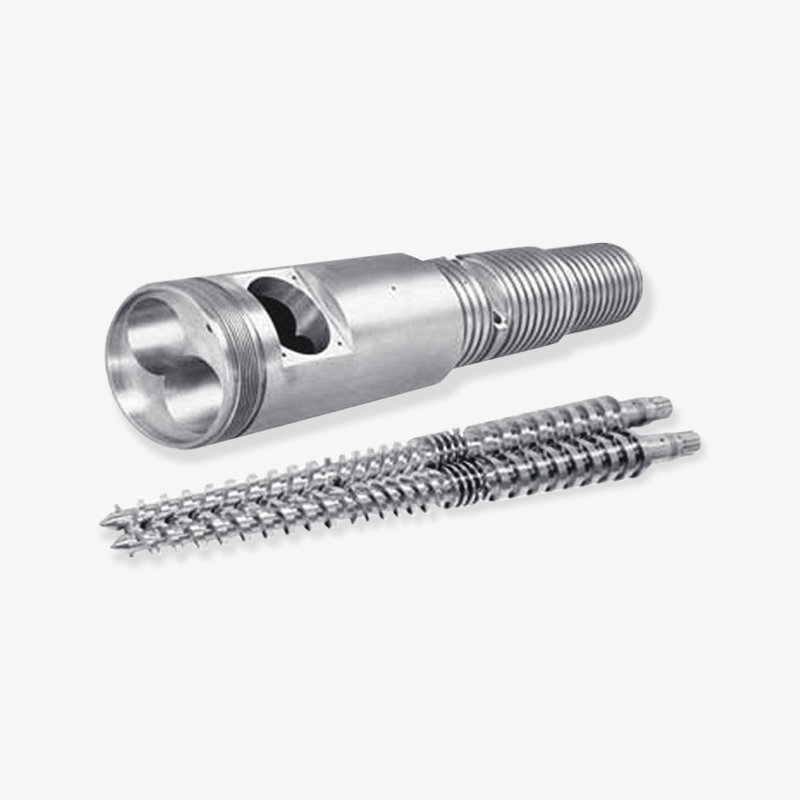
The defining characteristic of a conical screw barrel compared to a parallel twin-screw design is the tapering diameter from the feed zone to the metering zone. This geometry produces three compounding effects that are particularly valuable when processing WPC formulations.
First, the conical twin screw assembly generates a self-wiping action as the two intermeshing screws rotate in opposite directions. The progressively narrowing gap between screw flight and barrel wall creates an intensifying shear zone that breaks up wood fiber agglomerates without requiring excessive screw speed. In practice, this allows WPC lines to operate at 15–25 rpm lower than comparable parallel-screw configurations while achieving equivalent dispersion quality, which reduces mechanical stress on wood fibers and minimizes fines generation.
Second, the geometry provides a large feed opening at the rear. WPC compounds are low-bulk-density materials that can be difficult to feed consistently. The expanded rear diameter of a conical design, typically 80–92 mm on production-scale machines, accommodates forced feeders and side stuffers without bridging, delivering a stable feed that is the foundation of uniform output thickness in board production.
Third, the decreasing channel depth in the metering zone produces a natural pressure buildup that is gentler than the steep compression found in single-screw extruders. This controlled pressurization prevents steam pockets from collapsing violently, which is critical when processing wood flour with residual moisture content above 0.5%.
The bar chart above compares five critical WPC processing performance indicators between conical and parallel twin-screw designs. Across every metric, the conical geometry demonstrates a measurable advantage, ranging from 12 percentage points in thermal stability to 20 percentage points in fiber dispersion quality. These differences translate directly into downstream product quality: boards produced on conical lines show fewer surface pinholes, more consistent cross-sectional density, and lower rejection rates at final inspection. The feed consistency advantage is particularly impactful for WPC production because inconsistent feeding leads to density variation along the board length, which is one of the most common quality complaints from construction material end-users. Energy efficiency, while the smallest gap, still represents meaningful operating cost savings over high-volume production runs measured in thousands of tons per year.
Key Specifications for WPC Conical Screw Barrels
Choosing the correct dimensional specification is the first decision point when sourcing a custom conical screw barrel for a WPC line. The diameter designation uses two numbers: the rear (feed) diameter and the front (discharge) diameter. Common production specifications include 55/100, 65/132, 80/143, 80/158, and 92/188 mm. The front diameter determines output capacity and die pressure capability, while the rear diameter governs feeding volume.
| Diameter (mm) | Output (kg/h) | Typical Board Width | Compression Ratio | Best For |
|---|---|---|---|---|
| 55/100 | 80–120 | Up to 150 mm | 2.6:1 | Thin WPC decking, narrow profiles |
| 65/132 | 150–220 | 150–250 mm | 2.8:1 | Standard WPC board, cladding |
| 80/143 | 250–350 | 200–350 mm | 2.9:1 | Wide boards, hollow sections |
| 80/158 | 300–420 | 250–400 mm | 3.0:1 | High-density WPC flooring, heavy profiles |
| 92/188 | 450–600 | 350 mm+ | 3.2:1 | Large-format boards, industrial panels |
Beyond diameter, screw straightness is a precision metric that is often overlooked during procurement. The standard tolerance for a production-quality extruder screw barrel is 0.015 mm straightness. Deviations above 0.03 mm cause periodic contact between screw flight and barrel bore, generating localized heat spikes and accelerating wear. When sourcing an extruder replacement barrel, always request a straightness certificate alongside the hardness report.
Surface roughness at Ra 0.4 is another specification that distinguishes industrial-grade barrels from lower-tier alternatives. This fine finish reduces the adhesion of degraded polymer to the barrel wall, which is critical for PVC-based WPC compounds that are particularly prone to stagnation and charring at the barrel wall interface.
Material and Surface Treatment: The Foundation of Wear Resistance
The base material for a wear resistant screw barrel designed for WPC service is 38CrMoAlA alloy steel. This nitriding steel combines high tensile strength (typically 980–1080 MPa after heat treatment) with excellent nitriding response, producing a hard, wear-resistant case while retaining a tough core that resists impact and flexural fatigue. It is the industry benchmark for demanding extrusion applications involving abrasive fillers.
The nitriding process applied to 38CrMoAlA creates a hardened surface layer with the following properties critical for WPC service: a surface hardness of HV 950–1000, a nitriding depth of 0.45–0.70 mm, and a brittleness rating at or below Level 1. The depth specification is particularly important: too shallow a layer (below 0.40 mm) wears through prematurely under the abrasion of wood flour and mineral fillers, while an excessively deep layer can cause delamination under bending stress.
For WPC compounds containing calcium carbonate or talc as secondary fillers at loadings above 10%, an additional chrome plating layer of 0.05–0.10 mm with hardness above 900 HV after nitriding provides a second line of defense. Chrome plating acts as a chemical barrier against mild acids released during wood fiber decomposition and reduces the coefficient of friction at the barrel wall, improving melt flow uniformity and reducing drive motor load by approximately 5–8%.
The most demanding applications, such as heavily filled bamboo-plastic composites or recycled WPC compounds with variable contamination, call for a dual alloy barrel with a bimetallic lining hardness of 60–70 HRC. This construction centrifugally casts a wear-resistant alloy liner (typically an iron-boron or nickel-based alloy) inside the barrel bore, providing two to four times the service life of a standard nitrided barrel in high-abrasion duty cycles.
The radar chart illustrates the performance profile of three surface treatment options across five evaluation dimensions relevant to WPC screw barrel service. The dual alloy bimetallic treatment achieves the highest scores on wear resistance, corrosion protection, and surface hardness, making it the premium choice for high-throughput or heavily filled WPC compounds. The chrome-plus-nitrided combination occupies a balanced middle position, offering a strong improvement in wear and corrosion resistance compared to nitriding alone while maintaining reasonable procurement cost. Standard nitriding leads the cost efficiency axis but trails on wear resistance, which is acceptable when wood flour loading is moderate (below 50%) and calcium carbonate filler is absent. Selecting the appropriate treatment tier based on compound formulation and annual throughput target is one of the highest-leverage decisions in WPC screw barrel procurement. Over a three-year production horizon, upgrading from nitriding-only to a bimetallic barrel can reduce total barrel replacement and downtime costs by 35–50% despite the higher initial investment.
Compression Ratio Selection Based on WPC Formulation
The compression ratio of a conical screw barrel is defined as the ratio of channel volume in the feed zone to channel volume in the metering zone. It is one of the most formulation-sensitive parameters in WPC extrusion and must be matched to the specific polymer carrier and wood flour loading to avoid degradation or incomplete plasticization.
For PVC screw barrel applications used in PVC-based WPC (typically 40–60% wood flour in a PVC matrix), a compression ratio of 2.5:1 to 2.8:1 is recommended. PVC is heat-sensitive, and excessive compression generates localized shear heat that can initiate dehydrochlorination. The lower compression ratio ensures gradual pressure buildup, giving stabilizer packages time to quench nascent degradation before it propagates. An anti corrosion screw barrel is particularly important for PVC-WPC because chlorine compounds released during thermal stress corrode standard nitrided surfaces; chrome or bimetallic treatment is strongly advised.
PE-based WPC and PP-based WPC tolerate higher compression ratios of 2.8:1 to 3.2:1. The higher ratio improves melt homogeneity and disperses wood flour more thoroughly through the polymer matrix, reducing void formation in thick board sections. However, ratios above 3.2:1 increase melt temperature by 8–12 degrees Celsius at the barrel exit, which can cause surface blooming on boards containing cellulose fiber with insufficient coupling agent treatment.
Custom conical screw barrel suppliers with strong technical capability can modify flight pitch, flight depth transition profile, and mixing element geometry to fine-tune plasticizing behavior for non-standard formulations. For WPC compounds incorporating recycled materials or mixed fiber types (wood plus rice husk, for example), a screw with a distributive mixing section positioned at approximately 70% of screw length from the feed end significantly improves output consistency.
This line chart demonstrates how melt temperature at the barrel exit rises as compression ratio increases, and how this relationship differs by polymer type. PVC-WPC shows the flattest curve at lower compression ratios, confirming that PVC-based compounds are less sensitive to compression below 2.8:1 but begin to climb steeply above 3.0:1, approaching the thermal degradation boundary. PE-WPC and PP-WPC exhibit steeper temperature rise curves because polyolefins have lower melt viscosity, allowing frictional and shear heat to accumulate more rapidly under high compression. The practical implication is that PP-WPC lines operating with high-ratio screws must be designed with precise barrel cooling zones to prevent melt temperature from exceeding 195 degrees Celsius, which is the upper limit for most wood fiber without significant carbonization. Selecting the correct compression ratio from the outset eliminates the need for corrective barrel temperature adjustments that mask rather than resolve the underlying mismatch between screw geometry and formulation rheology.
Twin Screw Barrel Geometry and Its Role in WPC Homogeneity
A twin screw barrel for WPC service must be manufactured to tight bore tolerances to maintain the precise center distance between the two screw axes, which is the geometric parameter that controls the intermeshing clearance. Typical bore tolerances for production-grade equipment are H7/h6 (approximately +0.025 mm on bore, -0.013 mm on shaft). Clearance exceeding 0.15 mm between screw flight tip and opposing barrel wall reduces the positive conveying mechanism and allows material to recirculate rather than advance, increasing residence time and degradation risk.
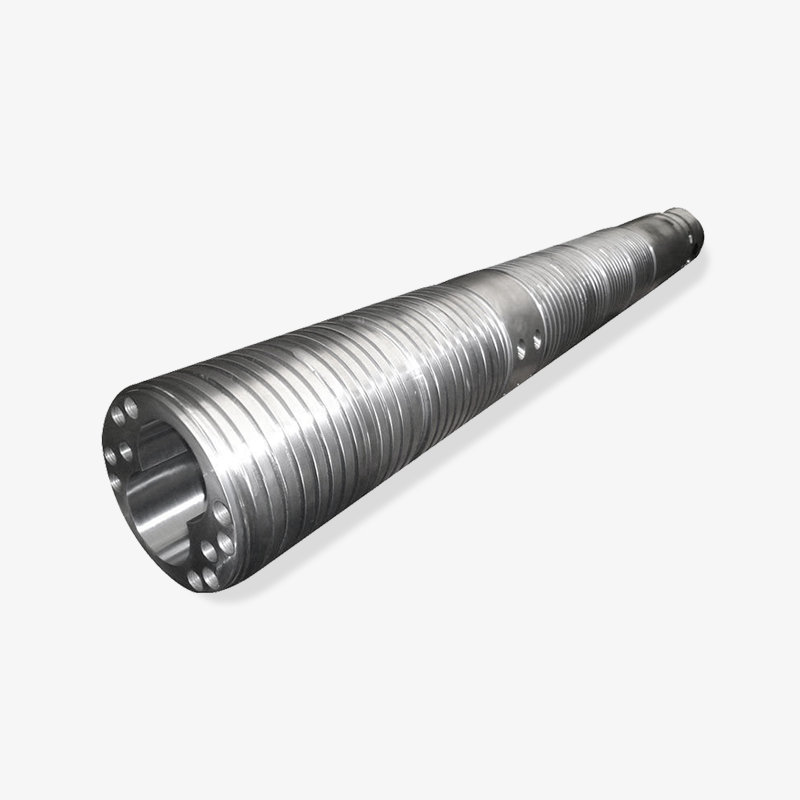
The figure-eight cross-section of a conical twin screw assembly barrel is machined using gun boring followed by profile grinding or honing. The perpendicularity of the two bores relative to the barrel centerline directly affects screw synchronization: angular deviation above 0.02 mm/100 mm causes differential wear on the drive-side screw versus the follower-side screw, resulting in uneven plasticizing between the two melt streams that merge at the die inlet.
Vent port positioning is another barrel design consideration specific to WPC applications. Wood flour contains 5–10% moisture at typical delivery moisture content levels, and even pre-dried WPC compounds retain 0.3–0.8% bound moisture that vaporizes inside the barrel. Placing a vacuum vent port at approximately 60–65% of barrel length from the feed end allows steam removal before the melt enters the high-pressure metering zone, dramatically reducing void formation in the final board and improving surface smoothness. A well-positioned vent eliminates the need for a downstream degassing extruder in most WPC formulations.
The column chart reveals a clear optimum in vent port positioning: boards produced with vent ports at 60–65% of barrel length show void content below 0.5%, compared to 2.8% void content when the vent is placed too early at 40%. The early-vent failure mode occurs because melt pressure at 40% barrel length is insufficient to seal the vent against backflow, allowing air ingestion rather than steam removal. The late-vent failure at 75% misses the main steam generation window, leaving dissolved moisture to form voids under the high pressure of the metering zone. These data reinforce the importance of specifying vent port position when ordering a custom conical screw barrel, as this dimension is fixed at manufacture and cannot be corrected in the field. For producers converting existing extruder replacement barrel sets to WPC service, vent port relocation is one of the most cost-effective modifications available, with payback often measured in weeks through reduced scrap and improved surface quality.
China Screw Barrel Supplier Qualification: What to Check Before Ordering
When evaluating a China screw barrel supplier for WPC applications, procurement teams should apply a structured qualification checklist rather than relying solely on price and lead time. The following parameters are industry-standard verification points that differentiate capable suppliers from commodity manufacturers.
Metallurgical Certification
Request mill certificates for the base steel confirming material grade and heat number traceability. Reliable wear resistant screw barrel manufacturers can provide lot-specific hardness test reports covering surface HV at the nitrided layer and core tensile strength. Certificates should specify nitriding depth measured by microhardness traverse, not estimated from process time.
Dimensional Inspection Records
Reputable suppliers provide CMM (Coordinate Measuring Machine) inspection reports verifying bore diameter, center distance, bore straightness, and surface roughness for each barrel shipped. Screw straightness values should be below 0.015 mm as measured over the full working length. Barrels supplied without dimensional documentation should be considered unverified regardless of supplier claims.
Production Capability Evidence
A legitimate industrial supplier of extruder screw barrel products should have internal nitriding furnace capacity, CNC grinding equipment sized for the barrel lengths required, and a quality management system. Workshop photos, machine lists, and references from existing WPC or PVC customers provide meaningful evidence. The production workshop scale (10,000+ square meters with 60+ employees, for example) indicates capacity to handle custom orders and maintain delivery schedules.
After-Sales Technical Support
WPC barrel selection requires application-specific expertise. Suppliers who can advise on compression ratio selection, vent port positioning, and flight geometry for specific formulations provide significant value beyond the product itself. This kind of technical support reduces the risk of trial-and-error startup costs that can easily exceed the barrel procurement cost several times over.
Maintenance and Service Life Extension for WPC Screw Barrels
A well-maintained nitrided conical barrel used in standard WPC (50% wood flour, PE carrier, no mineral filler) can achieve a service life of 18–24 months at a two-shift production schedule before bore wear reaches the replacement threshold of 0.8 mm diametral clearance increase. Bimetallic barrels extend this to 36–48 months under equivalent conditions. Proactive maintenance practices can further extend service intervals by 20–30%.
The most critical maintenance practice is controlled startup and shutdown. Thermal shock from cold-starting a barrel at full screw speed without adequate warm-up is the leading cause of premature nitrided layer cracking. The recommended warm-up protocol is: heat barrel to processing temperature set points and hold for 20–30 minutes before starting the screw drive. During shutdown, purge the barrel with a polyolefin purging compound to prevent carbonized WPC residue from hardening against the barrel wall overnight.
Regular bore diameter measurement using an inside micrometer or air gauge at defined inspection intervals (typically every 500 production hours) provides early warning of accelerated wear before quality defects appear in board output. Keeping a wear progression log allows maintenance teams to predict replacement timing and order extruder replacement barrel sets in advance, avoiding emergency procurement at premium lead times.
When wear reaches the replacement threshold, partial refurbishment of the screw flight tips via hard chrome re-plating or thermal spray coating can restore clearance without full screw replacement. This approach reduces maintenance cost by 40–55% compared to full screw-and-barrel set replacement and is particularly economical when only one zone of the barrel shows accelerated wear due to localized abrasion from a high-filler WPC compound.
About Zhoushan Microwave Screw Machinery
Zhoushan Microwave Screw Machinery Co., Ltd. is a professional China screw barrel manufacturer and screw extruder factory with a strong foundation in industrial precision manufacturing. The company operates a production workshop of more than 10,000 square meters staffed by over 60 skilled employees. Since its founding in 1990, it has maintained an uninterrupted commitment to the production and research of plastic machinery, continuously integrating foreign screw machinery technology and advanced processing methods into its product development process. The company supplies a comprehensive range of conical screw barrel, twin screw barrel, PVC screw barrel, and extruder screw barrel products to WPC board producers, PVC profile manufacturers, and compounding lines across international markets. Its engineering team provides technical support on screw geometry selection, surface treatment specification, and wear analysis for complex formulations including WPC, reinforced thermoplastics, and specialty compounds.
Frequently Asked Questions
Q1: What compression ratio should I choose for a PVC-based WPC board line?
A: For PVC-WPC formulations, a compression ratio of 2.5:1 to 2.8:1 is recommended. Higher ratios generate excess shear heat that risks PVC degradation and corrosive chlorine release. Pair the screw with an anti corrosion screw barrel featuring chrome-over-nitrided surface treatment for best results.
Q2: How long does a nitrided conical barrel last in WPC production?
A: At two-shift operation with 50% wood flour and PE carrier and no mineral filler, a standard nitrided conical barrel typically lasts 18–24 months before reaching the replacement clearance threshold. Bimetallic dual-alloy barrels extend this to 36–48 months. Actual life depends strongly on wood flour particle size, calcium carbonate loading, and screw speed.
Q3: What dimensional specifications should I verify when ordering a custom conical screw barrel?
A: Key specifications to verify include: rear and front diameters (e.g. 80/158 mm), screw straightness (target 0.015 mm), surface roughness (Ra 0.4), nitriding hardness (HV 950–1000), nitriding depth (0.45–0.70 mm), and bore roundness within H7 tolerance. Always request CMM inspection reports alongside hardness certificates.
Q4: Is a bimetallic barrel necessary for all WPC applications?
A: Not necessarily. Standard nitrided barrels are suitable for WPC compounds with 40–50% wood flour, no calcium carbonate or talc filler, and moderate throughput. Bimetallic dual-alloy construction becomes cost-effective when mineral filler loading exceeds 10%, when bamboo fiber (which is harder than wood flour) is used, or when the production schedule requires minimizing planned downtime for barrel changes.
Q5: Can an existing parallel-screw extruder barrel be converted to a conical screw barrel for WPC?
A: No. Conical and parallel twin-screw extruders use different gearbox configurations, screw center distances, and barrel mounting systems that are not interchangeable. Upgrading to a conical configuration requires replacing the complete screw, barrel, and typically the gearbox and feed housing. However, sourcing an extruder replacement barrel of the same conical geometry type as the original is a straightforward process when the machine model and diameter designation are provided to the supplier.
Q6: What causes uneven board thickness when using a conical twin screw extruder for WPC?
A: Uneven board thickness is most commonly caused by inconsistent melt pressure at the die inlet, which in turn results from feed irregularities, partially blocked vent ports, or unequal wear between the two screws in the conical twin screw assembly. Regular bore measurement and ensuring that forced feeders operate at consistent screw speed are the primary corrective measures. Differential screw wear should prompt a symmetric replacement of both screw and barrel as a matched set.
Selected Bearing Display


 浙公网安备33090202000520号