


 English
 中文简体
中文简体
Author: WeiBo
Date: Jun 08, 2026
How to Select the Right Size Conical Twin Screw Barrel for Your Machine?
Content
- 1 Understanding the Conical Twin Screw Barrel: Design Principles and Why Size Matters
- 2 Key Sizing Parameters: Diameter Ratio, L/D Ratio, and Compression Ratio
- 3 Material Grade and Surface Treatment: The Foundation of Long Service Life
- 4 Step-by-Step Sizing Guide: How to Match Barrel to Machine and Process
- 5 Energy Consumption and Operational Efficiency Across Barrel Sizes
- 6 Application Scope: Resins, Products, and Industries Served
- 7 Maintenance, Wear Indicators, and Replacement Intervals
- 8 Customization and OEM Supply: Ordering a Conical Twin Screw Barrel to Specification
- 9 About Zhoushan Microwave Screw Machinery Co., Ltd
- 10 Frequently Asked Questions
- 10.1 Q1. How do I know which conical twin screw barrel diameter is right for my extruder?
- 10.2 Q2. What is the difference between a standard nitrided barrel and a dual alloy barrel?
- 10.3 Q3. What compression ratio should I specify for PVC pipe production?
- 10.4 Q4. How long does a conical twin screw barrel typically last before replacement is needed?
- 10.5 Q5. Can I order a customized twin screw barrel for a non-standard machine?
- 10.6 Q6. What surface roughness and straightness tolerances are maintained on production barrels?
Selecting the right size conical twin screw barrel for your machine requires matching the screw diameter ratio, compression ratio, and material type to your specific extrusion process. The most critical factor is the diameter specification — for instance, a 45/90mm conical barrel suits small-throughput PVC pipe lines, while an 80/158mm or 92/188mm barrel is engineered for high-capacity wood-plastic composite or large-profile extrusion. Get the sizing wrong and you face under-processing, excessive wear, or chronic material degradation. This guide provides a systematic, data-backed framework for making the correct selection.
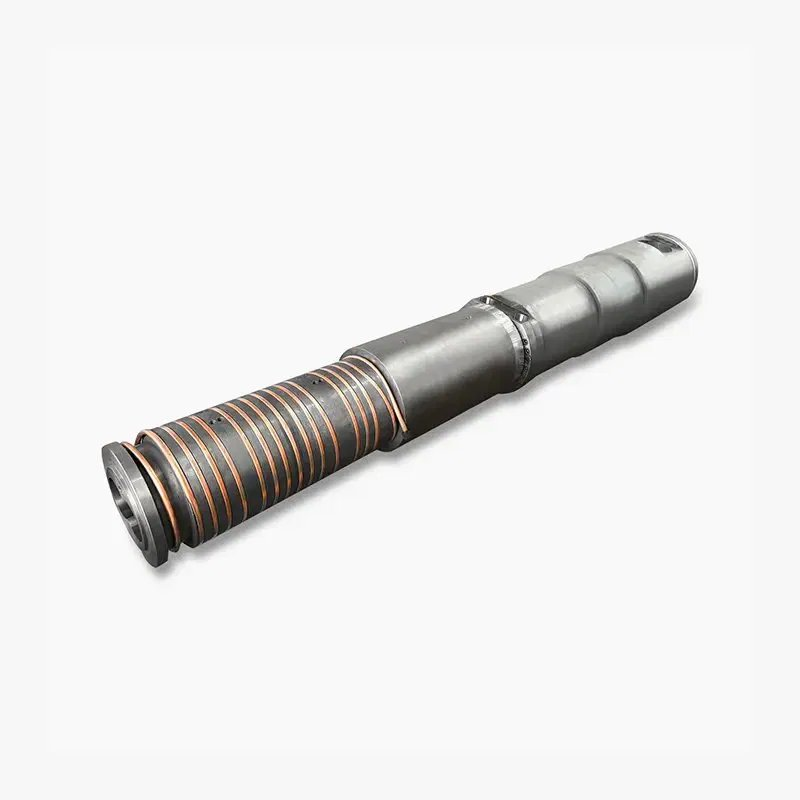
Understanding the Conical Twin Screw Barrel: Design Principles and Why Size Matters
A conical twin screw barrel differs fundamentally from a parallel twin screw barrel in that the two intermeshing screws taper from a large diameter at the feed zone to a smaller diameter at the discharge end. This geometry creates a natural pressure gradient that progressively compresses, melts, and homogenizes material without excessive mechanical shear. The result is superior plasticization quality, lower operating temperatures, and reduced thermal degradation — particularly important for heat-sensitive resins such as rigid PVC.
The size of the barrel directly governs output capacity, residence time, and the shear energy imparted to the melt. A larger diameter ratio (e.g., 92/188mm) provides a much greater feed volume and is capable of processing 600–900 kg/h of compound, whereas a 45/90mm configuration is optimized for laboratory-scale or specialty production lines at 80–150 kg/h. Choosing the wrong size creates a mismatch between the extruder drive torque, the gearbox rating, and the volumetric demand of downstream tooling — leading to surging, melt fracture, or motor overload.
The cone angle and the L/D ratio (length-to-diameter) further define how thoroughly materials are mixed and how long they remain in the melt zone. Standard conical twin screw barrels used in plastic pipe and profile production typically have an L/D between 18:1 and 22:1, providing adequate residence time without burning temperature-sensitive additives. Industrial twin screw extruder barrel assemblies manufactured to tighter tolerances extend service life and reduce downtime significantly.
The chart above illustrates approximate output capacity (kg/h) across the six most common conical twin screw barrel diameter configurations. Smaller diameters such as the 45/90mm and 55/100mm are suited to precision extrusion of specialty profiles and small-volume PVC pipe, delivering outputs in the range of 120 to 200 kg/h. Mid-range configurations like the 65/132mm and 80/143mm cover the broadest share of industrial pipe and sheet extrusion applications, with throughputs reaching 320 to 480 kg/h. The larger 80/158mm and 92/188mm barrels are designed for high-throughput production of construction profiles, wood-plastic decking, and large-diameter drainage pipe. Selecting the correct diameter is not merely about volume — it also determines the torque load on the gearbox and the thermal profile through the barrel zones. Matching barrel size to downstream die capacity ensures stable melt pressure and consistent product dimensions.
Key Sizing Parameters: Diameter Ratio, L/D Ratio, and Compression Ratio
Three interdependent parameters define the sizing of any conical barrel extruder: the input-to-output diameter ratio, the length-to-diameter (L/D) ratio, and the compression ratio. Each variable must be balanced against the others to achieve the desired melt quality, energy efficiency, and output consistency. For a customized twin screw barrel, these parameters are calculated based on the melt flow index (MFI) of the resin, the bulk density of the feedstock, and the target line speed.
The diameter ratio (large end / small end) for standard conical twin screw configurations typically ranges from 1.8:1 to 2.2:1. A higher ratio increases the compression pressure but also demands stronger barrel walls and higher-grade materials. The compression ratio — defined as the volume of one screw flight at the feed end divided by the volume at the metering end — typically ranges from 2.5:1 to 3.5:1 for PVC and PP applications. Deviating significantly from these design windows for a given resin leads to either insufficient plasticization or excessive shear heating.
L/D ratios in industrial twin screw barrels for standard profile and pipe extrusion fall between 18:1 and 22:1. Longer barrels (higher L/D) improve mixing and are used for filled compounds or recycled materials where longer residence time is needed to homogenize pigments or additives. Shorter barrels are preferred for heat-sensitive PVC formulations to minimize thermal exposure. OEM machine builders specify L/D in combination with screw geometry to achieve the target specific energy consumption (SEC), commonly expressed in kWh/kg.
| Diameter Spec (mm) | Diameter Ratio | Typical Output (kg/h) | Common Application | Suitable Resins |
|---|---|---|---|---|
| 45/90 | 2.0:1 | 80 - 150 | Small pipe, thin-wall profile | PVC, ABS |
| 51/105 - 55/100 | 1.9 - 2.1:1 | 150 - 250 | Window profile, sheet | PVC, PP |
| 65/132 | 2.0:1 | 280 - 380 | Pipe, decking, siding | PVC, WPC |
| 80/143 - 80/158 | 1.8 - 2.0:1 | 400 - 650 | Heavy pipe, large profile | PVC, PE, PP |
| 92/188 | 2.0:1 | 700 - 900 | WPC, granulation, large pipe | WPC, PVC, PP, PE |
Material Grade and Surface Treatment: The Foundation of Long Service Life
The base material for a high wear resistance extruder barrel is 38CrMoALA nitriding steel — a chromium-molybdenum-aluminum alloy chosen for its combination of core toughness and surface hardenability. After rough machining, the barrel undergoes a carefully sequenced multi-stage process: quench tempering to achieve core hardness, dimensional stabilization, gas nitriding at controlled atmosphere and temperature, precision grinding to final bore tolerances, and surface polishing to Ra 0.4. Each stage is critical; skipping or shortcutting any step produces a barrel that may meet dimensional specs but fails prematurely under industrial operating loads.
The nitriding process produces a surface hardness of HV950 to HV1000 at a depth of 0.45 to 0.7mm, with a brittleness rating of no more than Level 1. This combination of deep case depth and controlled brittleness ensures that the hardened surface does not chip or spall under the cyclic contact stresses generated by the counter-rotating screws. A surface chrome plating layer of 0.05 to 0.10mm at a hardness of 900 HV or greater is applied after nitriding for barrels intended for highly corrosive resin systems such as chlorinated PVC or flame-retardant compounds.
For applications processing abrasive-filled compounds — glass fiber, calcium carbonate, or wood flour — a dual alloy barrel construction is available with a hardness range of 60 to 70 HRC. In this design, the bore liner is cast from a proprietary wear alloy with a composition optimized for resistance to both abrasion and corrosion. The screw straightness specification of 0.015mm and bore surface roughness of Ra 0.4 are maintained across the full length of the barrel, ensuring tight clearances that maximize conveying efficiency and minimize material leakback.
The radar chart compares two primary barrel material configurations across six performance dimensions relevant to industrial extruder operation. The standard nitrided 38CrMoALA barrel excels in cost efficiency and offers a broad processing range, making it the most practical choice for general-purpose PVC, PP, and ABS applications. The dual alloy barrel configuration scores higher in wear resistance (HRC 60-70), surface hardness retention, and projected service life, making it the preferred option when processing highly abrasive compounds such as glass-fiber-reinforced plastics or calcium carbonate-filled WPC formulations. Corrosion resistance is enhanced in chrome-plated variants by the additional 0.05-0.10mm surface layer, particularly beneficial for chlorinated or fluorinated resin systems. Cost efficiency is naturally lower for dual alloy barrels given the higher raw material and machining cost, but the extended replacement interval — often 2 to 3 times longer than a standard barrel — delivers favorable total cost of ownership over a production line's operational life. Selecting the appropriate material grade is therefore as important as selecting the correct diameter specification.
Step-by-Step Sizing Guide: How to Match Barrel to Machine and Process
Selecting the correct extruder barrel size is a systematic process that begins with the downstream product specification and works backward to the screw-barrel system. Follow the steps below to avoid costly mismatches between machine components.
- Define the product and material: Identify the resin type (PVC, PP, PE, ABS, WPC), its MFI, bulk density, filler content, and any heat-sensitivity constraints. This determines the maximum allowable shear rate and residence time.
- Establish the target output rate: Determine the required throughput in kg/h based on the production schedule, die design, and downstream line speed. This is the primary factor in selecting the screw diameter.
- Verify gearbox torque rating: Confirm that the extruder drive system can sustain the torque required to operate the selected barrel size at the intended screw speed (typically 15-35 rpm for conical twin screw systems).
- Select compression ratio for the formulation: For rigid PVC, a compression ratio of 2.8:1 to 3.2:1 is standard. For flexible PVC or PP, ratios closer to 2.5:1 are appropriate. Consult the resin supplier's recommended processing parameters.
- Specify surface treatment: Choose standard nitriding for commodity resins, chrome-plated bore for corrosive compounds, or dual alloy construction for abrasive-filled materials.
- Confirm OEM dimensional compatibility: Cross-reference the barrel flange dimensions, tie bar spacing, and barrel support bracket positions against the existing machine frame. For OEM twin screw barrel supplier orders, provide the original machine model number and drawing if available.
A common error is selecting a barrel diameter based solely on the existing machine frame without verifying whether the current gearbox torque and motor power are adequate for the new barrel size. Uprating from a 65/132 to an 80/143 barrel, for example, increases volumetric capacity by approximately 50% but requires a proportional increase in drive torque — which may necessitate a gearbox replacement as well.
Energy Consumption and Operational Efficiency Across Barrel Sizes
One of the key advantages of a well-designed conical twin screw cone-shaped barrel is its ability to maximize thermal energy utilization. The closed processing environment reduces material volatilization and heat loss, while the progressive compression geometry converts mechanical work into melt energy with minimal waste. Specific energy consumption (SEC) — measured in kWh per kilogram of processed material — is a practical benchmark for comparing barrel and screw designs in identical production conditions.
Properly sized conical twin screw systems operating at optimal screw speed for a given formulation typically achieve SEC values of 0.12 to 0.22 kWh/kg for rigid PVC pipe production. This compares favorably to poorly matched systems, which can consume 0.30 kWh/kg or more due to excessive shear, prolonged residence time, or barrel cooling requirements to compensate for over-heating. Correct barrel sizing, therefore, has a direct and measurable impact on energy cost — at a production volume of 400 kg/h over two shifts, a reduction of 0.08 kWh/kg saves approximately 38 kWh per day, translating to meaningful annual cost savings.
The line chart demonstrates the relationship between screw speed (rpm) and specific energy consumption (kWh/kg) for a 65/132mm conical barrel processing rigid PVC pipe compound under two scenarios: correctly sized barrel and an oversized barrel configuration. The correctly sized barrel achieves its minimum SEC at approximately 22-26 rpm, corresponding to the optimal operating window where the compression ratio, screw geometry, and thermal profile are in balance. At lower screw speeds, insufficient shear and mechanical work raise the electrical energy required per kilogram processed; at higher speeds, friction heat and pressure surges increase energy demand again. The oversized barrel consistently operates at higher SEC across all tested speeds because the feed zone is under-filled relative to its design capacity, resulting in inefficient compression and poor heat transfer. This data illustrates why matching barrel size to the production rate target — not just the physical machine frame — is the most direct path to reducing operational energy costs on a plastic extruder production line.
Application Scope: Resins, Products, and Industries Served
The conical twin screw barrel is one of the most versatile components in the plastic processing industry. It is the standard solution for processing PVC — both rigid and flexible grades — due to the gentle, low-shear plasticization that the conical geometry provides. However, the range of materials and end products processed with conical twin screw systems extends well beyond PVC to include PP, PE, ABS, and various filled or reinforced compounds.
- PVC pipe and fittings: Water supply, drainage, and electrical conduit pipe in diameters from 16mm to 630mm. Barrel sizes 45/90 to 92/188 cover the full product range.
- Window and door profiles: Multi-chamber PVC profiles requiring tight dimensional tolerances and consistent melt homogeneity throughout long production runs.
- Sheet and film: Calendered PVC sheet for flooring, formwork, and signage; co-extruded PP and ABS sheet for thermoforming.
- Wood-plastic composites (WPC): Decking boards, cladding panels, and outdoor furniture profiles produced from mixtures of PE or PP with 40-70% wood flour filler.
- Raw material granulation: Pelletizing of PVC dry blend, PP masterbatch, and recycled PE for downstream injection molding or further extrusion. The gentle action of the conical barrel preserves additive integrity during compounding.
- Specialty applications: CPVC hot-water pipe, foamed PVC trim board, and cable insulation compounds requiring precise temperature control throughout the barrel zones.
The screw barrel design can be adapted for each application through modifications to the flight geometry, helix angle, and mixing section configuration. For abrasive WPC applications, the dual alloy barrel with hardened bore liner extends service intervals substantially, reducing maintenance downtime and spare parts costs in continuous production environments.
Maintenance, Wear Indicators, and Replacement Intervals
A twin screw barrel is a wear component. Even with premium material grades and surface treatments, the barrel bore will gradually wear under the combined effects of abrasion, corrosion, and cyclic mechanical stress. Monitoring wear and planning replacement before a barrel reaches critical wear limits prevents unplanned downtime and protects the quality of the extruded product.
The primary wear indicator is the radial clearance between the screw flight tip and the barrel bore. For a new conical twin screw assembly, this clearance is typically 0.05 to 0.15mm depending on barrel diameter. When clearance increases beyond 0.40 to 0.50mm, material leakback across the screw flights becomes significant, causing output drops, pressure instability, and increased melt temperature variation. At this stage, barrel replacement is recommended to restore extruder performance.
The following maintenance practices extend barrel service life in industrial twin screw barrel applications:
- Perform a cold-start purge with a compatible carrier resin before introducing filled or colored compounds to prevent abrasive damage in the cold-feed zone.
- Maintain barrel temperature profiles within the specified range; excessive temperature cycling accelerates thermal fatigue in the nitrided surface layer.
- Measure bore diameter at regular intervals (every 2,000 to 3,000 operating hours) using an inside micrometer at multiple axial positions to detect uneven wear patterns.
- Avoid dry-running the extruder without material, which causes metal-to-metal contact between screw flights and barrel bore.
- When processing corrosive compounds, flush the barrel with a neutral carrier resin at the end of each production run to remove residual reactive material from the bore surface.
Customization and OEM Supply: Ordering a Conical Twin Screw Barrel to Specification
When a standard catalog configuration does not match an existing machine or a novel process requirement, a customized twin screw barrel can be engineered and manufactured to the customer's drawing. As a professional OEM twin screw barrel supplier, the manufacturing process begins with a detailed review of the machine interface dimensions — flange bolt pattern, barrel support saddle positions, feed throat opening, and vent port locations — before proceeding to material selection and machining.
Lead times for custom screw barrel manufacturing depend on the complexity of the specification, but standard production timelines for conical twin screw assemblies range from 25 to 45 working days from drawing approval to shipment. Customers are encouraged to provide both a dimensional drawing and a brief process description covering resin type, melt temperature, and throughput target to allow the engineering team to optimize the nitriding depth and surface treatment for the specific application.
All barrels undergo dimensional inspection against drawing tolerances prior to shipment, including bore diameter at multiple cross-sections, flange parallelism, and surface roughness measurement. A hardness test report confirming nitriding hardness (HV950-1000) and depth (0.45-0.7mm) is provided with each unit. For export orders, barrels are packaged in anti-rust oil and sealed in moisture-proof material to protect the precision bore surface during transit.
About Zhoushan Microwave Screw Machinery Co., Ltd
Zhoushan Microwave Screw Machinery Co., Ltd is a professional China screw barrel manufacturer and screw extruder factory with more than 10,000 square meters of production workshop and more than 60 dedicated employees. Since its founding in 1990, the company has been committed to the production and research of plastic machinery, while continuously introducing and adapting foreign screw machinery technology to meet the evolving demands of global manufacturing clients. The factory produces a comprehensive range of conical twin screw barrel assemblies, parallel twin screw barrels, single screw barrels, and matched screw elements for extruders used across the plastics, construction, packaging, and wood-plastic composite industries. With over three decades of manufacturing experience and a rigorous quality control system, the company supplies both domestic and international customers with reliable, technically sound extruder components backed by engineering support.
Frequently Asked Questions
Q1. How do I know which conical twin screw barrel diameter is right for my extruder?
Match the barrel diameter to your target output rate (kg/h) and verify compatibility with the extruder gearbox torque rating. A 45/90mm barrel suits outputs of 80-150 kg/h; an 80/158mm is appropriate for 400-650 kg/h. Always cross-reference with the machine's original specification sheet or provide the machine model to your supplier for confirmation.
Q2. What is the difference between a standard nitrided barrel and a dual alloy barrel?
A standard nitrided barrel (38CrMoALA, HV950-1000) is suitable for most PVC, PP, PE, and ABS applications. A dual alloy barrel uses a hardened bore liner with hardness of 60-70 HRC and is recommended for abrasive compounds such as glass-fiber-filled plastics, wood-flour WPC, or calcium carbonate-filled formulations where wear rates are significantly higher.
Q3. What compression ratio should I specify for PVC pipe production?
For rigid PVC pipe, a compression ratio of 2.8:1 to 3.2:1 is standard and balances plasticization quality with melt temperature control. For flexible PVC or softer compounds, ratios closer to 2.5:1 reduce over-shearing. Confirm with your resin supplier's recommended processing window before finalizing the specification.
Q4. How long does a conical twin screw barrel typically last before replacement is needed?
Service life depends heavily on material abrasiveness, operating temperature, and maintenance practices. A standard nitrided barrel processing unmodified PVC typically lasts 8,000 to 15,000 operating hours. Processing filled or abrasive compounds without adequate surface treatment can reduce this to 3,000-5,000 hours. Dual alloy barrels in the same abrasive service typically achieve 2 to 3 times the service life of a standard barrel.
Q5. Can I order a customized twin screw barrel for a non-standard machine?
Yes. Custom barrels are manufactured to customer drawings or dimensional samples. Provide flange dimensions, bore diameter specifications, overall length, vent port positions, and process material details. Standard lead time for custom conical twin screw barrels is 25 to 45 working days from drawing approval. Quality inspection reports including hardness test results are supplied with each unit.
Q6. What surface roughness and straightness tolerances are maintained on production barrels?
Production barrels are finished to a bore surface roughness of Ra 0.4 and a screw straightness of 0.015mm. These tolerances ensure tight operating clearances that optimize conveying efficiency and minimize material leakback, contributing directly to consistent output quality and reduced energy consumption per kilogram of processed material.
Selected Bearing Display


 浙公网安备33090202000520号