


 English
 中文简体
中文简体
Author: WeiBo
Date: May 01, 2026
What specific role does the rubber screw barrel play in the rubber extrusion process?
Content
- 1 Specific Role of the Rubber Screw Barrel in Rubber Extrusion
- 2 Products Manufactured Using a Rubber Screw Barrel
- 3 Why the Rubber Screw Barrel Must Withstand High Temperatures and Pressures
- 4 Impact of the Rubber Screw Barrel on Product Quality & Production Efficiency
- 5 FAQ: Rubber Screw Barrel in Extrusion
Specific Role of the Rubber Screw Barrel in Rubber Extrusion
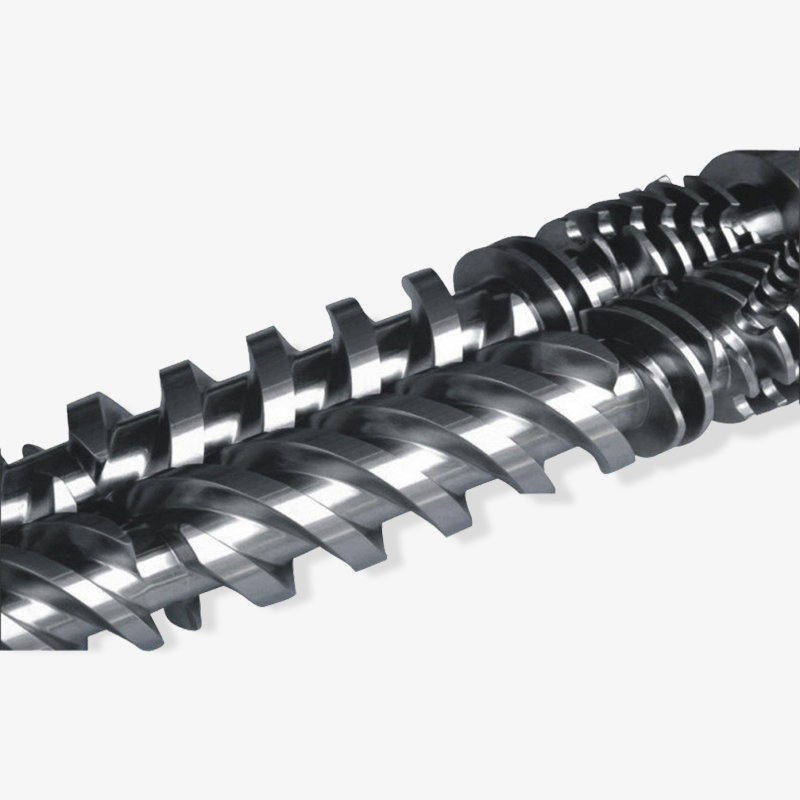
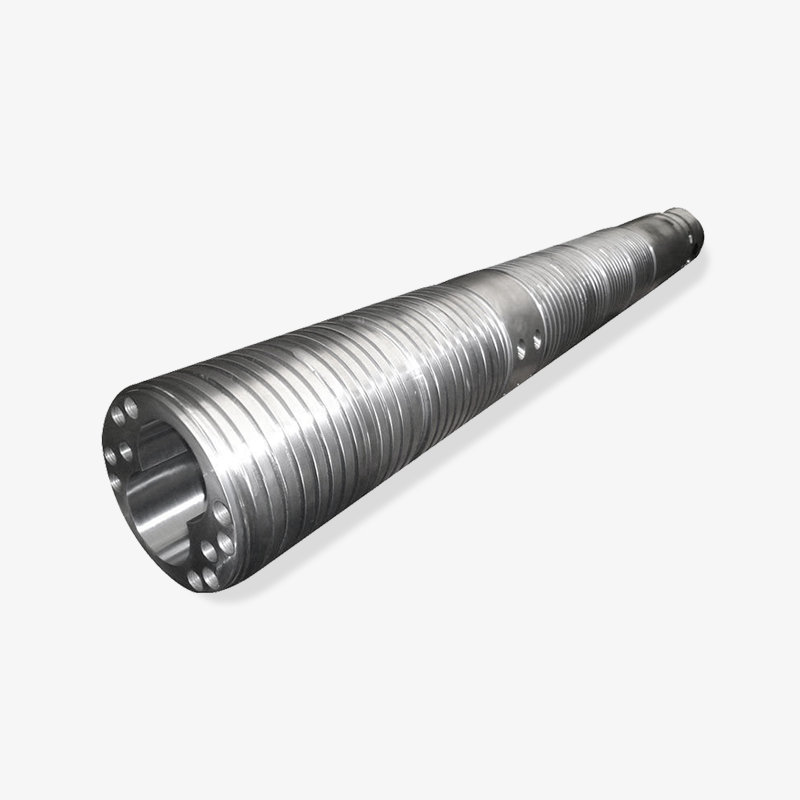
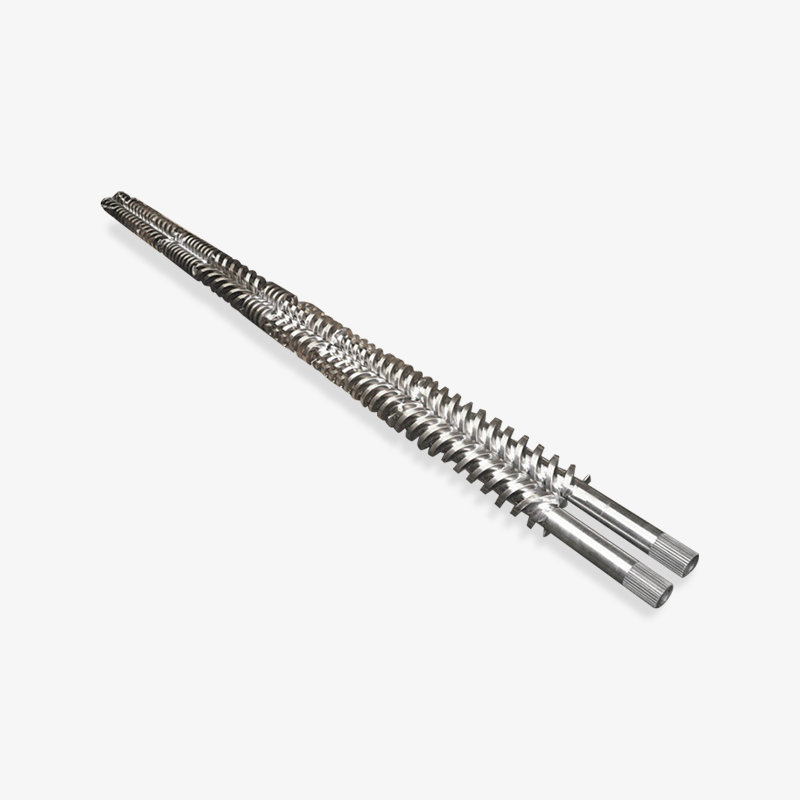
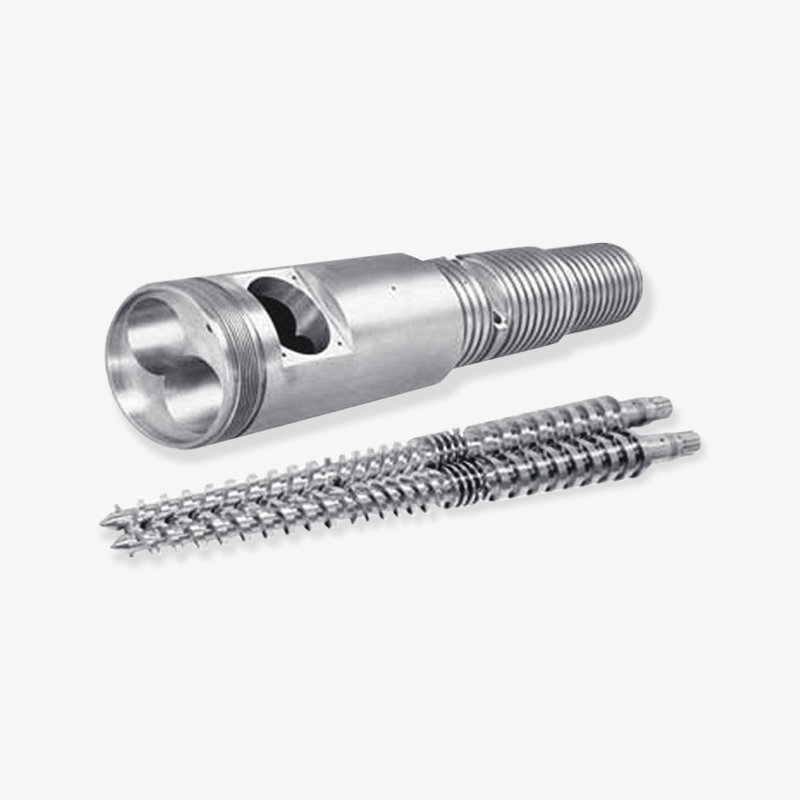
The rubber screw barrel acts as the core reactor and conveyor within the extruder. Its primary role is to transform raw rubber compound into a continuous, homogenized, and shaped profile by applying intense shear, compression, and forward thrust. Without a properly designed screw-barrel system, the rubber would not plasticize uniformly or achieve the required viscosity for forming.
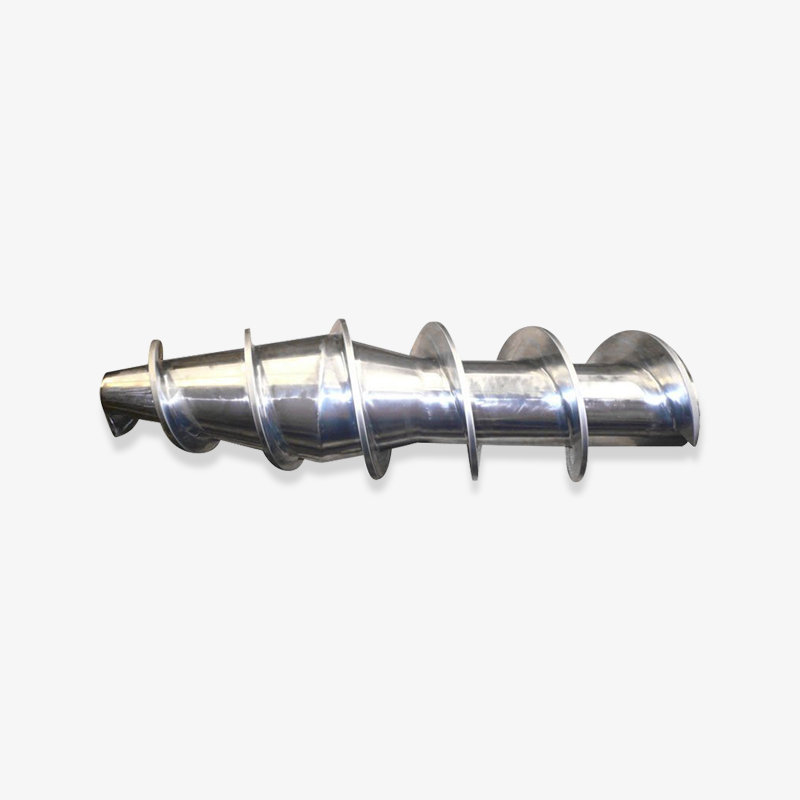
In detail, the screw rotates inside the barrel, creating three functional zones:
- Feed zone: Draws rubber from the hopper and pre-heats it.
- Compression zone: Reduces air voids and builds pressure up to 500-700 bar (7,250-10,150 psi).
- Metering zone: Ensures a steady, pulse-free flow through the die.
The barrel's inner surface works with the screw flights to generate frictional heat and shear stress, which breaks down molecular chains (mastication) and disperses fillers like carbon black or silica. This mechanical-energy conversion is 80-90% efficient for rubber processing, far surpassing simple thermal heating.
Products Manufactured Using a Rubber Screw Barrel
A single rubber screw barrel line can produce hundreds of continuous profiles, sheets, tubes, and custom cross-sections. The versatility depends on the screw geometry (compression ratio, L/D ratio) and the die attached at the barrel exit.
Common product categories include:
- Automotive seals and weatherstrips: EPDM rubber profiles for doors, windows, and trunk lids – typical production speeds: 15-30 m/min.
- Hoses and tubing: Fuel lines, coolant hoses, vacuum tubing (inner diameter from 2mm to 50mm).
- Cable insulation and jacketing: Rubber compounds for flexible power cables or mining cables, with wall thickness control within ±0.05mm.
- Rubber sheets and mats: Conveyor belts, floor mats, gasket sheets (width up to 2000mm).
- Extruded profiles with metal/fabric inserts: Window glazing channels or reinforced rubber tracks.
For high-volume applications, cold-feed extruders with barrier screws are preferred, while hot-feed extruders (using pre-warmed rubber strips) are used for precision profiles like silicone medical tubing.
Why the Rubber Screw Barrel Must Withstand High Temperatures and Pressures
Rubber extrusion inherently generates extreme heat (up to 120-180°C / 248-356°F) and internal pressures (300-700 bar) due to viscous dissipation and die resistance. If the barrel cannot withstand these conditions, it will deform, wear prematurely, or fail catastrophically.
Three technical reasons demand this durability:
- Vulcanization onset: Temperatures above 130°C can start cross-linking (scorching) inside the barrel. The barrel must manage heat via cooling channels (water or oil) to prevent premature cure. A 10°C uncontrolled rise doubles the scorch risk.
- Pressure-induced leakage: At 500 bar, poor barrel-screw clearance (optimal: 0.1-0.3mm) allows backflow, reducing output by up to 40%. A rigid barrel maintains consistent clearance.
- Abrasive fillers: Carbon black (30-80 phr) and silica act as grinding agents. High pressure forces these particles against the barrel wall, requiring bimetallic liners (e.g., 68-72 HRC hardness) or nitrided steel (60-62 HRC) to resist wear.
| Barrel Material | Max Temp (°C) | Max Pressure (bar) | Wear Resistance |
|---|---|---|---|
| Nitrided steel (38CrMoAlA) | 450 | 600 | Medium (60 HRC) |
| Bimetallic (Fe-Cr-B lining) | 550 | 700 | High (68-72 HRC) |
| Carbide-lined barrel | 600+ | 800 | Very High (72-78 HRC) |
Impact of the Rubber Screw Barrel on Product Quality & Production Efficiency
The screw barrel directly determines dimensional accuracy, surface finish, and output consistency. Even a 0.1mm wear on the barrel inner diameter can reduce output by 15-20% and cause unacceptable dimensional drift.
Quality impacts:
- Uniformity of cure: Temperature variations > ±3°C across the barrel cause undercured or scorched spots. Precision barrels with cooling zones maintain ±1°C stability.
- Surface defects: Worn barrels create "melt fracture" or rough surfaces. New barrels with L/D ratios of 12:1 to 20:1 for rubber produce smooth, gloss-controlled profiles.
- Tolerance control: A rigid barrel-screw assembly holds extrudate thickness to ±0.03mm for critical seals, compared to ±0.1mm for worn systems.
Efficiency impacts:
- Energy consumption: Optimized screw geometries (barrier or variable pitch) reduce specific energy use by 15-25%, from 0.25 kWh/kg to 0.20 kWh/kg for typical NR/SBR compounds.
- Uptime: Bimetallic barrels last 20,000-30,000 operating hours versus 8,000 hours for plain carbon steel, cutting replacement downtime by 70%.
- Scrap reduction: Consistent melt temperature and pressure reduce start-up waste from 50kg to under 5kg per batch in a typical automotive seal line.
A case study from a hose manufacturer showed: after upgrading to a nitrided screw barrel with a 18:1 L/D ratio, extrusion speed increased from 12 m/min to 22 m/min while rejecting less than 0.5% of production (down from 4.2%).
FAQ: Rubber Screw Barrel in Extrusion
1. How often should a rubber screw barrel be replaced?
Typically every 15,000-25,000 hours for bimetallic barrels, or when the inner diameter wear exceeds 0.15mm. Regular clearance checks every 3 months are recommended.
2. Can the same screw barrel process different rubber compounds?
Yes, but with limitations. A general-purpose screw (compression ratio 1.2:1 to 1.5:1) handles NR, SBR, and BR. For high-filler compounds (e.g., >50 phr carbon black) or low-viscosity silicones, a dedicated screw design is essential to avoid surging or degradation.
3. What is the typical L/D ratio for rubber screw barrels?
12:1 to 20:1 – shorter than thermoplastics (24:1 to 36:1) because rubber requires less melting and more shear mixing. Cold-feed extruders often use 14:1-16:1; hot-feed uses 8:1-12:1.
4. Does the screw barrel affect the final product's hardness (Shore A)?
Indirectly, yes. Inconsistent shear history changes filler dispersion and molecular breakdown, causing hardness variations of ±3-5 Shore A. A well-designed barrel minimizes this to ±1 Shore A.
Selected Bearing Display


 浙公网安备33090202000520号