


 English
 中文简体
中文简体
Author: WeiBo
Date: Oct 05, 2026
Bimetallic Barrel Guide for Extruder and Injection Molding Machine Buyers
Content
- 1 What a Bimetallic Barrel Actually Is and What the Alloy Liner Does
- 2 Where a Bimetallic Barrel Earns Its Price in Daily Production
- 3 Matching the Liner Grade to the Polymer You Actually Run
- 4 Tolerances, Geometry and Interface Details to Put on the Drawing
- 5 Bimetallic Barrel vs Nitrided Barrel: Real Cost of Ownership
- 6 How to Vet a Bimetallic Barrel Manufacturer, Supplier or Wholesaler
- 7 Installation, Break-In and Bore Inspection Routines
- 8 Why Plastic Machinery Builders Source Barrels From Zhoushan Microwave Screw Machinery
- 9 Frequently Asked Questions About Bimetallic Barrels
- 9.1 What is a bimetallic barrel?
- 9.2 How long does a bimetallic barrel last compared with a nitrided barrel?
- 9.3 Can a bimetallic barrel be repaired or re-lined?
- 9.4 Is a bimetallic barrel worth it for a small extruder?
- 9.5 Do bimetallic barrels work with PVC?
- 9.6 Can the dimensions be customized for an existing machine?
- 9.7 What should a purchase order for a bimetallic barrel include?
- 9.8 Which liner grade should a first-time buyer choose?
A pipe extrusion line running 40 percent recycled PVC with a calcium carbonate filler destroyed a nitrided 38CrMoAlA barrel in under nine months. The same line, switched to a centrifugally cast bimetallic barrel with a nickel-based liner, ran four years before anyone thought to measure the bore again. Nine months against four years is the entire economic case for a bimetallic barrel, and it is also why the specification details matter far more than the label on a quotation.
The conclusion first: when a process pushes abrasive fillers, glass fiber or corrosive polymers through the screw and barrel, a bimetallic barrel usually costs less per year of production than a nitrided one, even though the invoice is higher. What decides whether that holds true is the alloy family of the liner, how solidly that liner is bonded to the steel shell, the liner thickness relative to the bore, and whether the barrel geometry matches the screw already running in the machine.
This guide works through those points from the angle of a plastic machinery builder or a processor replacing a worn barrel: what the liner really is, how wear rates differ in practice, which grade suits which polymer, what belongs on the drawing, how to vet a bimetallic barrel manufacturer or supplier, and what to check after the barrel arrives at the loading dock.
What a Bimetallic Barrel Actually Is and What the Alloy Liner Does
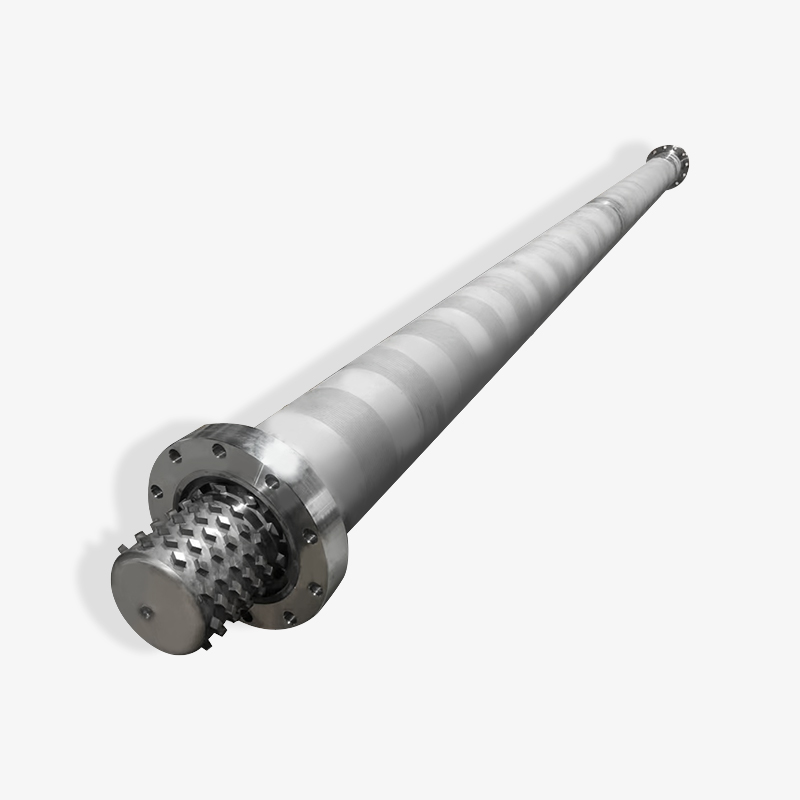
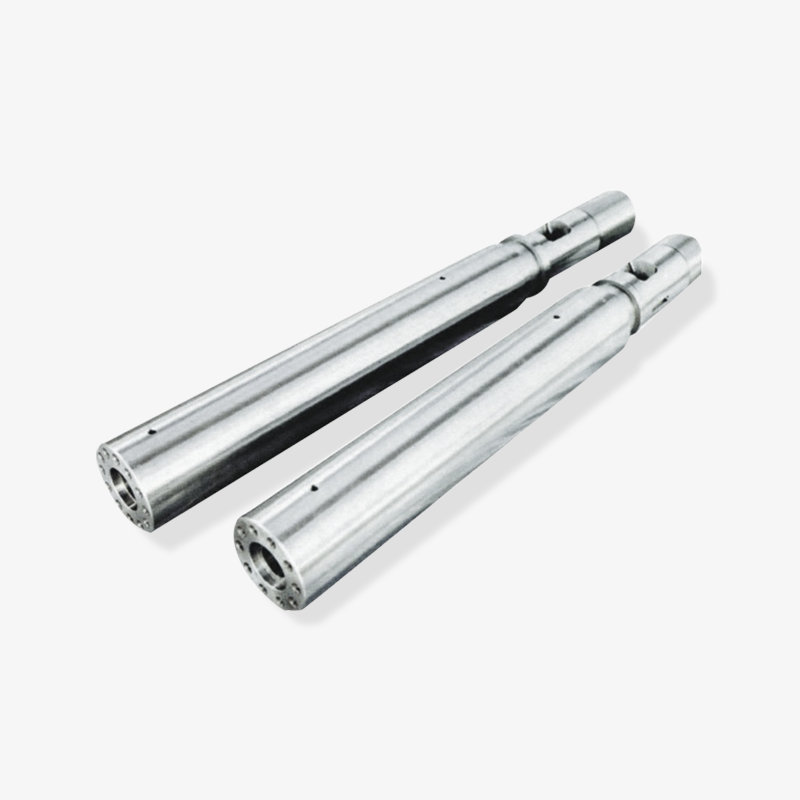
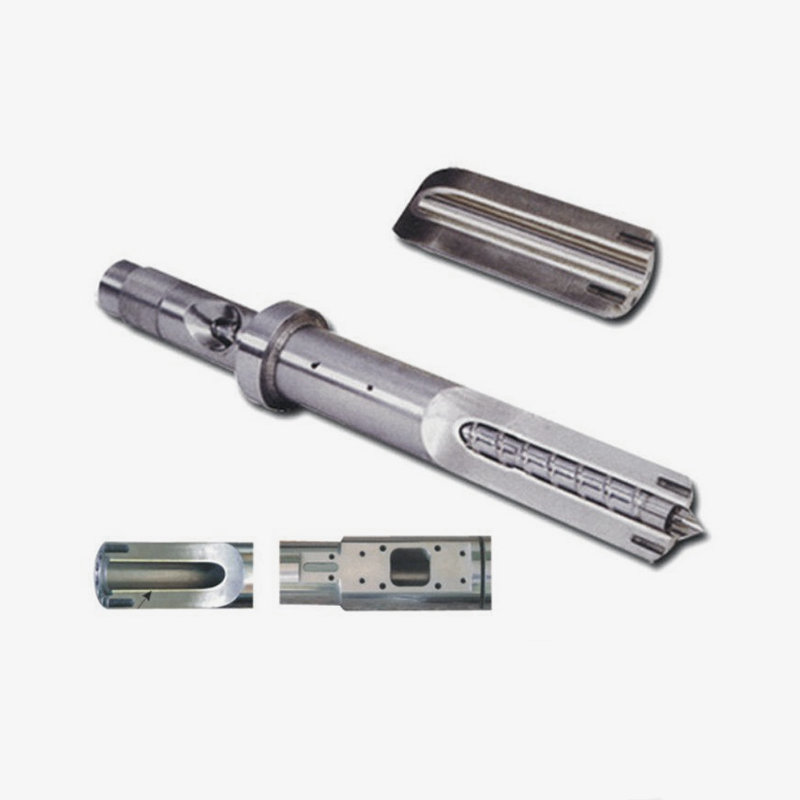
A bimetallic barrel is a steel tube with a hard alloy liner fused to the inside of the bore. The outer shell carries the pressure, the flange loads and the heating bands. The liner takes the abrasion, the corrosion and most of the friction generated by the rotating screw.
Two materials, one working surface
In most centrifugal-cast designs the shell is low-carbon or chromium-molybdenum steel, and the liner alloy is poured as a melt while the shell spins. Centrifugal force presses the alloy against the bore wall, and the two materials bond metallurgically as they cool. Heat-fusion and hot isostatic pressing routes exist as well, and they can produce comparable results when the process window is tightly controlled. What matters in the finished part is that the interface between liner and shell is a genuine bond rather than a sleeve pressed into a rough bore.
Liner thickness generally runs from 1.5 mm to 3 mm on common extruder sizes, with thicker liners on large-diameter barrels. The alloy families in regular production are:
- Iron-based alloys in the Fe-Cr-B family, used for most filled polyolefins and offering a balance of wear resistance and cost
- Nickel-based alloys in the Ni-Cr-B-Si family, chosen for PVC and polymers that release corrosive by-products
- Cobalt-based alloys for combinations of corrosion and elevated operating temperature
- Tungsten carbide reinforced nickel-based liners for glass fiber, mineral fill and other high-load abrasive duty
Bulk liner hardness usually falls between HRC 55 and HRC 65 depending on the grade. That number is easy to misread, because a nitrided barrel can show a surface hardness above the equivalent of HRC 65. The difference is depth. Gas nitriding produces a diffusion case of roughly 0.3 mm to 0.7 mm, and once that case wears through, the material underneath behaves like the softer base steel and the wear rate accelerates sharply. A bimetallic liner is hard alloy through its full thickness, so losing a few tenths of a millimeter of bore still leaves the working surface inside wear-resistant material.
Why depth beats surface hardness
Think about where a barrel actually fails. It is rarely a sudden fracture. It is a gradual change in bore diameter and roundness that opens up the clearance between screw flight and barrel wall. That change reduces conveying efficiency, raises melt temperature variation and eventually shows up as dimensional drift in the finished product. A thin hardened case buys time; a thick alloy liner buys years. This is the practical difference between the two construction types, and it is why extruder barrel and injection molding machine barrel selection tends to move toward bimetallic construction as soon as fillers or corrosive formulations enter the picture.
| Bore material | Typical hardness | Abrasion resistance | Corrosion resistance | Typical fit |
|---|---|---|---|---|
| Nitrided chromium-molybdenum steel | High surface hardness, case of 0.3 to 0.7 mm | Low to moderate | Low | Unfilled PE and PP, clean regrind, general purpose extrusion |
| Iron-based bimetallic liner | HRC 55 to 62 through the liner thickness | Moderate to high | Moderate | Calcium carbonate and talc filled PP or PE, rigid PVC at moderate load |
| Nickel-based bimetallic liner | HRC 52 to 58 through the liner thickness | Moderate to high | High | PVC dry blend, halogenated flame retardant systems, recycled streams with acid residue |
| Carbide reinforced bimetallic liner | HRC 60 to 68 through the liner thickness | Very high | High | Glass fiber reinforced PA, PBT and POM, heavily mineral filled engineering resins |
The liner alloy and the quality of the bond, not the word bimetallic, decide how long a barrel lasts.
Where a Bimetallic Barrel Earns Its Price in Daily Production
Wear does not happen evenly along a bore. It is heaviest in the feed section, where solid pellets and powder are compacted against the wall, and it is heavy again in the compression and metering zones where melt pressure and filler particles work together against the surface.
Three practical factors set the wear rate: the type and loading of the filler, the corrosive by-products released by the polymer, and the screw speed and back pressure the line runs at. Calcium carbonate and talc at 20 to 30 percent loading will ovalize a bore over months. Glass fiber reinforced PA, PBT and POM attack the bore differently, because the fibers act like tiny cutting tools. PVC is subtler still: thermal degradation releases hydrogen chloride, which attacks grain boundaries rather than scraping the surface, so a nitrided case pits first and then spalls.
The chart below places a nitrided barrel against three bimetallic liner types under glass fiber filled PA duty. The values are relative life multipliers rather than absolute running hours, because actual life depends on formulation, screw design and temperature profile.
Relative bore life under glass fiber filled PA: nitrided barrel as baseline
Nitrided 38CrMoAlA barrel: 1.0x baseline
Iron-based bimetallic liner: about 3.0x
Nickel-based bimetallic liner: about 3.5x
Carbide reinforced bimetallic liner: about 6.0x
Against a nitrided barrel, an iron-based bimetallic liner commonly stretches life by two to three times, and a nickel-based liner holds up better again where corrosion is part of the problem rather than abrasion alone. Carbide reinforced liners can widen the gap to five times or more, but they also carry the highest purchase price, so they usually make sense only where filler loading is genuinely heavy or where a barrel change costs a line more than the part itself. A manufacturer that casts both bimetallic screws and bimetallic barrels in house tends to recommend a liner grade first from the filler content and corrosion risk, and then work back to the total cost per year, rather than letting the budget pick the material.
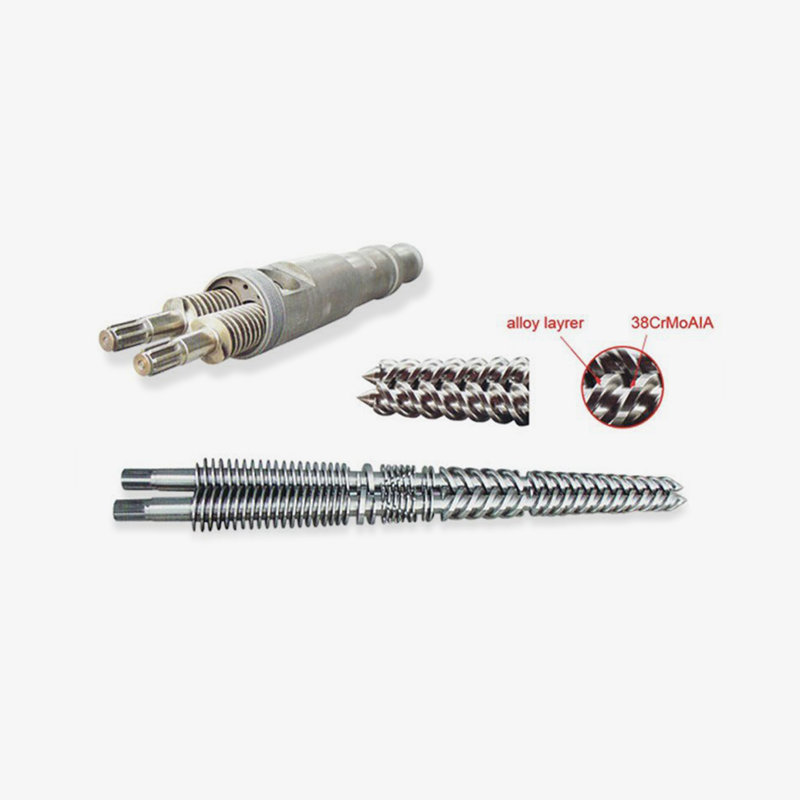 Bimetallic barrelBimetallic barrel are widely used in many fields such as automobile manufacturing, home appliance production, packaging materials, medical devices, electronic communic...View Product →
It is worth noting how the material choice interacts with the machine layout. A single screw extruder running heavily filled compound wears differently from a parallel twin screw or a conical twin screw, because the conveying mechanism and the residence time distribution are not the same. Planetary and rubber extrusion duties introduce their own patterns. In each case the useful question is the same: how much abrasive or corrosive work is being done at the bore wall per hour of production.
A bimetallic barrel repays its premium fastest where fillers are heavy, corrosion is present, or a stop costs more than the barrel.
Matching the Liner Grade to the Polymer You Actually Run
Liner selection is not a question of buying the hardest available alloy. It is a question of matching the alloy to the damage mechanism that is actually present in your process, and then matching the screw to the barrel so the two wear together instead of against each other.
Filled polyolefins
PE and PP loaded with calcium carbonate, talc or barium sulfate are the most common bimetallic application. Iron-based liners are usually the economical answer here. Below roughly 10 percent filler loading a nitrided barrel can still be tolerable, but once loading passes 20 percent the iron-based bimetallic liner pulls ahead from the first year onward, and the gap keeps widening because the nitrided case is gone after the first year or two while the alloy liner is still working.
PVC and other corrosive systems
PVC dry blend, halogenated flame retardant packages and recycled streams carrying acid residue shift the problem from abrasion to corrosion. Nickel-based liners are the better fit because they resist chloride and acidic by-products at the grain boundary. One detail is easy to overlook: the screw has to be upgraded at the same time. If the bore is wear resistant but the screw flight lands wear flat within a few months, the clearance opens, output drops and the barrel is blamed for a screw problem. A matched approach to wear-resistant screw design, with hardened flight tops or a bimetallic screw body, is usually part of the same purchase decision.
Glass fiber and highly filled engineering resins
Above roughly 20 percent glass fiber content, the damage is mechanical and aggressive. Carbide reinforced nickel-based liners last longest, although the unit price is higher. For moderate fiber content, iron-based or nickel-based liners combined with a sensible compression ratio and a properly hardened screw often give an acceptable service interval without pushing the budget to the top of the range.
What about the screw?
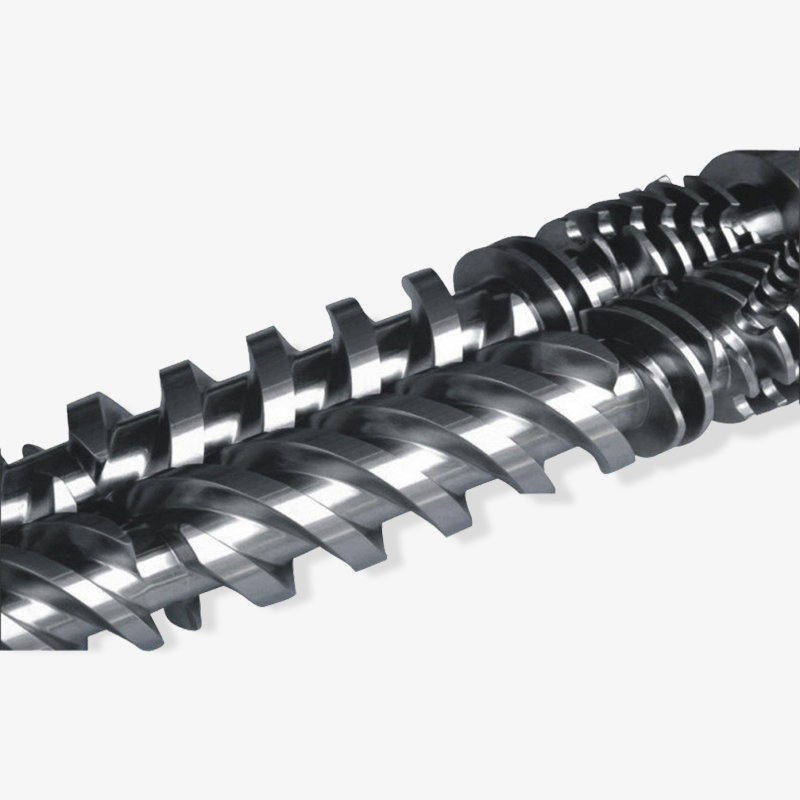
Buying the barrel and screw as a matched set is usually the smarter route. A bimetallic barrel paired with a standard nitrided screw tends to end with the screw failing first, and it can drag the barrel down with it, because hard particles embed in the softened flight and then scour the bore like a lap. Suppliers that treat bimetallic as a material category crossing single screw, conical twin screw, parallel twin screw and planetary constructions can supply the barrel and its matching screw from the same production flow, which removes one layer of tolerance negotiation from the project.
The screw and barrel pairing question
There is a useful technical note on how wear-resistant screw geometry is specified for glass fiber reinforced injection molding, covering flight hardening, compression ratio and the effect of clearance growth on melt quality. Reading that alongside a barrel quotation helps align the two parts of the purchase instead of treating them as separate line items.
If the liner grade does not match the polymer, a bimetallic barrel loses its advantage and you are left with the higher invoice.
Tolerances, Geometry and Interface Details to Put on the Drawing
A bimetallic barrel is a custom part. If the drawing says only bimetallic barrel, bore 90 mm, the supplier has to guess everything else, and the guesses are exactly where problems appear later.
At minimum, the specification should carry:
- Bore diameter and tolerance class, checked against the actual screw rather than the nominal size
- Bore roundness and straightness limits, for example straightness within 0.05 mm per 1000 mm of length
- Liner thickness and minimum remaining wall thickness
- Overall length, flange diameter, bolt circle, locating step and sealing face details
- Feed opening size and position, vent port, and pressure or temperature sensor ports
- Heater band grooves, including groove length and spacing
- Bore surface roughness, typically Ra 0.4 to 0.8 micrometre for extrusion duty
- Liner hardness and bond quality verification, by ultrasonic inspection, a metallographic sample or a test coupon cast with the batch
- Screw clearance at the flight lands, because a barrel cannot be accepted in isolation from the screw it will work with
Two procurement habits save trouble. First, do not allow liner thickness to be trimmed to save cost. A thin liner is cheaper, but it has less margin against bonding stress, and once the alloy is worn through the whole advantage disappears. Second, ask for measured values in the shipping inspection report, not a statement of compliance. Bore measurements at defined positions, hardness readings and runout numbers tell you immediately whether the supplier actually inspects its own output or simply forwards a generic certificate.
A barrel drawing without liner thickness, straightness and bond verification requirements is an open invitation to a short service life.
Bimetallic Barrel vs Nitrided Barrel: Real Cost of Ownership
A bimetallic barrel typically costs between 1.8 and 3 times as much as a nitrided barrel of the same size. That multiple looks significant until it is set against the cost of having a line stand still.
Take a twin screw extrusion line running glass fiber reinforced PA. If a nitrided barrel lasts twelve months, each replacement brings labour, dismantling, realignment, restart and scrap during the ramp back up. If a bimetallic barrel on the same machine runs forty-eight months, the plant buys one barrel in four years instead of four, and it also avoids three unplanned stoppages. Once that arithmetic is written down, the decision usually makes itself.
There are still cases where a nitrided barrel is the sensible choice. Unfilled PE or PP running at moderate temperature, with low filler content and no corrosive additives, wears a bore slowly. Putting a bimetallic liner into that process is paying for margin the line will never use. The judgement hinges on the real formulation, though, and not the ideal one. Many plants start on unfilled resin and begin blending regrind two years later, at which point the wear curve changes completely.
There is also a middle path worth knowing about: using a bimetallic liner in the feed and compression sections where wear is worst, while keeping a less expensive construction in the metering zone. It is not suitable for every geometry, but as a way to control cost on long barrels, it is a legitimate conversation to have with a supplier during quotation.
Calculate the cost per year of service and per avoided stoppage, not the cost per barrel on the invoice.
How to Vet a Bimetallic Barrel Manufacturer, Supplier or Wholesaler
The market for bimetallic barrels includes genuine manufacturing plants and trading companies that resell. Both can deliver usable parts, but you should know which one is in front of you, because lead times, customization and responsibility when something goes wrong all differ.
Questions that separate the two quickly:
- Is the casting or fusing process controlled in house, and can the liner grade be traced to a batch?
- Can the supplier provide hardness results and ultrasonic bond inspection for the liner?
- Is there in-house machining capability, or is the bore finished by a third party after the liner is cast?
- Can the barrel be built to a specific drawing for bore, tolerance and flange dimensions, or only selected from standard sizes?
- What is the realistic lead time for a large custom diameter, given that bimetallic long barrels generally take longer than nitrided parts?
- How are export packing and documentation handled, including material certificates and dimensional reports?
- Which polymer categories has the supplier actually worked with, including filler and fiber content levels?
One question tends to cut through most of the noise: ask the supplier to explain how the liner is bonded and how bond quality is verified. A real manufacturing plant can describe the process and the inspection method without hesitation. A reseller usually cannot answer at that level of detail.
It also helps to look at the width of a supplier's product family. A company that produces single screw barrels, conical twin screw barrels, parallel twin screw barrels, planetary screw barrels, injection molding machine barrels and plastic machine parts is likely to have the machining capacity and the process control to handle a custom bimetallic job, because the tolerances in those other product lines demand it.
Ask a bimetallic barrel supplier to explain the bonding process and the bond inspection method; the answer reveals the type of company you are dealing with.
Installation, Break-In and Bore Inspection Routines
Once a barrel reaches the plant, a handful of decisions determine whether it runs the full expected life or fails early.
- Alignment. Get the screw axis and the barrel bore axis as close as practical, aiming for deviation within 0.05 mm. A barrel that is out of line wears on one side and the screw works against it continuously.
- Heating sequence. Bring the barrel and screw up to temperature before material is introduced. Feeding cold material into a cold barrel is dry friction with extra steps.
- Avoid dry running. Running the screw in an empty barrel grinds metal against metal. Purge with a proper purging compound instead.
- Watch the purging compound. Abrasive purging grades can take material off the liner as readily as they take material off the screw.
- Record baseline bore measurements. Measure the bore at defined positions before installation, and repeat at the same positions at every maintenance window.
- Set a wear limit. Establish an internal rule, such as beginning to plan replacement once bore wear reaches a defined fraction of the original clearance, and review output quality against that number.
Many plants only discover a worn barrel when product dimensions drift or the screw starts to drag. A simple bore measurement routine converts that surprise into a scheduled, planned purchase, which also means the replacement can be ordered before the line is stopped rather than after it has already stopped.
Much of a bimetallic barrel's service life is decided during alignment, warm-up and break-in, not at the moment the liner grade is chosen.
Why Plastic Machinery Builders Source Barrels From Zhoushan Microwave Screw Machinery
Zhoushan Microwave Screw Machinery was founded in 1990 in Zhoushan, Zhejiang, and builds core components for plastics processing machinery, principally screws, barrels and related parts. The company operates a workshop of more than 10,000 square metres with a workforce of over 60 people, and its products ship to markets including the United States, Germany, Dubai, Vietnam and Thailand. Its customers are mainly plastic machinery manufacturing plants, the businesses that assemble screws and barrels into complete extruders and injection molding machines.
The breadth of the product range matters to a purchasing team. Alongside bimetallic screws and bimetallic barrels, the company produces single screw barrels, conical twin screw barrels, parallel twin screw barrels, planetary screws and barrels, injection molding machine screws and barrels, rubber extruder screws, EPE foam extrusion screw and barrel sets, plastic machine parts and accessories, and complete pipe, sheet and profile production lines. That combination means a machinery builder can source a barrel and its matching screw, or an entire conical twin screw assembly, from one supplier instead of coordinating three.
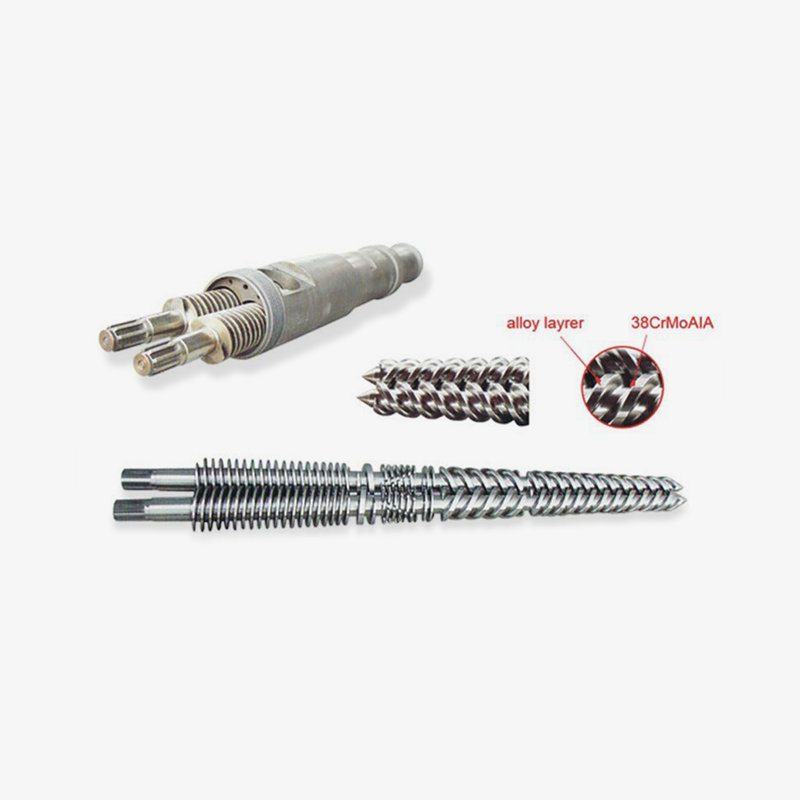 Bimetallic screwBimetallic screw is a high-performance extruder accessories, which are widely used in various injection molding machinery, extrusion machinery, bakelite machinery and ...View Product →
Customization is the other practical difference. The company positions itself around the idea that it can supply either a single component or a complete set of equipment, and it combines precision screw and barrel production with general machining. For machinery builders that regularly need non-standard flanges, unusual bore diameters, modified feed openings, repositioned vents or additional sensor ports, working with a supplier that both casts the liner and machines the bore removes a layer of tolerance mismatch that otherwise shows up at assembly.
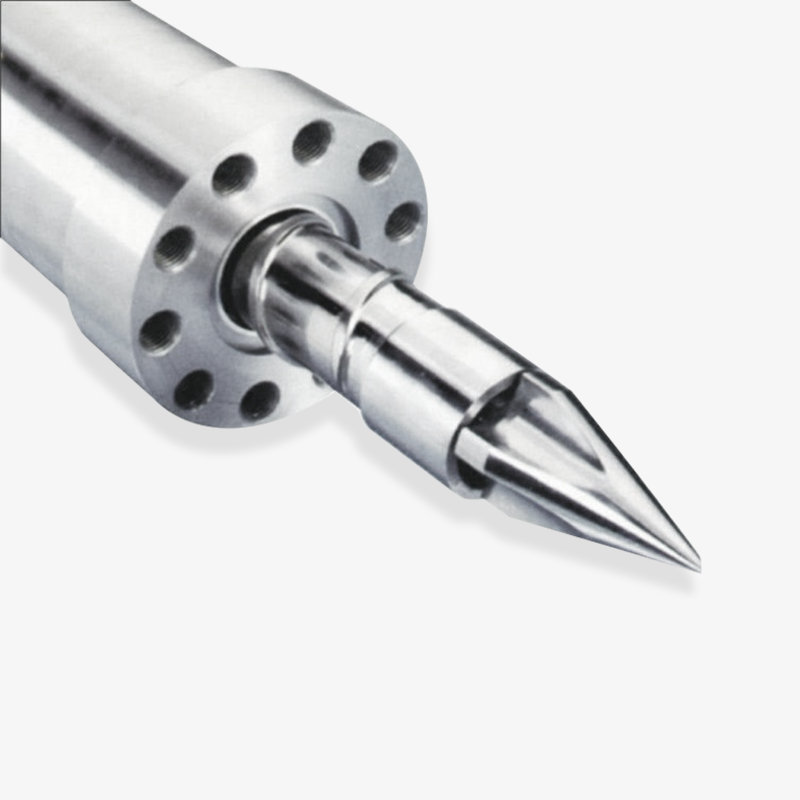 Injection molding machine screw barrelThe screw is the core of the plasticization system, and the plastic raw materials are sheared, compressed, mixed and transported through rotational movement. The desig...View Product →
Injection molding is a good illustration. A molder or machine builder dealing with filled engineering resins needs a screw and barrel set whose wear behaviour is predictable over a long service interval, and the injection molding machine screw and barrel range covers that application directly. The same logic applies on the extrusion side, where bimetallic liners pair with single screw, twin screw and planetary designs to suit different conveying mechanisms and residence times.
The company states that it has become an important mechanical parts supplier for a number of plastic machinery customers in China, which describes a long-term supply relationship rather than a one-off transaction. From a buyer's perspective, that means engaging technical staff during selection and holding specifications steady during production are both worth managing deliberately, because the relationship is intended to continue across multiple machine programs.
A supplier that casts its own liner and machines its own bore can coordinate the barrel, screw and flange tolerances as one matched set instead of three separate purchases.
Frequently Asked Questions About Bimetallic Barrels
What is a bimetallic barrel?
It is a steel barrel with a hard alloy liner fused to the inside of the bore. The outer steel shell provides strength, pressure containment and the mounting dimensions. The alloy liner provides wear resistance and, depending on grade, corrosion resistance. It is used on extruders and injection molding machines as the working partner of the screw.
How long does a bimetallic barrel last compared with a nitrided barrel?
In abrasive duty, a bimetallic liner commonly runs three to six times longer than a nitrided barrel, with the exact figure depending on filler type and loading, liner grade and process temperature. In unfilled, mild duty the difference is much smaller, so the comparison should be based on your actual formulation rather than a general multiplier.
Can a bimetallic barrel be repaired or re-lined?
It depends on wear depth and shell condition. If the wear is still within the liner and the shell is straight with adequate wall thickness, some suppliers can recast the liner. If the shell itself has distorted or the bore has lost too much material, a new barrel is usually more practical. The decisive measurement is how much liner remains.
Is a bimetallic barrel worth it for a small extruder?
It can be, if that small extruder runs a heavily filled compound and downtime is expensive. If it runs unfilled PE or PP and a spare barrel is already on the shelf, a nitrided barrel may be economical for the first few years. The deciding factors are filler content, stop cost and replacement interval, not machine size.
Do bimetallic barrels work with PVC?
Yes, but with a nickel-based liner rather than an iron-based one. Corrosive by-products from PVC attack the grain boundaries, so corrosion resistance is as important as abrasion resistance. The screw should also carry a corrosion-resistant treatment, otherwise the wear simply shifts from the barrel to the screw.
Can the dimensions be customized for an existing machine?
Yes. Bimetallic barrels are normally built to drawing. Before ordering, measure the old barrel and record bore diameter, overall length, flange dimensions and feed opening position, then use those measurements as the basis for the new part. If the old barrel is already oval, do not copy the worn dimension; use the original drawing or the original specification instead.
What should a purchase order for a bimetallic barrel include?
Bore diameter and tolerance, straightness limits, liner grade and minimum thickness, flange and port dimensions, bore roughness, hardness and bond inspection requirements, packing method, and the dimensional report that must ship with the part. Putting all of that on paper gives both sides a reference point if a problem appears later.
Which liner grade should a first-time buyer choose?
Start with the damage mechanism rather than the price list. Filled PE and PP point to an iron-based liner. PVC or halogenated systems point to nickel-based. Heavy glass fiber or high mineral loading points to a carbide reinforced liner. If the process combines abrasion and corrosion, prioritize the corrosion-resistant family and accept a slightly lower hardness.
Choosing a bimetallic barrel comes down to matching your polymer formulation and wear pattern to a liner grade, and then confirming that the supplier can build to your drawing and document what it measured. For PVC and corrosive systems, that means a nickel-based liner. For glass fiber and heavy mineral fill, it points toward a carbide reinforced liner. For ordinary filled PE and PP, an iron-based liner is often enough. After the alloy choice, the questions are about bonding quality, liner thickness, bore tolerances and inspection reports.
If you are specifying a bimetallic screw and barrel set for an extruder or an injection molding machine, the fastest route to a useful quotation is to send the bore diameter, the polymer, the filler type and content, and the current service interval you are getting from the part in the machine. With those four pieces of information, a manufacturer can recommend a liner grade and a matching screw, and you can compare options on cost per year of production rather than on unit price alone.
Further reading on this site:
Selected Bearing Display


 浙公网安备33090202000520号