


 English
 中文简体
中文简体
Author: WeiBo
Date: Aug 04, 2026
Conical Twin Screw Extruder: Types, Features, and Selection Guide
Content
- 1 Conical Twin Screw Extruder: Direct Answer and Product Overview
- 2 Common Types and Key Features of a Conical Twin Screw Extruder
- 3 How It Works: Structure and Plasticization Principle
- 4 Comparing Core Performance Attributes
- 5 Application Scenarios and Selection Guide
- 6 Detailed Comparison of Twin Screw Extruder Configurations
- 7 Torque and Output Behavior Across Screw Speed
- 8 Conical Twin Screw vs Single Screw Extruder Comparison
- 9 Maintenance Guidance
- 10 Frequently Asked Questions
- 10.1 Q1: What materials can a conical twin screw extruder process?
- 10.2 Q2: Why does the extruder use a conical rather than parallel screw shape?
- 10.3 Q3: How often should the screw and barrel wear surfaces be inspected?
- 10.4 Q4: What should buyers check before working with an OEM or ODM factory for this equipment category?
- 10.5 Q5: Can the same machine be used for both pipe extrusion and granulation?
Conical Twin Screw Extruder: Direct Answer and Product Overview
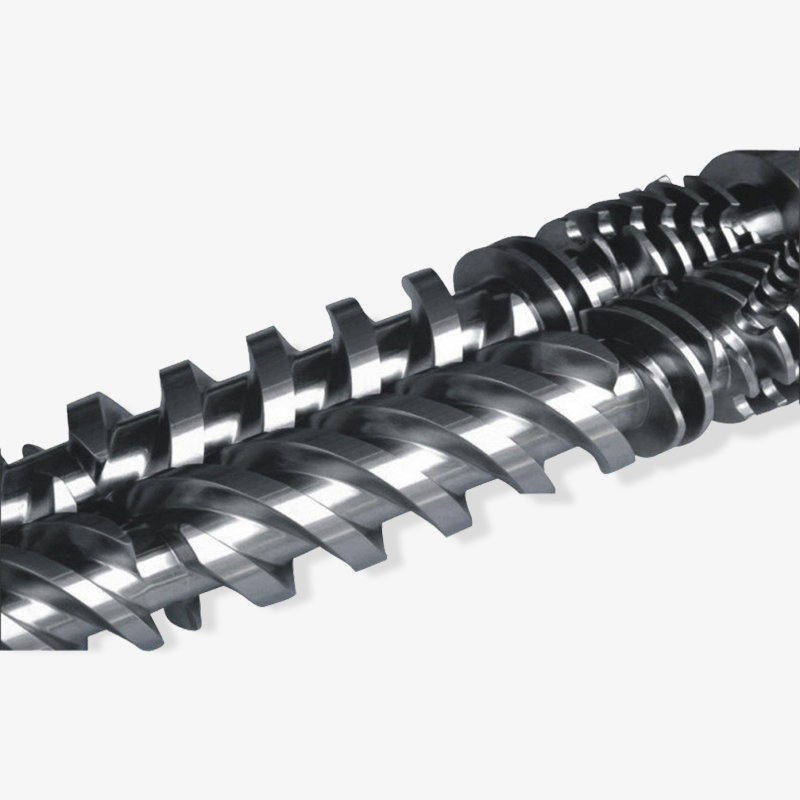
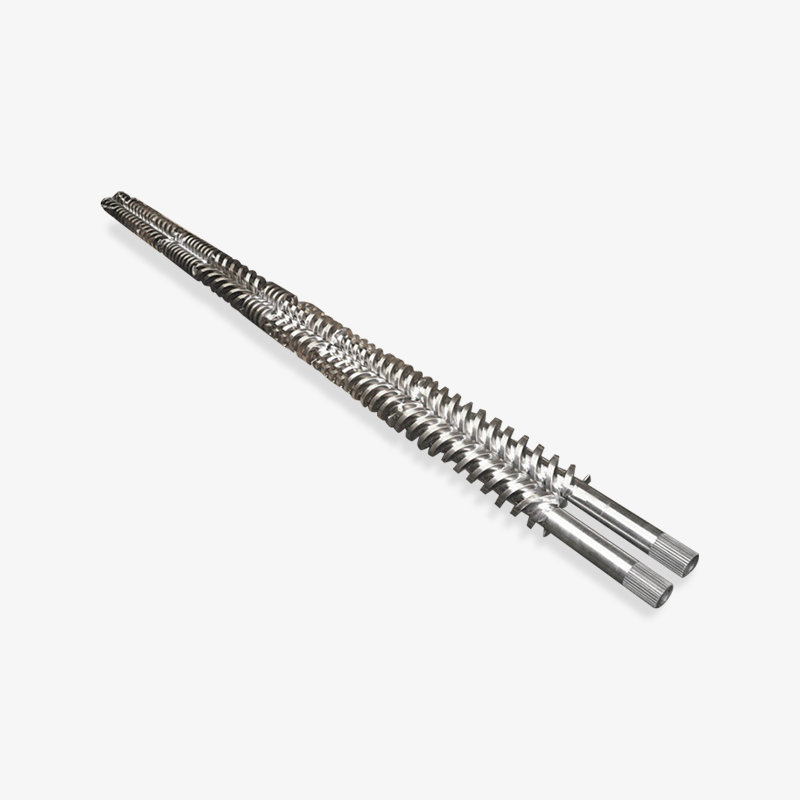
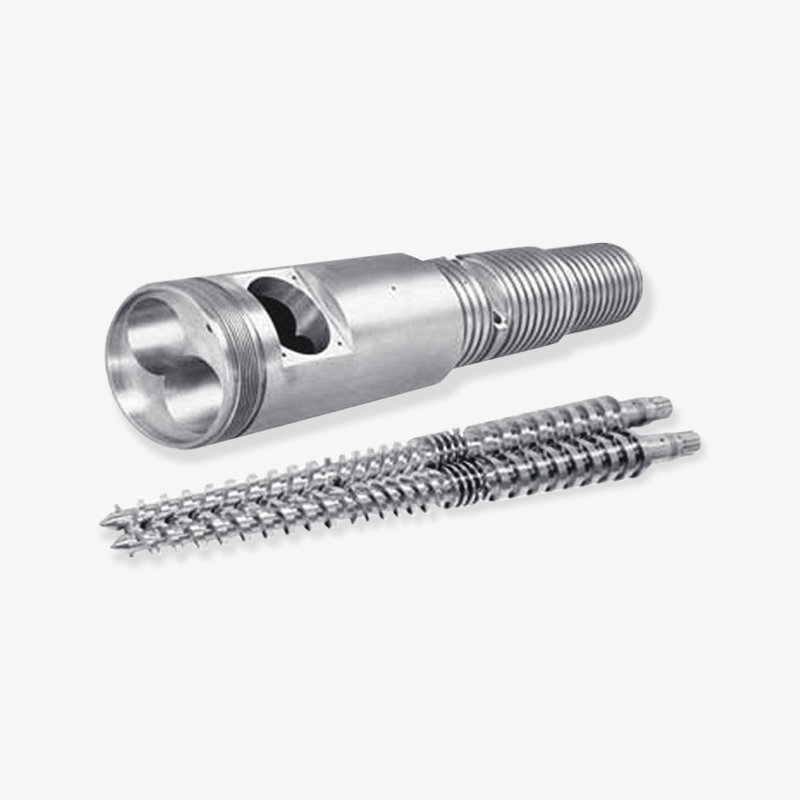
A Conical Twin Screw Extruder is a plastic processing machine built around two intermeshing, counter-rotating screws that taper from a larger diameter at the feed end to a smaller diameter near the die, a shape that allows a larger feed opening while still developing the compression and shear needed to plasticize rigid materials such as hard polyvinyl chloride powder. The tapered screw geometry, combined with a matched barrel bore, keeps the material fully mixed and evenly plasticized as it moves through the barrel, which directly affects the surface quality and dimensional consistency of the finished extrudate. This configuration is widely selected for processing rigid PVC powder directly into pipes, plates, sheets, rods, films, and profiles, and it is also used for plastic modification and powder granulation processes where thorough mixing matters as much as output rate.
This article walks through the common configurations of a conical twin screw extruder, how its internal screw and barrel structure produces consistent plasticization, where each configuration performs best, how to compare machines before selecting one, and how to maintain the equipment so it keeps running reliably across long production cycles. We also cover considerations relevant to distributors and wholesale buyers sourcing plastic processing machinery for pipe, profile, and sheet production lines.
Key takeaway: the tapered twin-screw geometry is what allows a conical extruder to combine a large feed opening with strong compression and mixing, which is central to its use in rigid PVC extrusion.
Common Types and Key Features of a Conical Twin Screw Extruder
Conical twin screw extruders are generally grouped by screw speed range and venting configuration, each suited to a different production requirement. Understanding these categories helps buyers, whether setting up a pipe extrusion line or sourcing through a China manufacturer for plastics processing equipment, match the right configuration to the intended product output.
Standard-Speed Conical Twin Screw Machines
Standard-speed machines are commonly configured for general-purpose PVC pipe and profile extrusion, offering a balance between thorough mixing time and steady throughput. This configuration is a common starting point for buyers producing standard pipe or profile dimensions.
High-Output Conical Twin Screw Machines
Higher screw speed and larger barrel diameter configurations are selected when a production line needs greater throughput, such as larger-diameter pipe manufacturing or higher-volume sheet lines, while still maintaining adequate plasticization quality.
Single-Vent and Double-Vent Barrel Options
Venting configuration affects how effectively moisture and volatiles are removed from the melt during processing. A double-vent barrel design generally supports more thorough degassing, which can be relevant when processing recycled or moisture-sensitive material streams.
- Standard-speed configuration: balanced mixing time and throughput for general PVC extrusion.
- High-output configuration: larger barrel and higher speed for greater production volume.
- Single-vent barrel: simpler structure suited to dry, consistent feedstock.
- Double-vent barrel: enhanced degassing for moisture-sensitive or recycled material.
Key takeaway: screw speed range and venting configuration should be matched to both the target output volume and the moisture sensitivity of the feedstock being processed.
How It Works: Structure and Plasticization Principle
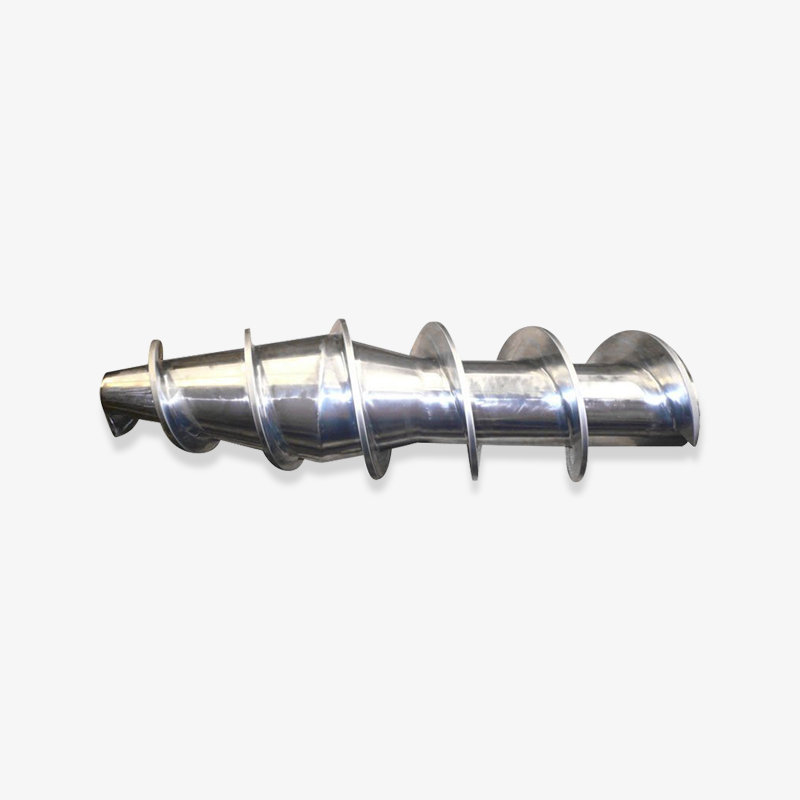
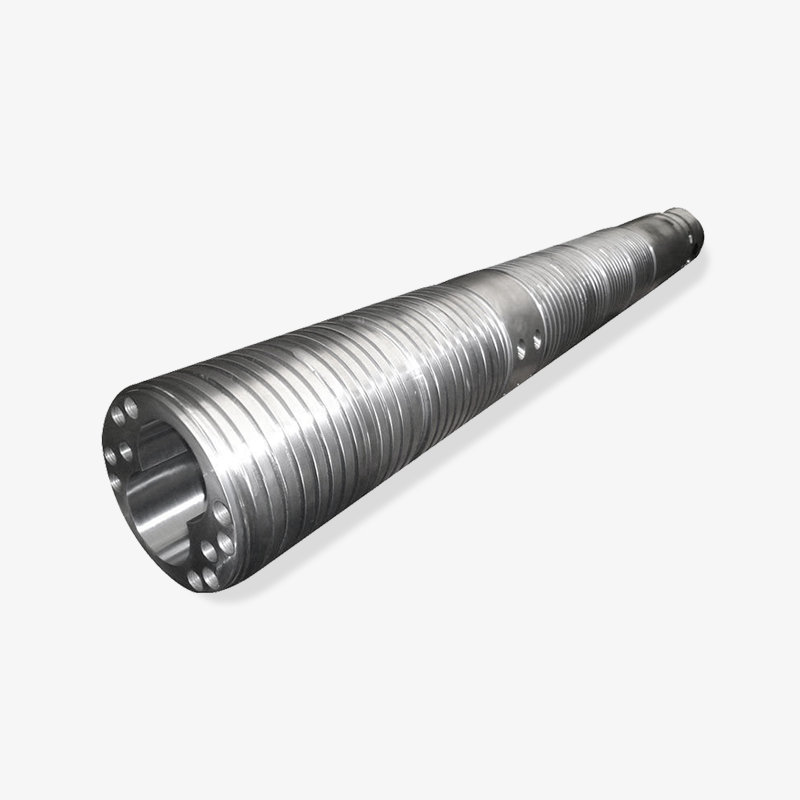
The plasticization principle of a Conical Twin Screw Extruder relies on two intermeshing screws rotating in the same direction within a matched conical barrel bore. As material enters the larger-diameter feed end, the intermeshing flights carry it forward in a positive-displacement manner, meaning the material is pushed along predictably rather than relying solely on friction against the barrel wall. As the screws taper toward the smaller-diameter discharge end, the channel volume decreases, which compresses the material and generates the shear and heat needed to melt and homogenize it before it reaches the die.
The transmission system, typically a gearbox paired with thrust bearings, supports the significant axial and radial loads generated during this compression process, which is why transmission quality has a direct effect on long-term reliability. A well-designed gearbox with smooth-running components reduces wear and failure rates, extending the service life of the equipment. Barrel heating and cooling zones along the length of the machine allow operators to control the temperature profile precisely, supporting consistent plasticization across different material formulations and production speeds.
| Component | Primary Function |
|---|---|
| Tapered intermeshing twin screws | Conveys, compresses, and mixes material along the barrel |
| Conical barrel bore | Matches screw taper to maintain consistent compression |
| Gearbox and thrust bearings | Supports axial and radial loads from screw rotation |
| Barrel heating and cooling zones | Controls temperature profile for consistent plasticization |
Key takeaway: positive-displacement conveying from the intermeshing screws, combined with a matched conical barrel, is what allows the extruder to compress and plasticize material predictably along its length.
Comparing Core Performance Attributes
Before looking at the chart below, it helps to understand what buyers typically weigh against each other when comparing conical twin screw extruders. Mixing uniformity and plasticization efficiency tend to be the two attributes that most directly affect finished product quality and dimensional consistency. Output stability and wear resistance matter more for continuous production lines running extended shifts. Energy efficiency and maintenance convenience round out the comparison, influencing operating discipline and long-term equipment upkeep. The chart illustrates typical relative priority levels commonly assigned to these attributes when specifying plastic extrusion machinery, expressed on a 0–100 scale for comparison purposes.
The chart shows mixing uniformity and plasticization efficiency receiving the highest relative emphasis, which reflects why screw geometry and barrel matching are usually the first specifications a process engineer reviews. Output stability follows closely, since fluctuations in feed rate or melt temperature can directly translate into dimensional variation in the finished pipe, sheet, or profile. Wear resistance sits close behind, particularly relevant for continuous multi-shift operations where screw and barrel surface hardness affects how often components need replacement. Energy efficiency becomes more important for high-volume operations, where motor load and heating cycles accumulate into a meaningful share of overall operating discipline over a production run. Maintenance convenience ranks lowest among these six attributes in overall priority, though it still supports the wear resistance and output stability scores above it by determining how quickly worn components can be inspected and addressed. This pattern suggests that a well-specified Conical Twin Screw Extruder should prioritize screw and barrel matching first, then output consistency and wear resistance, before fine-tuning for energy use or service convenience. Buyers comparing machines from different suppliers can use this same attribute set as a practical checklist during technical evaluation. Distributors sourcing from a China supplier or China factory often request trial runs on their own material formulation specifically to verify these attributes under real production conditions rather than relying on specification sheets alone. For OEM and ODM programs, this attribute framework also gives procurement teams a consistent way to compare candidate factories before committing to an equipment order. Ultimately, no single attribute defines machine quality in isolation; it is the combination of screw design, transmission quality, and barrel construction that determines how a conical twin screw extruder performs across a full production campaign.
Application Scenarios and Selection Guide
Selecting the right conical twin screw extruder depends heavily on the target product and feedstock. The table below separates two common application scenarios so buyers can quickly identify which specifications matter most for their situation.
PVC Pipe, Profile, and Sheet ExtrusionStandard-speed configuration for consistent wall thickness Precise barrel temperature control for rigid PVC processing Durable screw and barrel surface treatment for continuous runs Matched die design for pipes, plates, sheets, rods, or profiles |
Plastic Modification and Powder GranulationDouble-vent barrel for effective degassing of additives Strong mixing capability for filler or additive dispersion Adjustable screw speed for formulation flexibility Stable output rate for consistent pellet or granule sizing |
Beyond these two broad categories, buyers should also weigh barrel diameter, motor power, and available control system features such as automated temperature regulation. A durable and reliable transmission system matters more for facilities running continuous multi-shift production. For plastics processing buyers, working with a professional OEM manufacturer or ODM manufacturer allows customization of screw geometry, barrel venting, and control configuration to match a specific material formulation or product line.
Key takeaway: match screw speed range and venting configuration to the target product and feedstock first, then refine the choice using secondary specifications like control system features.
Detailed Comparison of Twin Screw Extruder Configurations
The table below summarizes how the main configurations described earlier differ across the specifications buyers most often compare when sourcing a Conical Twin Screw Extruder for a plastic processing line.
| Configuration | Screw Speed Range | Best Suited For | Maintenance Level |
|---|---|---|---|
| Standard-speed single-vent | Moderate | General PVC pipe and profile extrusion | Moderate |
| High-output large-diameter | Higher | Large-diameter pipe, high-volume sheet lines | Moderate to higher |
| Double-vent degassing | Moderate | Recycled or moisture-sensitive material | Moderate |
| Modification and granulation setup | Adjustable | Compounding, filler dispersion, granulation | Moderate |
Key takeaway: no single configuration is universally best; the right choice depends on target product dimensions, feedstock characteristics, and required output volume.
Torque and Output Behavior Across Screw Speed
A well-understood characteristic of twin screw extrusion is that output rate does not increase in a perfectly straight line as screw speed rises. At lower screw speeds, output tends to climb steadily and predictably, since the screws are operating well within the torque capacity of the gearbox and drive system. As speed increases further, output continues to rise, but the rate of increase can begin to flatten as residence time in the barrel shortens and the balance between mixing quality and throughput starts to shift. The line chart below presents an illustrative output-versus-speed pattern that reflects this general engineering relationship rather than data from any single tested machine. It is intended to help buyers understand why running near the top of a machine's rated speed range does not always deliver a proportional gain in usable output.
The curve rises steadily across the lower portion of the speed range, showing output increasing in a fairly consistent relationship with screw speed while residence time remains long enough to fully plasticize the material. Moving into the middle portion of the range, the climb continues but the spacing between data points begins to narrow slightly, reflecting the point where residence time starts to shorten and mixing efficiency becomes a more active constraint on how much additional output speed can deliver. Toward the upper end of the range, the curve flattens further, illustrating diminishing returns where additional screw speed produces a smaller output gain relative to the same speed increase at lower ranges. This general pattern is why process engineers often identify an optimal operating speed band rather than simply running a conical twin screw extruder at its maximum rated speed at all times. Operating too far into the flattened upper region can also increase mechanical stress on the gearbox and screws without a proportional benefit in output, which affects long-term wear resistance and maintenance frequency. Conversely, operating too conservatively in the lower range leaves throughput capacity unused relative to what the machine's design can support. Engineers commonly reference this general output-versus-speed relationship when tuning a production line for a specific product and material formulation rather than adjusting speed arbitrarily. Recognizing this pattern helps both process engineers and equipment suppliers, including a China manufacturer offering multiple screw and barrel configurations, recommend an operating range that balances throughput with plasticization quality and equipment longevity. This is particularly relevant for buyers evaluating a Conical Twin Screw Extruder for continuous multi-shift production, where the operating point chosen affects both output and maintenance costs over the equipment's service life.
Conical Twin Screw vs Single Screw Extruder Comparison
A frequent question among process engineers is how a conical twin screw extruder compares with a single screw extruder across practical processing concerns rather than just machine cost. The radar chart below compares five dimensions that matter most in this decision: mixing capability, feeding stability for powder material, output consistency, wear resistance, and energy efficiency. Each dimension is scored on a relative scale rather than an absolute measurement, since actual performance varies by specific model and manufacturer. The comparison is intended as a general orientation guide rather than a claim about any particular product. Reading the chart from the center outward, a larger shaded area on a given axis indicates a stronger relative advantage on that dimension.
The shaded areas show the conical twin screw configuration holding a clear relative advantage on mixing capability, powder feeding stability, and output consistency, which aligns with why it is specifically favored for processing rigid PVC powder directly rather than requiring pre-compounded pellets. Wear resistance shows a closer comparison between the two machine types, since both depend heavily on screw and barrel surface treatment quality regardless of screw count. Energy efficiency also appears fairly close, with the specific balance depending more on motor sizing and control system tuning than on the number of screws alone. This general pattern is why single screw extruders remain common for simpler pellet-fed applications, while conical twin screw extruders are more often specified for powder-fed rigid PVC processing where positive-displacement conveying and thorough mixing are essential to product quality. For processors handling a mix of material types, understanding this distinction helps match the right extruder type to each product line rather than defaulting to one configuration for every application. Buyers evaluating a Conical Twin Screw Extruder against single screw alternatives should weigh their feedstock form and required mixing intensity as primary decision factors. It is worth noting that individual machines vary by manufacturer and screw design, and buyers should always confirm specific performance details with the supplier rather than assuming every unit performs identically across these five dimensions.
Maintenance Guidance
Proper maintenance extends the working life of a conical twin screw extruder and helps preserve consistent output quality across long production campaigns. Regular inspection of screw and barrel wear surfaces helps identify gradual clearance changes before they begin to affect mixing quality or output consistency, since increased clearance between the screw flights and barrel wall reduces the positive-displacement conveying effect the design relies on. Gearbox oil should be checked and changed according to the manufacturer's maintenance schedule, since the transmission system carries substantial load during continuous operation and clean lubrication directly supports smooth running and reduced wear. Heating and cooling zone sensors and controllers should also be checked periodically to confirm the temperature profile along the barrel remains accurate, since drift in temperature control can affect plasticization quality even when the mechanical components are in good condition.
- Inspect screw and barrel wear surfaces on a scheduled interval.
- Check and change gearbox lubrication according to the maintenance schedule.
- Verify barrel heating and cooling zone sensors remain accurate.
- Clean vent ports regularly to maintain effective degassing performance.
- Record output and temperature data over time to catch gradual performance drift early.
Behind many of these design and construction details is the manufacturing expertise built by companies specializing in plastic processing machinery. Zhoushan Microwave Screw Machinery Co., Ltd is a professional China screw barrel manufacturer and screw extruder factory, operating more than 10,000 square meters of production workshop with more than 60 employees. Since its founding in 1990, the company has been committed to the production and research of plastic machinery, while introducing foreign screw machinery technology and technique into its manufacturing process. This kind of manufacturing foundation supports both direct equipment lines and OEM and ODM partnerships for buyers sourcing a Conical Twin Screw Extruder as a China Brands partner or private-label equipment supplier.
Key takeaway: scheduled inspection of screw wear and gearbox lubrication are the two habits most likely to preserve output consistency and equipment longevity over the extruder's service life.
Frequently Asked Questions
Q1: What materials can a conical twin screw extruder process?It is commonly used for rigid PVC powder and can also process various thermoplastic materials, directly extruding pipes, plates, sheets, rods, films, and profiles, as well as supporting plastic modification and powder granulation processes. |
Q2: Why does the extruder use a conical rather than parallel screw shape?The tapered shape allows a larger feed opening at the intake end while still developing strong compression toward the discharge end, which supports feeding powder material directly without requiring pre-compounded pellets. |
Q3: How often should the screw and barrel wear surfaces be inspected?Inspection intervals generally follow the manufacturer's recommended maintenance schedule, with many operators checking wear clearances periodically as part of routine preventive maintenance rather than waiting for output quality to decline. |
Q4: What should buyers check before working with an OEM or ODM factory for this equipment category?Buyers typically review screw and barrel material quality, gearbox specification, and the factory's quality control process, and many request trial runs using their own material formulation to evaluate output and mixing performance before confirming an order. |
Q5: Can the same machine be used for both pipe extrusion and granulation?Configuration and die setup differ between pipe or profile extrusion and granulation applications, so while the underlying screw and barrel platform can support both, the downstream tooling is typically matched to a specific application. |
Conical Twin Screw Extruder, twin screw extruder, PVC pipe extrusion machine, plastic extrusion machinery manufacturer, China manufacturer, China factory, China supplier, China wholesale, OEM manufacturer, ODM manufacturer, OEM factory, ODM factory, OEM supplier, ODM supplier, wholesale supplier, wholesaler, exporter, durable extrusion machine, reliable machinery supplier, professional extruder manufacturer, adjustable screw speed, multifunction extrusion equipment, China Producer, China Brands, from China, high quality extruder
Selected Bearing Display


 浙公网安备33090202000520号