


 English
 中文简体
中文简体
Author: WeiBo
Date: Sep 15, 2026
Extruder Meaning: Types, Working Principles, Applications & Selection Guide
Content
- 1 Extruder Meaning: Beyond the Dictionary Definition
- 2 How an Extruder Works: Working Principle and Core Components
- 3 Main Types of Extruders Used in Industry
- 4 Extruder Applications across Industries
- 5 How to Choose an Extruder: Selection Criteria for Buyers
- 6 Extruder Maintenance: Protecting the Screw and Barrel
- 7 Extruder Manufacturers, Suppliers, and Wholesalers: What to Look For
- 8 Frequently Asked Questions about Extruder Meaning and Selection
- 8.1 What does extruder meaning cover in a simple sentence?
- 8.2 Is an extruder the same as an injection molding machine?
- 8.3 What is the difference between a single screw and a twin screw extruder?
- 8.4 What materials can an extruder process?
- 8.5 How long does an extruder screw and barrel last?
- 8.6 What does the L/D ratio mean in an extruder?
Extruder meaning begins with one simple idea: an extruder is a machine that pushes material through a die to shape it continuously. In plastics processing, that usually means feeding polymer pellets into a heated barrel, melting them with a rotating screw, and forcing the melt through a fixed opening to form pipe, film, sheet, profile, or pellets. The definition sounds short, but the phrase covers a wide family of machines, from a compact rubber extruder on a factory floor to a 40:1 parallel twin screw compounding line. Engineers, purchasing teams, and maintenance crews each interpret extruder meaning through the machine they operate, so it is worth breaking the term down from several angles.
This guide explains extruder meaning in practical terms: the dictionary origin, the working principle, the main screw and barrel configurations, the applications that rely on extrusion equipment, and the selection and maintenance considerations that matter to buyers. We also draw on the experience of Zhoushan Microwave Machinery, a Chinese screw and barrel manufacturer founded in 1990, to show how the definition translates into real-world supplier decisions. By the end, you should be able to explain what an extruder is, point out the parts that determine its performance, and ask the right questions when you compare machines or spare parts.
In short, extruder meaning in industrial practice is the continuous forming of a molten or softened material by screw-driven pressure through a die, and the screw and barrel combination inside the machine determines most of its capability and cost.
Extruder Meaning: Beyond the Dictionary Definition
Dictionaries define an extruder as "a machine that shapes material by forcing it through a die." That phrase captures the essential motion, but it leaves out the conditions inside the machine. A typical plastic extruder does not simply push cold pellets through a hole. It must feed the material, compact it, melt it with friction and external heat, mix any additives or colorants, build pressure, and then push the homogeneous melt through a die that creates the final cross-section. In short, extruder meaning in equipment design is shaped by the screw, the barrel, the heating system, the gearbox, and the die together, not by the die alone.
The word has a long linguistic history. "Extruder" comes from the Latin extrudere, a combination of ex (out) and trudere (to push). That origin explains why the same word appears in very different fields. In the food industry, an extruder cooks and shapes snacks and animal feed. In ceramics and metal processing, extruders force clay or heated billets through dies. In 3D printing, a small extruder feeds a thin strand of filament into a hot nozzle. Each of these devices shares the same principle: apply pressure to a material and let a shaped opening determine the result.
Within plastic processing, the term carries some specific assumptions that are useful to know. First, an extruder is a continuous machine, while an injection molding machine is cyclic. Second, an extruder refers to the whole machine, while the terms "extruder screw" and "extruder barrel" refer to the two most critical components inside it. Third, the output of an extruder, often called the extrudate, can be anything from a finished pipe to a semi-finished sheet that goes to further processing. Keeping these distinctions in mind makes it much easier to communicate with machinery suppliers, because the same word appears in product catalogs, process documentation, and maintenance manuals with slightly different shades of meaning.
The practical definition of an extruder therefore depends on context: for a machine builder it is a complete processing line, for a component maker it is the screw and barrel assembly, and for a plant operator it is the equipment that turns raw material into a salable product.
How an Extruder Works: Working Principle and Core Components
Once you know what an extruder is, the next layer of extruder meaning is how it converts solid polymer into a continuous melt. The process follows the same logical sequence in nearly every screw-driven extruder. The screw rotates inside a close-fitting barrel, creating mechanical friction while being heated externally. The melted polymer then accumulates at the barrel head and is forced through the die gap.
The Extrusion Process Step by Step
- Feeding - Material enters the barrel through a hopper, either by gravity or with a force feeder. The feed throat is usually water-cooled to prevent premature melting and bridging.
- Conveying and compression - The screw channel carries material forward. As the channel depth decreases, the material compresses, expels air, and starts to soften.
- Melting and plasticizing - Frictional heat from screw rotation plus barrel heater bands melt the polymer. Barrier flights or mixing elements improve melt uniformity.
- Metering and pressurizing - The final screw section controls the output rate, smooths pressure fluctuations, and delivers a consistent melt temperature to the head.
- Die forming - The melt passes through screen packs, a breaker plate, and then the die, which gives the extrudate its final cross-section and size.
- Cooling and downstream handling - After the die, the product is calibrated, cooled, pulled, cut, or wound, depending on the application.
Core Components of an Extruder
Every extruder, regardless of size or manufacturer, contains the following main parts. Understanding their roles helps maintenance staff and buyers compare machines with confidence.
| Component | Function | Impact on Product Quality |
|---|---|---|
| Screw | Conveys, compresses, melts, and mixes the material | Determines output, melt quality, and energy consumption |
| Barrel | Surrounds the screw and transfers heat | Affects temperature control and screw wear protection |
| Heating and cooling system | Maintains the required temperature profile | Prevents degradation and ensures melt consistency |
| Gearbox and drive motor | Rotates the screw at the required speed and torque | Sets maximum throughput and torque stability |
| Breaker plate and screen pack | Filters contamination and builds pressure | Improves melt cleanliness and mixing |
| Die | Forms the extrudate into the desired shape | Defines dimensional accuracy and surface finish |
For buyers and engineers, the screw and barrel deserve special attention. These two parts wear against each other under high temperature and pressure, and their alloy, heat treatment, and surface hardening determine how long an extruder can run before maintenance is needed. A manufacturer like Microwave Machinery that produces both the screw and the barrel can control the fit, material selection, and surface treatment as a matched system, which is a practical advantage when replacing components on an existing line.
Screw Length-to-Diameter Ratio: A Key Specification
Among the specifications that define extruder meaning in engineering terms, the length-to-diameter ratio of the screw deserves special attention. The L/D ratio compares the working length of the screw to its diameter, and it directly influences how much melting, mixing, and pressurizing the screw can deliver. A higher L/D value normally gives a longer residence time and better plasticizing, which is why high-output and compounding lines tend to use longer screws. Different screw configurations have evolved around different L/D ranges, and reading them correctly helps you compare supplier datasheets. The bar chart below summarizes typical L/D ratios for five common extruder screw configurations.
Typical L/D Ratio by Screw Configuration
Planetary screw 18:1
Conical twin screw 22:1
Single screw general 25:1
Single screw pipe or film 30:1
Parallel twin compounding 40:1
Reading the chart from the bottom up reveals a clear logic behind extruder meaning in machine design. The planetary configuration has the shortest L/D because its rolling spindles distribute stress over a large surface, so it does not need a long barrel to achieve good melt quality. The conical twin screw also stays compact, which suits its typical role of plasticizing rigid PVC at a low processing temperature. A general purpose single screw operates at 25:1 because that geometry gives a dependable balance for most pellets you will feed it. When the application demands higher melt quality, the single screw length extends to 30:1, as seen in pipe and film lines. The parallel twin screw at 40:1 represents the other extreme: the long barrel provides multiple mixing zones and allows feed ports to be positioned along the barrel. In practice, the L/D ratio also affects installation floor space, barrel heating cost, and screw removal procedures. A longer screw means more surface contact, which increases torque requirements from the gearbox. It also means the barrel manufacturer must control straightness over a greater length, which is why precision machining capacity matters when ordering long barrels. This is one reason experienced buyers do not simply request the largest L/D available. They specify the L/D that matches the material, the screw profile, and the downstream equipment. That kind of matching is exactly where a screw and barrel manufacturer earns its value. The next time a supplier quotes an extruder or a replacement barrel, you will know that the L/D number is more than a dimension; it is a statement of how much work the machine is designed to do.
The working principle of an extruder can be summarized as feed, compress, melt, meter, and form; every component between the hopper and the die exists to make one of those five steps more stable.
Main Types of Extruders Used in Industry
The extruder family is usually categorized by screw geometry, and each type serves a different operating niche. Knowing these categories deepens your understanding of extruder meaning and helps when you read a manufacturer's product list.
Single Screw Extruders
Single screw extruders are the most common configuration in plastic processing. One screw rotates in a smooth barrel, and the material moves forward through spiral channels. This design is economical, mechanically simple, and reliable for processing well-compounded pellets. It dominates applications like pipe extrusion, profile extrusion, film blowing, and sheet casting, where consistent output and temperature are more important than intense mixing. A single screw barrel for extruder applications is typically matched to the polymer type, the output rate, and the L/D ratio selected by the process engineer.
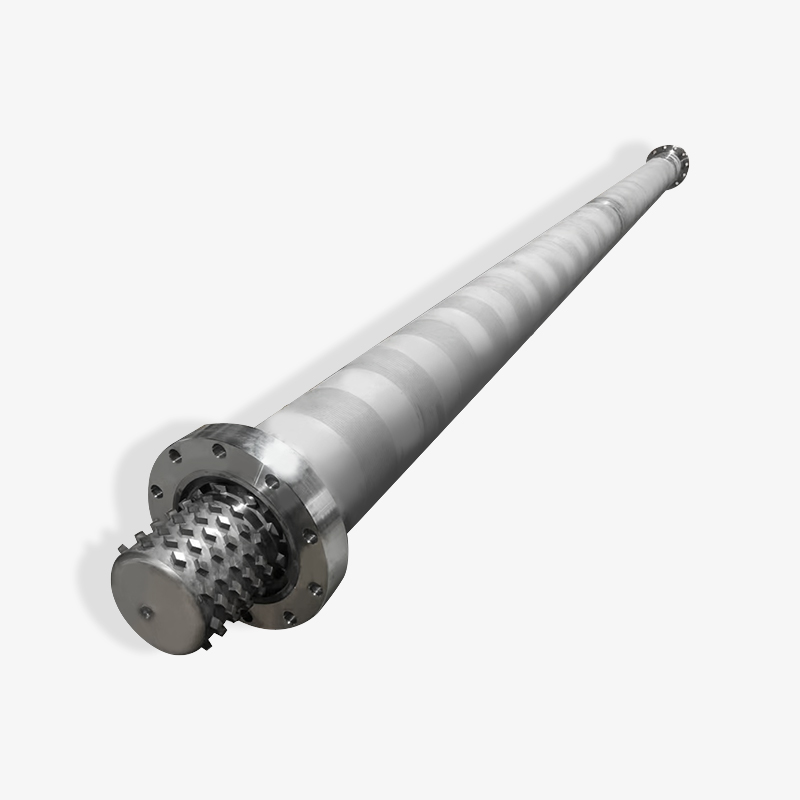
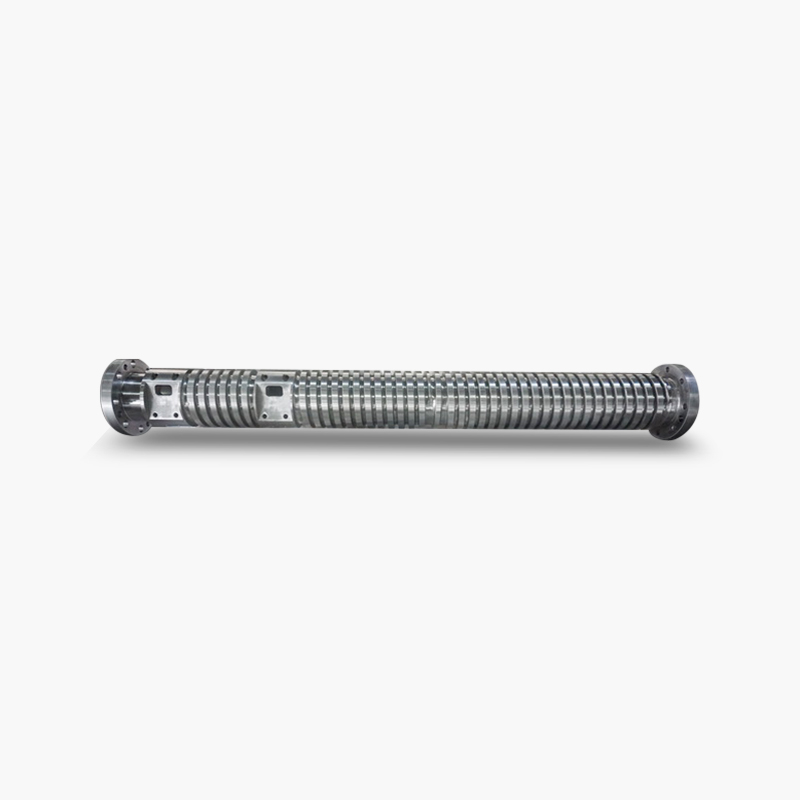 Single Screw Barrel for Extruder with Modular DesignThis barrel suits standard extrusion processes like pipe, profile, and film. Its modular build simplifies maintenance, while alloy steel screws and precise temperature control support consistent melting and efficient output.View Product →
Twin Screw Extruders
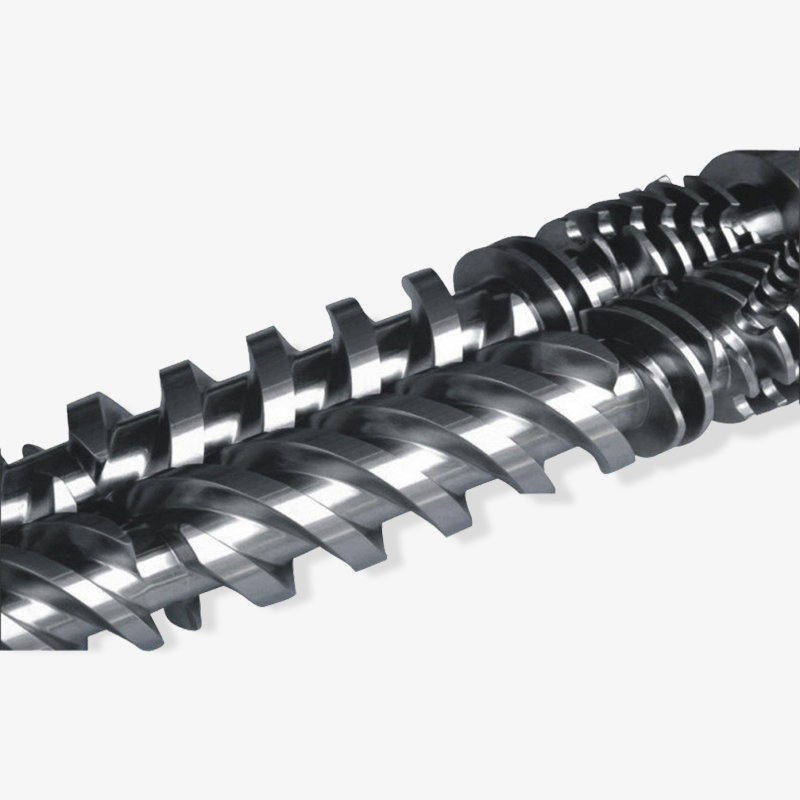
Twin screw extruders use two parallel or conical screws running side by side. They are further divided into co-rotating and counter-rotating types, and into intermeshing and non-intermeshing pairs. Co-rotating parallel twin screws are the workhorses of compounding, masterbatch production, and devolatilization because they generate controlled shear and self-cleaning action. Conical twin screws have a wider root at the feed end and a smaller diameter at the discharge end, which gives a high compression ratio without over-densifying the material; they are classic choices for PVC pipe and profile lines. The conical twin screw and barrel assembly is designed to handle the low shear sensitivity of PVC while maintaining stable melt delivery to the die.
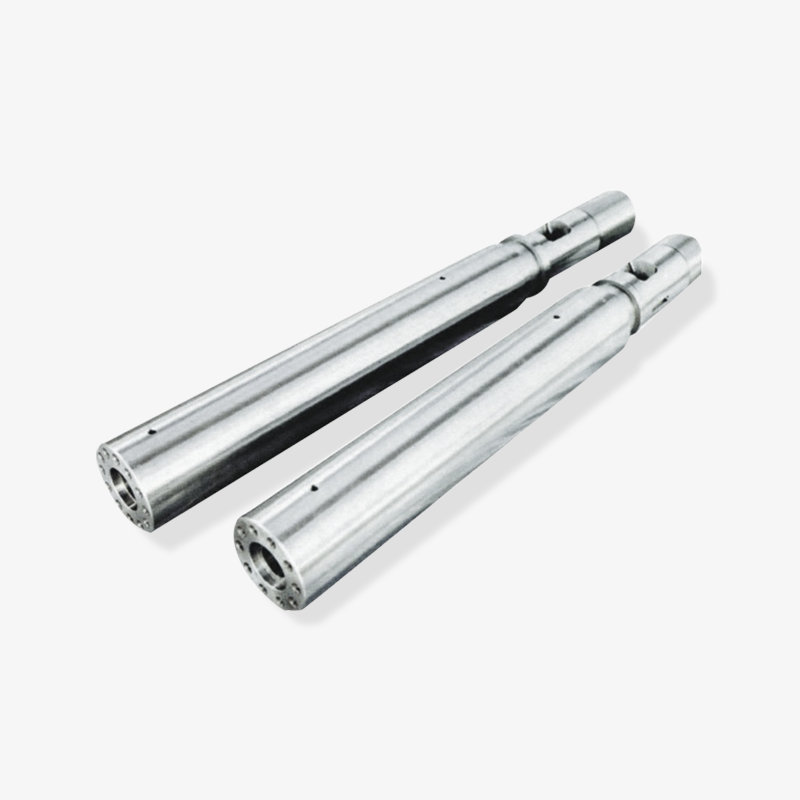
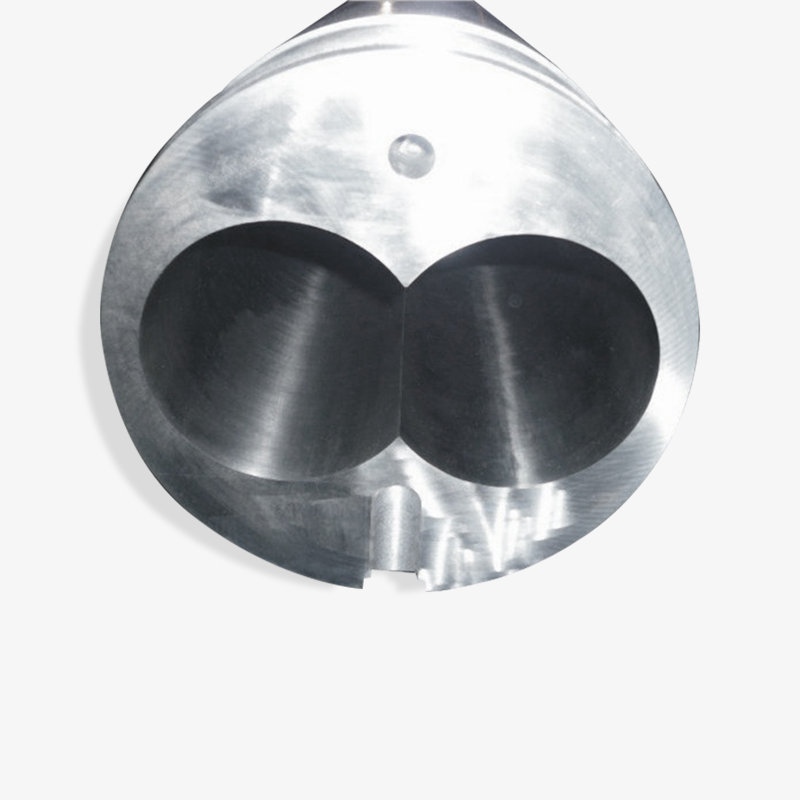 Conical Twin Screw and Barrel Assembly for PVCEngineered for low-shear processing, this conical twin screw and barrel delivers stable melt to the die. It offers high compression ratio and even mixing, making it a reliable choice for PVC pipe and profile lines.View Product →
Planetary Screw Extruders
A planetary screw extruder combines one central main screw with several planetary screws arranged around its circumference. The planetary spindles roll between the main screw and a grooved barrel, creating large surface contact and gentle shear. This arrangement is excellent for heat-sensitive materials, especially rigid PVC and other compounds that degrade under high shear. Because the mixing action happens across many small contact points, the melt temperature remains low, and additives are distributed very evenly.
Ram and Piston Extruders
Ram extruders and piston extruders do not use a rotating screw. They push material with a reciprocating ram, which is useful for ultra-high-molecular-weight polymers, rubber preforms, and certain food pastes that cannot tolerate screw mixing. Their output is less uniform than screw machines, but they handle difficult materials reliably and are often found in specialized production lines where pressure, not mixing, is the main requirement.
Comparison of Extruder Types
The table below gives approximate reference ranges for each configuration. Actual values depend on the material, screw design, and line setup, so use it as a starting point rather than a purchasing specification.
| Type | Common Screw Speed | Typical L/D | Best Suited For |
|---|---|---|---|
| Single screw | 20-120 rpm | 25-30:1 | Pipe, profile, film, sheet, standard pellets |
| Parallel twin screw | 200-600 rpm | 32-48:1 | Compounding, masterbatch, devolatilization |
| Conical twin screw | 10-60 rpm | 18-25:1 | PVC pipe, profiles, sheet |
| Planetary screw | 10-50 rpm | 16-20:1 | Heat-sensitive materials, PVC compounds |
| Ram extruder | Not screw-driven | Not applicable | UHMWPE, rubber preforms, pastes |
The type of extruder you need is determined less by the brand and more by the material, the required shear rate, and the downstream product shape; that is why suppliers ask about your recipe before they quote a machine.
Extruder Applications across Industries
Extruder meaning remains abstract until you link it to actual products. The machine is used to produce almost every semi-finished plastic article in continuous form, and it also serves the rubber, metal, ceramic, and food industries in adapted versions. The common thread is always the same: a material is forced through a die and takes on a fixed cross-section.
- Pipes and profiles - PVC, PE, and PP pipes for water supply, drainage, and gas distribution, plus window profiles, door frames, and decorative trims.
- Film and sheet - Blown film for packaging, cast film, and thermoforming sheet for trays, cups, and blisters.
- Compounding and pelletizing - Twin screw lines that mix additives, fillers, and colorants into homogeneous pellets.
- Foam products - EPE pearl cotton foam sheet, XPS insulation board, and other chemically blown foams.
- Wire and cable - Extrusion coating that applies insulation and jacketing layers onto conductor cores.
- Rubber products - Rubber extruders feed strip-shaped or profiled blanks before vulcanization.
- Food and feed - Cooking extruders shape snacks, breakfast cereals, and pet food.
- 3D printing - A small filament extruder melts and deposits plastic layers.
In foam extrusion, for instance, a dedicated EPE foam extrusion screw and barrel is designed with special mixing and melt-cooling geometry to control the gas phase inside the melt. That detail shows why generic extruder meaning is not enough when selecting spare parts: the screw geometry must match the process chemistry, not just the machine model.
Application Areas and Typical Screw Configurations
The following table offers a quick reference for which extruder type is commonly selected in different product segments. Real machine designs vary, so treat the values as industry orientation rather than a final engineering calculation.
| Application | Typical Output | Common Screw Type | Critical Process Requirement |
|---|---|---|---|
| Water pipe | 200-1000 kg/h | Single screw or conical twin | Stable thickness, low gel count |
| PVC window profile | 100-500 kg/h | Conical twin screw | Even fusion, low degradation |
| Compounding masterbatch | 500-3000 kg/h | Parallel twin screw | High dispersion, self-cleaning |
| EPE foam sheet | 80-300 kg/h | Special single screw with mixing pins | Closed-cell structure, melt cooling |
| Rubber hose preform | 50-400 kg/h | Rubber extruder screw | Low temperature rise, uniform shape |
Every extrusion application translates into a specific screw and barrel design; pipes, films, foams, and compounds look similar in a general diagram but require very different screw geometry in practice.
How to Choose an Extruder: Selection Criteria for Buyers
Choosing an extruder is a technical and economic decision. Buying teams often focus on price and delivery, while production engineers focus on melt quality and stability. A complete selection process should satisfy both sides. The rules below apply whether you are buying a complete extrusion machine or a replacement screw and barrel set.
The Five Factors That Drive Selection
- Material type - The polymer family, additives, and required processing window determine the screw geometry and barrel material.
- Output rate - Measured in kilograms per hour, not motor power, because screw design and barrel volume set the real limit.
- Final product geometry - Pipe, film, profile, sheet, and pellets each impose different die, cooling, and pulling requirements.
- Wear environment - Abrasive fillers, recycled material, and high service temperatures accelerate screw and barrel wear.
- Power and infrastructure - Available voltage, cooling water, compressed air, and floor space all affect the final machine choice.
Reference Framework for Comparing Supplier Proposals
When a supplier sends you a quotation, the technical sheet usually includes the following parameters. The cards below show the five numbers you should compare across different offers.
Material
PE, PP, PVC, PA, or compound
PE, PP, PVC, PA, or compound
Output
Target kg/h and screw speed
Target kg/h and screw speed
L/D ratio
Selected by process type
Selected by process type
Compression ratio
Range of 2:1 to 4:1 typical
Range of 2:1 to 4:1 typical
Screw material
Nitrided or bimetallic
Nitrided or bimetallic
Material compatibility comes first. A screw designed for soft PVC will not deliver the same melt quality with high-density polyethylene, and a screw meant for pellets may struggle with powder or regrind. The output target then rules out many machines: a 60 mm single screw extruder cannot compete with a 75 mm parallel twin screw for compounding throughput, regardless of motor power. The L/D ratio and compression ratio should be proposed based on your product, not on a standard catalog, because pipe, film, and profile all require different melting curves. Finally, the screw material and surface treatment indicate how much maintenance you should budget for the coming years.
Single Screw or Twin Screw: A Quick Two-Column Check
If you are still deciding between the two most common configurations, this simple comparison can guide the conversation with your supplier.
| Choose a single screw extruder when... Your material arrives as well-compounded pellets, output below 800 kg/h is acceptable, your priority is operating simplicity and lower initial investment, and the final product is pipe, profile, film, or sheet made from standard polymers. |
Choose a twin screw extruder when... You feed powder or a recipe with additives, you need high dispersion or devolatilization, you process rigid PVC at low shear, or you are compounding a masterbatch at several hundred kilograms per hour. |
The supplier's experience also matters. A manufacturer that supplies OEMs and aftermarket users across several countries is more likely to have documented solutions for common problems such as bridging, surging, or premature screw wear. For example, Microwave Machinery has supplied screw and barrel components to markets including the United States, Germany, Dubai, Vietnam, and Thailand since 1990, which gives its engineering team broad feedback from real extrusion lines operating under different climates, raw materials, and operator skill levels.
Never choose an extruder by price per kilogram of output alone; the screw and barrel specification, the supplier's process experience, and the after-sales support decide the real cost of ownership over five years.
Extruder Maintenance: Protecting the Screw and Barrel
An extruder that runs continuously for three shifts faces aggressive conditions: abrasive fillers, high barrel temperatures, and cyclical thermal stress. The screw and barrel are therefore treated as replaceable wear parts, not permanent components. Their service life depends on the material processed, the screw design, the metallurgy, and the maintenance routine.
Common signs that the screw or barrel requires attention include fluctuations in output pressure, rising melt temperature, poor surface quality, black specks, or a sudden drop in throughput. A simple rule is to measure the screw diameter and barrel bore at every planned maintenance stop and compare them with the manufacturer's tolerance table. It is also worth remembering that modular design can improve maintenance: feed sections, barrel segments, and even screw elements can be replaced individually instead of replacing the entire component, which lowers both downtime and cost. An explanation of how modular design improves the maintenance efficiency and production performance of the extruder single barrel system provides a practical example of this approach.
Wear protection is another purchasing decision that belongs in the maintenance budget. Nitrided screws handle standard materials, while a bimetallic barrel with a wear-resistant alloy lining extends service life when the line processes filled or recycled material. Replacing a barrel costs far more than choosing the right lining at the start, which is why experienced OEMs ask about the recipe before they finalize the component specification.
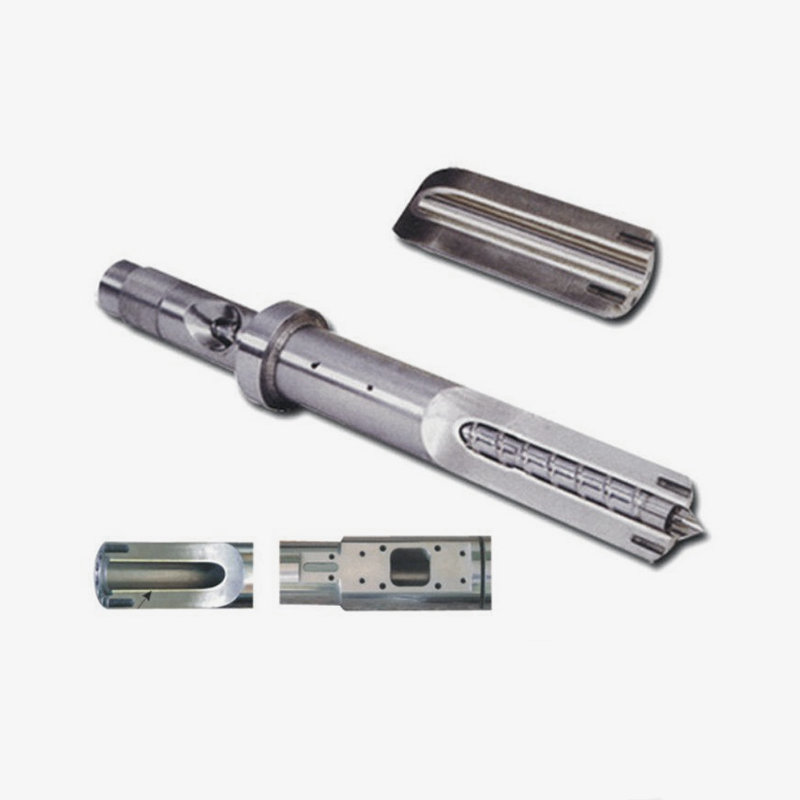
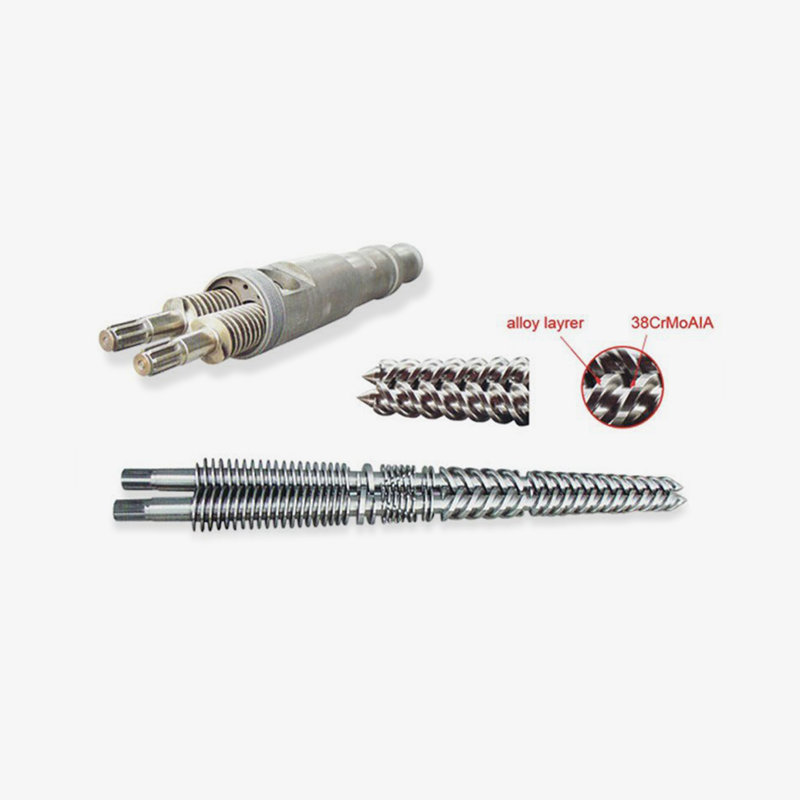 Bimetallic Barrel with Wear-Resistant Alloy LiningA bimetallic inner layer extends service life when handling filled, recycled, or engineering plastics. Precision machining reduces friction and energy use, making this barrel a durable upgrade for demanding extrusion applications.View Product →
The most profitable maintenance action in extrusion is prevention: choose the right metallurgy, monitor screw and barrel clearances regularly, and replace wear parts before they damage the gearbox or the downstream equipment.
Extruder Manufacturers, Suppliers, and Wholesalers: What to Look For
Because extruders are built around screw and barrel technology, the quality of your supplier matters as much as the design of the machine. The term "extruder manufacturer" can refer to a company that builds complete extrusion machines, while "screw and barrel supplier" describes a component maker that feeds those machines. Many extrusion line builders buy their screws and barrels from specialized suppliers, which is why a dedicated screw and barrel producer such as Microwave Machinery can be a strategic partner for machine makers, integrators, and distributors.
In the plastic machinery industry, the same company often works as manufacturer, supplier, and wholesaler through different channels. An OEM factory buys components in volume, a regional agent buys for resale, and an end-user plant buys spare parts at irregular intervals. A capable component manufacturer should be able to serve all three modes: volume production with consistent tolerances, custom engineering for OEM models, and after-sales service for replacement orders. Microwave Machinery, for instance, operates a workshop larger than 10,000 square meters, employs more than 60 staff, and exports to markets such as the United States, Germany, Dubai, Vietnam, and Thailand. These scale signals are relevant because they indicate that the company manages long supply chains and quality documentation beyond a single-market level.
When evaluating a potential extruder supplier, request three documents: the material certificate for the screw and barrel, the tolerance inspection report, and a reference list from customers in your specific application. A manufacturer that has served your type of production for years is easier to work with than one that only understands general purpose single screw machines. You can review the company profile and product categories on the manufacturer's official website to understand the range of screw, barrel, and machine solutions available.
Whether you call them extruder manufacturers, screw and barrel suppliers, or machinery wholesalers, the decisive criteria are the same: production capacity, quality control, application experience, and the willingness to engineer components around the customer's recipe.
Frequently Asked Questions about Extruder Meaning and Selection
What does extruder meaning cover in a simple sentence?In one sentence, an extruder is a machine that continuously melts and pushes plastic or another workable material through a die to create a consistent shape. In everyday factory language, it is the equipment that turns pellets or powder into pipe, film, sheet, profile, or pellets again. |
Is an extruder the same as an injection molding machine?No. An extruder runs continuously to make long, constant-cross-section products, while an injection molding machine cycles to fill a closed mold with a discrete part. The two machines share similar screw and barrel technology, but their output, control logic, and tooling are different. |
What is the difference between a single screw and a twin screw extruder?A single screw extruder uses one screw to convey, melt, and meter the material, and it works best with pre-compounded pellets. A twin screw extruder uses two gear-matched screws that provide more mixing, self-cleaning, and control over residence time, which is why it is preferred for compounding, PVC powder processing, and reactive extrusion. |
What materials can an extruder process?Most thermoplastics can be extruded, including PE, PP, PVC, PS, ABS, PA, and PET. Extruders also process rubber compounds, food dough, ceramic paste, and certain metals in specialized forms. The limiting factor is usually the screw and barrel design, because each material has a specific processing temperature and shear tolerance. |
How long does an extruder screw and barrel last?Service life ranges from about two to eight years depending on the material, the screw speed, the barrel lining, and the maintenance routine. Highly abrasive compounds with glass fiber or calcium carbonate can wear a nitrided barrel in a few years, while a bimetallic barrel can last much longer under the same conditions. |
What does the L/D ratio mean in an extruder?The L/D ratio is the screw working length divided by the screw diameter, expressed as a number like 25:1 or 40:1. It indicates how much time the material spends inside the barrel for melting, mixing, and pressure building. A higher L/D generally improves melt quality but increases cost, power consumption, and floor space. |
Understanding extruder meaning at the component level is the best protection against buying the wrong machine: the screw and barrel, not the brand name, decide whether your extrusion line will run smoothly in the long term.
Extruder meaning grows from a dictionary sentence into a complete technical picture once you link the machine's definition to its screws, barrels, temperature zones, and applications. The screw and barrel remain the parts that decide productivity and part quality, so buyers should evaluate them as carefully as they evaluate the gearbox or the motor. Whether you are an OEM planning a new line, a distributor building a spare part catalog, or a maintenance manager looking for a reliable replacement, secure your extruder knowledge first, then choose a partner who can translate that knowledge into matched components.
The clearest way to put extruder meaning into action is to start with the material and product you want to make, then work backward to the screw geometry, barrel specification, and supplier capability that will deliver those outputs reliably for years.
Selected Bearing Display


 浙公网安备33090202000520号