


 English
 中文简体
中文简体
Author: WeiBo
Date: Sep 15, 2026
Meaning of Extruder: Types, Working Principle, and Complete Buying Guide
Content
- 1 What Does Extruder Mean? A Practical Definition
- 2 How Does an Extruder Work? The Working Principle
- 3 Main Types of Extruders and What Each Name Means
- 4 Screw and Barrel: The Core Components That Define an Extruder
- 5 Common Industrial Applications of Extruders
- 6 How to Select the Right Extruder, Screw, and Barrel
- 7 Maintenance, Wear, and Service Life
- 8 Frequently Asked Questions About Extruders
- 8.1 What is the simple definition of an extruder?
- 8.2 What is the difference between an extruder and an injection molding machine?
- 8.3 What does the screw inside an extruder actually do?
- 8.4 Which materials can be processed on an extruder?
- 8.5 Single screw or twin screw: which is better?
- 8.6 How long do extruder screws and barrels last?
A maintenance engineer at a medium-sized pipe factory once stopped in front of his extrusion line and asked us a question that sounded simpler than it was. He pointed at the long, heated barrel mounted between the gearbox and the die head and said: "The operator calls this an extruder, but when he asks me what the machine actually does, I need a better answer than 'it makes pipe.'" The most useful answer is that an extruder is a continuous forming machine. It takes loose plastic granules, melts them inside a heated barrel with the help of a rotating screw, and then forces the molten material through a die to create a product with a fixed cross-section.
During the last few decades, the screw extruder has become the most widely used piece of production equipment in the plastic processing industry. Water pipes, window frames, cable insulation, shopping bags, packaging film, foam sheets, and even the pellets that feed injection molding machines all pass through an extruder at some point in their lives. The purpose of this article is to explain the meaning of extruder in a practical way: first the definition, then the working sequence, then the main machine types, the standard screw and barrel terminology you will meet in datasheets, and finally the selection and maintenance points that decide whether an extrusion line runs smoothly or spends too much time in the repair shop.
An extruder is a continuous forming machine: it melts plastic granules in a heated barrel with a rotating screw and forces the melt through a die to produce a long part with a constant cross-section.
What Does Extruder Mean? A Practical Definition
In dictionaries, the word extruder has a very broad meaning. It describes a person or a machine that extrudes something, and in manufacturing terms, the extruder definition usually refers to a machine that shapes a material by forcing it through a die. Metal extruders push heated aluminum billets through a die to form profiles; clay extruders shape bricks and tiles; food extruders cook and shape snacks and pasta. In the plastics industry, however, the meaning of extruder has become tightly attached to one specific type of machine: the screw extruder, sometimes called a screw-type extruder or screw extruder.
The difference matters because a plastic extruder does much more than push material through a die. It also melts the polymer, mixes additives into it, degasses it, and builds up pressure. The machine performs these tasks in one continuous operation. That is what separates a true extruder from a simple pump or a batch mixer. When an engineer says "we are having a problem with the extruder," he usually means the entire screw-and-barrel assembly, together with its drive, heating, and control system.
It is also useful to separate the machine from the process. Extrusion is the process of continuous forming; an extruder is the equipment that performs it. Many extrusion lines are actually built around one extruder plus a number of downstream units: a die, a calibrator, a cooling trough, a haul-off, and a cutter. This is why two factories can both produce the same pipe diameter and still have completely different lines, depending on the screw design, barrel lining, and auxiliary equipment.
Finally, the meaning of extruder should not be confused with an injection molding machine. Both use a screw in a heated barrel and both process thermoplastic materials, but an injection molding machine works intermittently: it reciprocates the screw, fills a closed mold, opens the mold, ejects the part, and repeats the cycle. An extruder delivers a continuous stream of melt and only reaches steady state when the screw rotates constantly at a stable speed and the melt flow becomes consistent. Understanding this steady-state requirement is the first step toward understanding everything else about extrusion.
In plastics, an extruder is a continuous screw-driven machine that melts, mixes, and discharges polymer under pressure; the screw-and-barrel pair, not the die alone, determines how well the whole process performs.
How Does an Extruder Work? The Working Principle
Every screw extruder, regardless of brand or size, operates on the same physical principle: a screw rotates inside a tightly fitted barrel, dragging granular polymer forward while heat and friction soften it. If the barrel were transparent and you could zoom into the screw channel, you would see the plastic moving as a continuous spiral wave. Five distinct stages happen inside that short journey from the hopper to the die.
Five Stages from Granules to Melt
- Feeding. Pellets or powder from the hopper fall into the screw channel as the rotating screw drags material forward. The feed zone, with its deep flights, determines how much material can enter the machine.
- Melting. Friction between the rotating screw and the barrel wall, plus heat from the barrel heaters, starts to melt the polymer. In the compression zone, as the channel volume becomes smaller, the granules are compressed against the hot barrel surface and a melt film develops.
- Mixing. The melt continues forward, and the screw flights create shear that disperses additives, pigments, fillers, and fiberglass evenly through the melt.
- Metering. In the metering zone, the channel has a constant shallow depth. Here the screw works as a positive-displacement pump, delivering a stable, pressure-controlled flow of melt to the die.
- Die forming. At the end of the barrel, the melt is forced through the die opening, which gives the product its shape. Downstream equipment pulls, cools, and cuts the emerging profile.
The Components That Make the Sequence Possible
Each stage relies on a specific mechanical component. The barrel is a thick, hardened steel tube that contains the material and absorbs the heat. The screw is the moving element that conveys and kneads the plastic; its diameter and length-to-diameter ratio largely control output and melt quality. The drive system, usually an AC motor with a gearbox, determines torque and screw speed. Heating bands around the barrel supply additional heat at startup and regulate barrel temperature, while cooling fans or water channels remove excess heat when the melt shear is high. The die is the final shaping orifice, and a screen changer or a breaker plate in front of the die filters contamination. All of these components have to work together because the polymer does not melt as a single block; it melts progressively, and any disturbance in one stage changes the conditions in every later stage.
When the machine is running normally, the melt flow at the die is uniform and the output per revolution of the screw is stable. When one of the components begins to fail, the first signs almost always appear as variations in output, pressure, or melt temperature. This is why experienced maintenance teams watch pressure gauges and motor amperage readouts rather than waiting for visible product defects.
The screw geometry also controls residence time and shear rate. A long screw with a gentle compression ratio gives a longer residence time and a lower shear rate, which is ideal for heat-sensitive materials such as PVC. A short screw with a steep compression ratio applies a high shear rate, which improves mixing but raises melt temperature. This trade-off comes into play in every screw type described in the next chapter.
All extruders follow the same five-stage sequence: feeding, melting, mixing, metering, and die forming; an imbalance in any stage immediately shows up as output fluctuation or melt-temperature drift.
Main Types of Extruders and What Each Name Means
In practical conversation, "what type of extruder do you have?" almost always refers to the screw arrangement. The screw is the part that gives the machine its name: single-screw extruder, twin-screw extruder, planetary-roller extruder, or ram extruder. Each design exists because it solves a different processing problem, and choosing the wrong one will limit output or damage the material.
Single-Screw Extruders
The single-screw extruder is the most common type in the world and the machine most people mean when they say "extruder." It consists of one screw rotating in one barrel, usually with a smooth bore or a grooved feed section. Its advantages are simple construction, low cost, easy operation, and reliable output for well-defined materials such as polyethylene, polypropylene, and polystyrene. Most pipe, profile, film, and sheet lines use single-screw extruders because these products require stable melt delivery rather than intensive mixing.
Screw design for single-screw machines follows a classic three-zone geometry: feed zone, compression zone, and metering zone. The depth and length of each zone define the compression ratio, which is normally between 2:1 and 3.5:1 for general-purpose polymers. With a properly selected screw, a single-screw extruder can deliver a very stable melt pressure, but it is a moderate mixer; fillers and pigments can remain poorly dispersed unless the screw has additional mixing elements. For many processors, the answer is to buy the single screw and barrel as a matched pair from a specialist manufacturer rather than from separate sources.
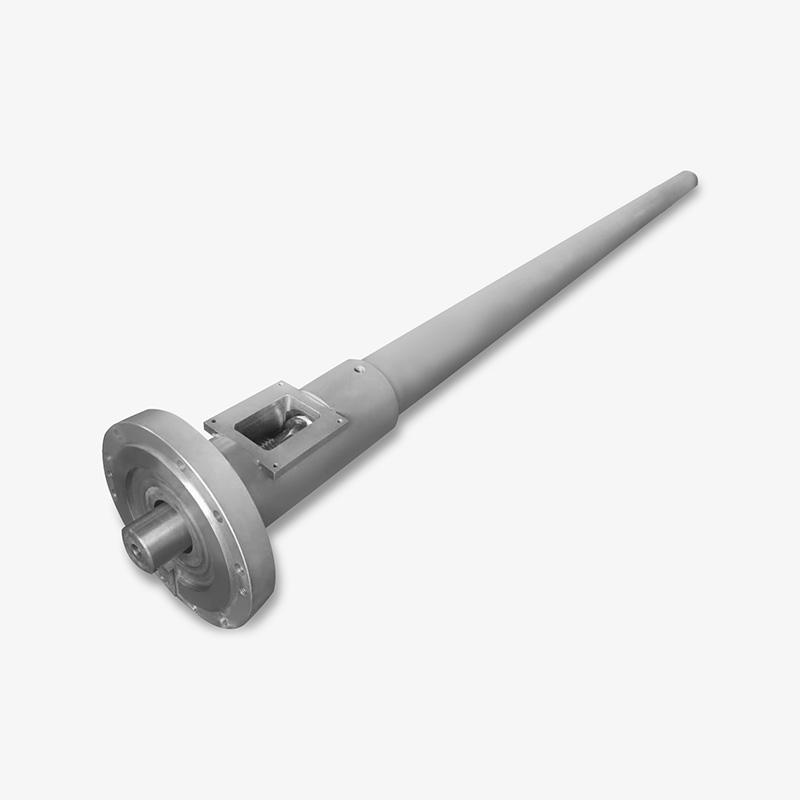 Matched Single Screw and Barrel Sets for Stable ExtrusionThis supplier offers matched single screw and barrel pairs designed for stable melt pressure in long-run applications such as PE pipe, film, and sheet. Precision-machined alloy steel construction supports consistent plasticizing and reduced wear.View Product →
Typical applications for single-screw machines include PE water pipe, PPR pipe, polyethylene film, PP sheet, PS profile, and cable insulation. In these jobs, the machine runs one material for long periods, and the screw profile is tuned to that material alone.
Twin-Screw Extruders: Parallel and Conical
When the application demands better mixing or direct handling of powder, a twin-screw extruder is usually the better answer. As the name says, the machine has two screws side by side in one barrel; the screws can be intermeshing or non-intermeshing, co-rotating or counter-rotating. For thermoplastic compounding, the most common arrangement is intermeshing co-rotating parallel twin screws. The figure-eight bore and the self-wiping screw profiles give good surface renewal and high mixing efficiency with a far shorter residence time than a single-screw machine. Our earlier technical article explains how parallel twin-screw technology achieves efficient material mixing, conveying and processing in step-by-step detail.
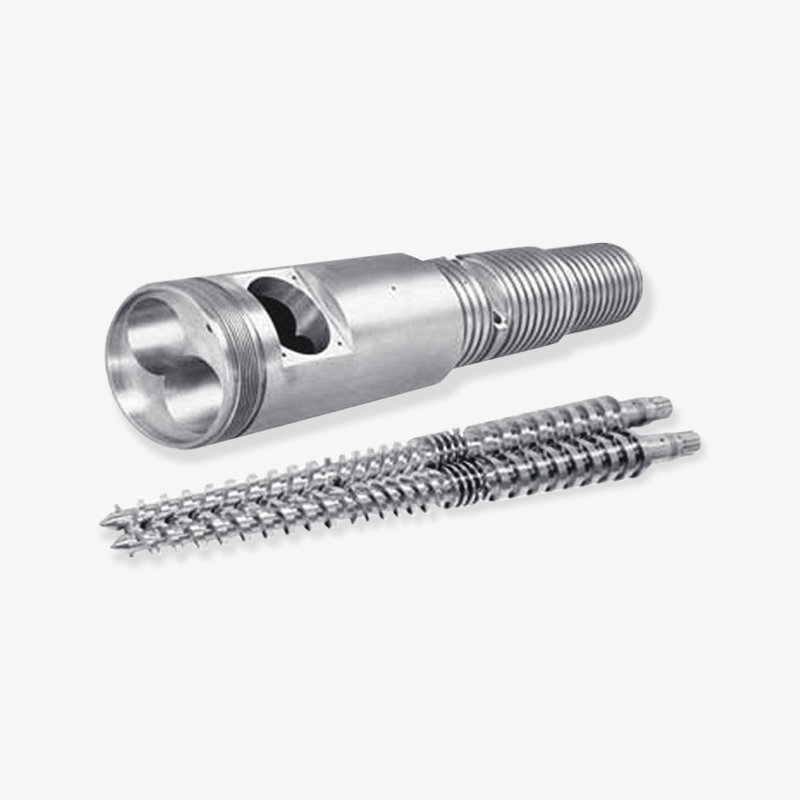
Conical twin-screw extruders work differently. The screws are broader at the feed end and narrower at the discharge end, and the barrel matches this conical shape. This design compresses the material gradually, which produces gentle, low-shear melting. Conical twin-screw machines are widely used for rigid PVC pipe and profile, because PVC is sensitive to heat and shear; the conical geometry keeps melt temperature low while still delivering high output at low screw speed.
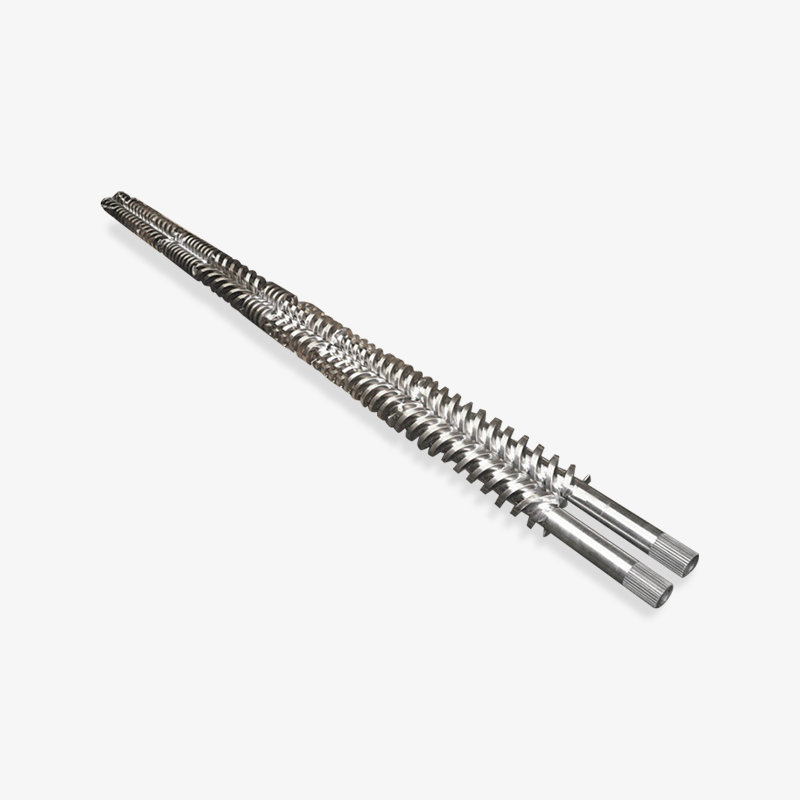
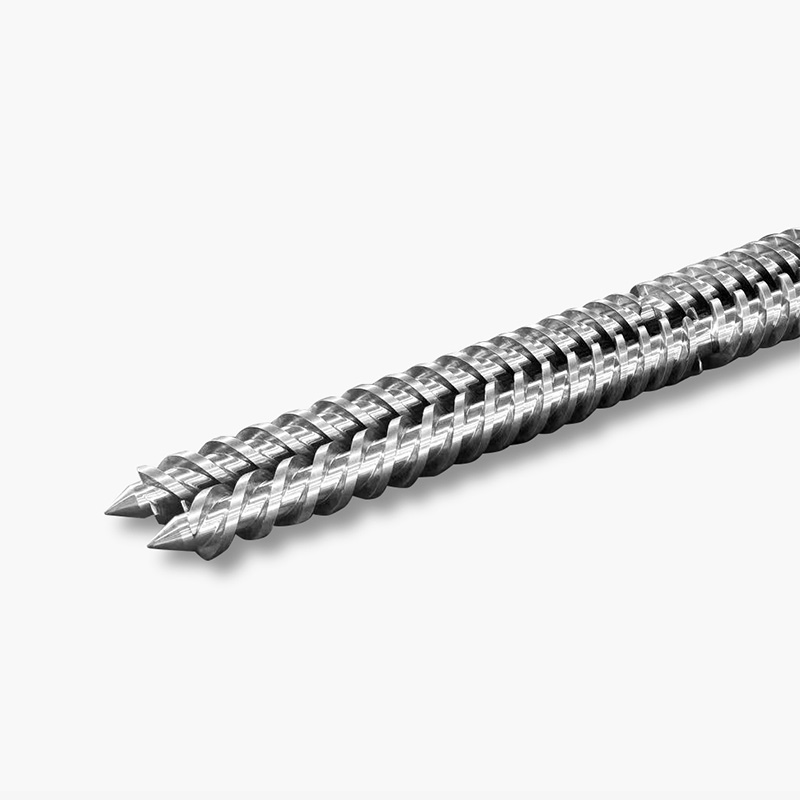 Conical Twin Screw and Barrel for Gentle PVC ProcessingConical twin screw and barrel assemblies provide low-shear melting ideal for rigid PVC pipe and profiles. High-quality alloy steel with optimized geometry improves mixing uniformity while reducing energy consumption and maintenance costs.View Product →
For processors, the practical distinction can be summarized as: parallel twin screws mix best and are ideal for compounds, masterbatch, and pellets; conical twin screws melt gently and are ideal for PVC powder and profiles. Tooling and screw pairs are not interchangeable between the two types, even when the outer diameter is the same, because the taper geometry is unique to each machine model.
Planetary Roller Extruders
A planetary roller extruder is a special design that occupies the middle ground between a single screw and a twin screw. The main screw, called the sun roll or central spindle, is surrounded by several smaller planetary spindles that rotate inside a barrel with a grooved inner wall. The result is a very large heat-exchange surface in a compact length. The material is sheared in many small gaps at the same temperature, which gives excellent thermal uniformity without high mechanical shear. These machines often serve as melt pumps in film and sheet lines, or as a final mixing stage right before a screen changer, where they remove agglomerates and temperature differences left by an upstream single screw.
Specialty Extruders Used in Rubber and Foam Processing
Rubber extruders, also called warm-feed or cold-feed rubber screws, are designed for rubber compounds; they have deeper flights and lower speeds to avoid overheating the elastomer. For foamed polyethylene, processors use an EPE foam extrusion screw-barrel set, which is optimized for injecting blowing agents into the melt at a stable pressure. There are also ram extruders, which push a solid block of material, such as PTFE or UHMWPE, forward with a piston rather than a rotating screw. These machines do not melt the polymer in the same way as screw machines; they rely on high pressure and a heated die.
| Extruder type | Screw arrangement | Typical L/D ratio | Best suited for | Common products |
|---|---|---|---|---|
| Single-screw | One screw in a barrel | 20:1 to 34:1 | Stable melt delivery for standard polymers | Pipes, profiles, films, sheets, cable coating |
| Parallel twin-screw | Two intermeshing co-rotating screws | 28:1 to 48:1 | Intense mixing and compounding | Masterbatch, compounds, recycled pellets |
| Conical twin-screw | Two convergent counter-rotating screws | 16:1 to 25:1 | Gentle melting of heat-sensitive powders | Rigid PVC pipe, profiles, wood-plastic composite |
| Planetary roller | Central spindle with planetary satellites | 5:1 to 15:1 | Heat treatment and melt homogenization | Film and sheet lines as melt pumps |
| Rubber cold-feed | One deep-flighted screw | 8:1 to 16:1 | Extruding unvulcanized rubber compounds | Rubber seals, tire components, gaskets |
| Ram extruder | Piston drive, no rotating screw | Not applicable | High-viscosity polymers that barely melt | PTFE and UHMWPE rods, tubes, profiles |
The name of an extruder tells you its screw arrangement, and that arrangement determines the material it can process, the mixing energy it can deliver, and the product shapes it can maintain economically.
Screw and Barrel: The Core Components That Define an Extruder
Both machine designers and experienced maintenance people will tell you that the real extruder is the screw and the barrel. The motor, the gearbox, and the heating system exist only to turn the screw and to keep the barrel at the correct temperature. If the screw and barrel pair performs poorly, nothing downstream can fix it. This chapter explains the geometry, materials, and processing windows that define how a screw-barrel set should be understood.
Screw Geometry: Diameter, L/D Ratio, and Compression Ratio
The first number in any extruder datasheet is the screw diameter, usually given in millimeters. A 75 mm single-screw extruder, for instance, means the flight outside diameter of the screw is 75 mm; output capacity scales roughly with the square of the diameter, so a 90 mm screw can deliver significantly more output at the same screw speed. The second number is the L/D ratio, the ratio of the barrel length to the screw diameter. A 75 mm screw with an L/D ratio of 30 means the effective barrel length is 2250 mm. Longer machines provide a longer residence time and more mixing length, which is useful when additives must be incorporated gradually.
The compression ratio is the ratio of the channel depth in the feed zone to the channel depth in the metering zone. It represents how strongly the material is squeezed as it travels along the screw. A typical general-purpose screw has a compression ratio of 2.5:1 to 3:1. If the ratio is too low, the melt is not pressurized enough and output surges; if it is too high, the melt overheats and the polymer degrades.
Barrel Construction and Internal Linings
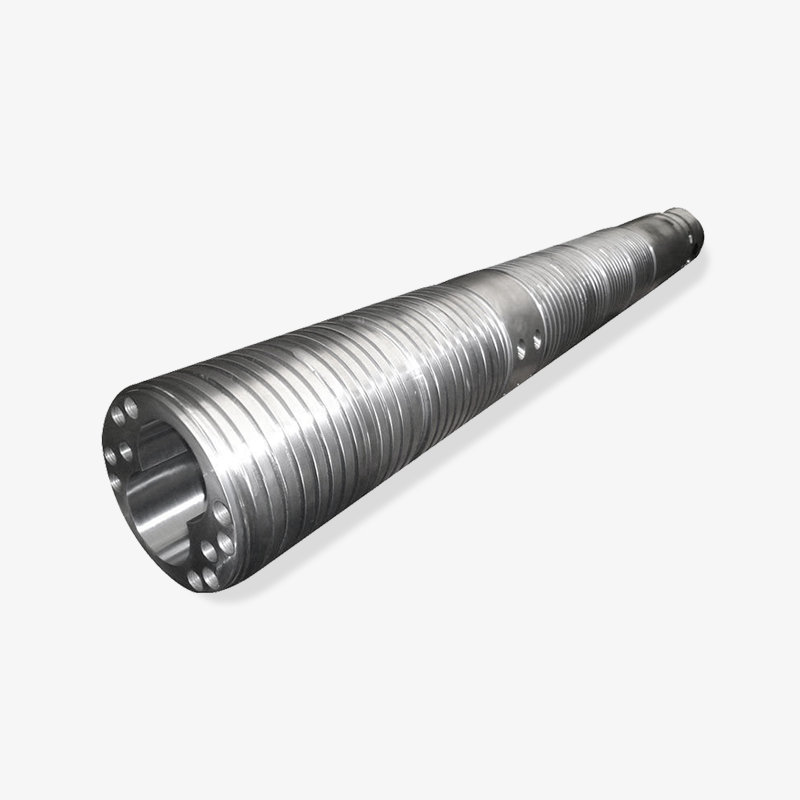
The barrel has to contain high pressure, conduct heat evenly, and resist wear. Small extruders use a one-piece barrel made from hardened steel with a nitriding treatment on the bore. Large machines and machines that run abrasive or corrosive materials use a bimetallic barrel: a strong steel shell with a very hard inner lining applied by centrifugal casting or sintering. The most common lining materials are high-chromium iron and tungsten carbide alloys.
Wear in the barrel usually appears first in the feed zone because the material is still solid there and creates high friction through the pellets. For glass-fiber-reinforced materials, the high wear zone often shifts to the metering zone, where the melt speed is high and fiber ends abrade the metal. Corrosion, which is common when processing PVC or certain flame retardants that release acidic gases, attacks the whole barrel length. The correct choice between nitrided steel, bimetallic high-chromium, and bimetallic tungsten carbide depends on the material recipe, not just on budget.
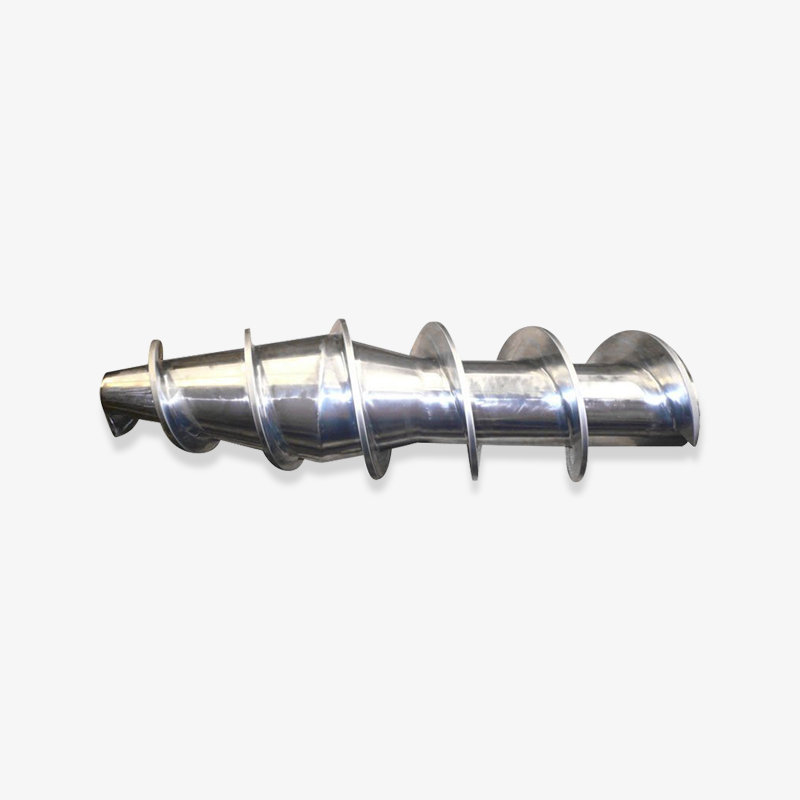
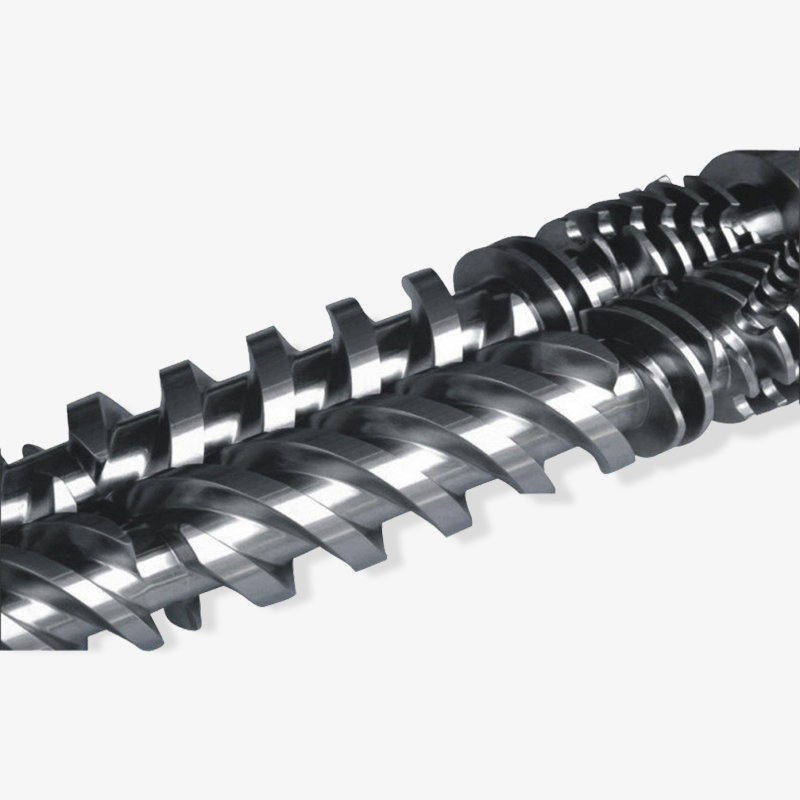 Bimetallic Screw and Barrel for Abrasive and Corrosive MaterialsBimetallic screw and barrel options with tungsten carbide or nickel-based alloys deliver long service life for glass-fiber-reinforced and corrosive plastics. Hardness up to HRC60-70 reduces replacement frequency and supports continuous high-temperature operation.View Product →
Screw steel grades follow the same philosophy. Nitrided screws are hardened in a gas-nitriding treatment and provide a low-cost solution for standard polymers. For abrasive compounds, a bimetallic screw with hard facing on the flight edges, or a full protective coating, extends service life considerably. Some processors choose an interchangeable screw design, also called a modular screw, so that the same machine can run several product recipes by changing only the screw, an approach that also simplifies maintenance.
Choosing the Processing Window: Why Barrel Temperature Settings Follow the Material
Barrel temperature setpoints are never arbitrary; they follow the processing window of the polymer. Every thermoplastic softens and melts within a relatively narrow range, and falling outside this range produces visible quality problems. If the barrel is too cold, the melt stays viscous and unstable, causing surging output and unmelted granules in the product. If the barrel is too hot, the polymer degrades and the product turns yellow, brittle, or washed-out grey. For this reason, any meaningful definition of extruder includes the idea of a controlled temperature path from hopper to die.
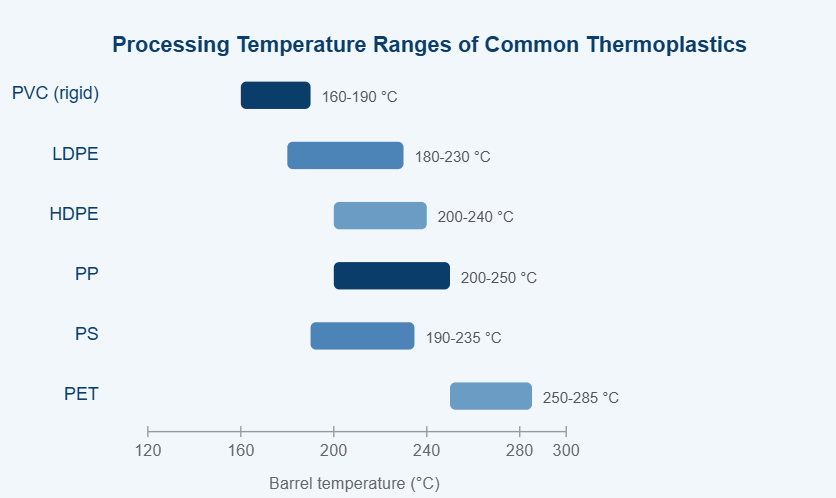
Typical barrel temperature windows for six common thermoplastics processed on screw extruders. Actual setpoints depend on residence time, screw design, and stabilizer packages.
The chart above compares the approximate barrel temperature windows for six thermoplastics that are routinely processed on single-screw and twin-screw extruders. The first message of the chart is that common commodity plastics are not interchangeable; each resin demands its own temperature region. PVC sits at the lower end because it starts to decompose around 200°C, releasing hydrochloric acid and discoloring rapidly. Polyethylenes cover a forgiving and wide window, which is why LDPE remains the easiest material for a beginner to extrude. HDPE needs a slightly higher barrel setpoint than LDPE to avoid unmelted crystals in the film. Polypropylene behaves similarly before degradation, but its sharp melting point means that a variation of just a few degrees can change the melt flow clearly. Polystyrene is also forgiving in temperature but tends to require good venting on larger machines. PET requires the highest temperatures, and it needs careful drying before extrusion because moisture hydrolyzes the polymer chain and reduces viscosity. The different windows directly affect screw design: low-temperature materials tolerate high shear, while high-temperature materials demand a lower shear profile and a longer metering zone. Therefore, when a processor changes from PVC to PP on the same machine, the recommended practice is to replace the screw-barrel set with one designed for the new polymer. Raw material fluctuations, such as different molecular weights, also shift the ideal window, so an experienced operator always pays attention to the trend of the melt temperature, not only to the barrel setpoint. In short, the chart explains why the screw and barrel of an extruder are never one-size-fits-all.
Wear-Resistant Options and Surface Treatments
Nitrided case
Hardened nitrogen surface; low cost; suitable for clean PE and PP processing.
Bimetallic high-chromium lining
Balanced wear and corrosion resistance; standard for talc- and calcium-carbonate-filled compounds.
Bimetallic tungsten-carbide lining
Top wear resistance for glass-fiber and mineral-filled abrasive materials.
Modular screw with replaceable wear elements
For processors who switch recipes frequently and want lower replacement cost.
The choice among these options changes the total cost of ownership of a machine. A nitrided barrel may be repaired by stripping the old surface and re-nitriding, but a worn tungsten-carbide lining usually requires a new barrel. Conversely, a large output machine running glass-fiber compounds usually pays back a tungsten-carbide lining within a single production season, because downtime is reduced.
The screw and barrel are a single working pair; geometry, steel grade, and surface treatment must all be matched to the polymer and its fillers, and the processing temperature chart is the map for that choice.
Common Industrial Applications of Extruders
Extruders appear in nearly every plastic manufacturing sector, but the tasks they perform can be grouped into two families: direct shaping of a finished profile and mixing of materials that are then formed into pellets, film, or other semifinished goods. Understanding which family your application belongs to is essential when reading equipment datasheets.
|
Direct Shaping of Finished Profiles
|
Compounding and Reclaim
|
A useful rule of thumb: if the product must maintain a precise cross-section, choose an extruder type known for stable output and use a screw designed for that single product; if the product is a pellet or compound whose exact composition matters more than its shape, choose a machine with intensive mixing and allow more maintenance time for screw changes.
Foam extrusion deserves a special mention because it combines the two families. An EPE foam screw-barrel set must first melt the polymer completely, then inject a physical blowing agent into the melt, and then keep the melt under high pressure until the die exit. The entire screw profile is optimized for this pressure path, which is why processors of foamed polyethylene do not run standard PE screws.
Extrusion applications divide into direct shaping and mixing-intensive compounding; selecting the wrong machine family means fighting the product, the screw, and the maintenance schedule from the first day.
How to Select the Right Extruder, Screw, and Barrel
Selecting an extruder, or replacing its screw and barrel, is a decision that should be made with datasheet numbers rather than guesses. Five factors carry most of the weight.
- Material recipe and form: resin type, additives, fillers, recycled content, and whether the feed is virgin pellets or powder.
- Output target: required kg/h, which defines the minimum screw diameter and drive power. Doubling the screw diameter roughly quadruples the pumping capacity at the same screw speed.
- Melt quality requirements: tolerances on wall thickness, filler distribution, and color; demanding tolerances call for a longer L/D ratio and possibly a barrier or mixing screw.
- Wear and corrosion environment: abrasive fillers such as glass fiber, talc, and titanium dioxide, and corrosive byproducts such as PVC decomposition gases, decide between nitrided and bimetallic materials.
- Existing machine interface: flange dimensions, centerline height, drive keyway, heating zones, and control software must match exactly.
| Factor | What to verify | Consequence of a wrong choice |
|---|---|---|
| Polymer recipe | Melt flow index, additives, filler percentage, degradability | Overheating, screw wear, or poor dispersion |
| Output | kg/h at a given screw speed and back pressure | Line cannot reach production target |
| L/D ratio | Length-to-diameter ratio needed for the recipe | Short L/D means unstable melting; long L/D risks heat damage |
| Compression ratio | Match to polymer type and bulk density | Surging, burning, or unmelted granules |
| Wear protection | Lining type for the barrel and facing for the screw | Premature wear and contamination of the product with metal particles |
| Geometrical fit | Diameter, overall length, keyway, heater zones, flange | Machine cannot be installed or leaks melt |
Working with a Screw and Barrel Manufacturer
Because the screw and barrel are custom parts, the best results come from working with a manufacturer who asks the right questions before quoting. A competent plastic machinery components manufacturer will ask for the machine brand, screw diameter, L/D ratio, output target, the polymer and additives you run, and the current failure mode, whether wear, corrosion, or poor mixing. They should also agree on the exact drawing measurements, because a dimension of half a millimeter can change the output and melting behavior. In many export markets, processors buy screw-barrel sets directly from the manufacturer to avoid the markup of intermediate wholesalers, and they receive application support at the same time.
At our own workshop, which was established in 1990 and has served customers in the United States, Germany, Dubai, Vietnam, and Thailand, we often see the same mistake: a processor buys a complete extruder machine from one supplier and later purchases screw-barrel sets from a different source, expecting them to be interchangeable. In practice, screw and barrel sets must be produced as a matched pair, with the correct radial clearance and flight tolerances. When they are matched, output per revolution remains stable and the machine runs quietly; when they are not, you notice surging, temperature fluctuations, and rapid wear.
Selecting a screw-barrel set starts with five numbers: material, output, melt quality, wear environment, and machine interface; it ends with one custom-matched pair of components.
Maintenance, Wear, and Service Life
Even a correctly selected extruder wears out. The screw and barrel are contact machine parts, and each revolution of the screw produces a small amount of friction against the barrel wall and against the material. The real question is not whether wear will occur but how fast and in which zone.
The Most Common Wear Mechanisms
- Abrasive wear from fillers: glass fibers, calcium carbonate, talc, and titanium dioxide act like sandpaper inside the barrel.
- Corrosive wear from acidic byproducts: PVC decomposition releases hydrochloric acid; flame-retardant and some bio-based polymers release other aggressive compounds.
- Metal-to-metal contact caused by misalignment, bent screws, or excessive side loads; this is the fastest way to destroy both parts.
- Erosion at the metering zone and flight edges from high melt velocity, most visible on reinforced compounds or high-temperature resins.
Symptoms That Indicate Wear
- Output drops by 10% or more at the same screw speed and back pressure.
- Melt temperature begins to fluctuate without a change in setpoints.
- Product thickness variation appears, especially along one side of the die.
- Black specks or dark streaks appear in the melt; trapped material in worn pockets degrades over time.
- Screw jams, unusual noise, or high motor amperage indicate mechanical interference.
A Basic Preventive Maintenance Routine
- Measure the screw outer diameter and barrel bore diameter at the feed, compression, and metering zones every 6 to 12 months, depending on the material.
- Keep records of output per screw revolution; a slow downward trend is more reliable than a single measurement.
- Purge the machine thoroughly before shutdown, especially when running PVC or other corrosive materials.
- Inspect the screw flight edges for rounding or cracks and the barrel bore for scoring or a rough surface.
- Check alignment between the gearbox and the barrel, and verify that the screw is straight.
- Work with a reliable supplier of replacement parts and keep a spare screw-barrel set ready for critical lines.
Routine maintenance extends service life, but ultimately every screw and barrel set reaches a limit. A general rule in the industry is that a nitrided screw lasts one to two years under good conditions; a bimetallic screw can last three to five years or more in abrasive service. When the bore of the barrel is enlarged by more than about 0.3 to 0.5 mm beyond the original dimension, a new matched set is usually more economical than reconditioning.
Wear in an extruder is not an emergency; it is a normal condition that can be tracked, planned around, and slowed down by correct material selection and a simple measurement routine.
Frequently Asked Questions About Extruders
These are the questions operators and purchasing teams most often ask when they start with extrusion.
What is the simple definition of an extruder?
Put simply, the meaning of extruder in plastics production is a machine that continuously melts and pumps plastic material through a die to create a long product with a constant cross-section. In one sentence: raw material goes in one side, molten and pressurized material comes out the other, and a screw inside the heated barrel does the pushing and mixing. The same term is used in metal extrusion, but in plastics, "extruder" almost always means a screw extruder with a barrel and a rotating screw.
What is the difference between an extruder and an injection molding machine?
An extruder works continuously and produces endless profiles, films, sheets, or pellets. An injection molding machine works intermittently: it melts polymer with a screw, injects the melt into a closed mold, holds pressure, then opens the mold and ejects the part. Many processors own both types. The screw-barrel set of an injection molding machine is similar but usually shorter and designed for reciprocating movement, so it cannot simply be replaced with an extruder screw.
What does the screw inside an extruder actually do?
The screw has three jobs: carry the solid material forward, melt it, and build up pressure. It looks like a simple spiral, but its channel depth, flight pitch, and length determine how much heat is generated by friction, how well additives are mixed, and how stable the output is. A small change in compression ratio can change the melt temperature by several degrees, which is why the screw is considered the heart of the machine.
Which materials can be processed on an extruder?
Most thermoplastics: PE, PP, PVC, PS, ABS, PA, PET, and many copolymers, as well as rubber compounds and certain food paste products in the food industry. The limiting factors are melt flow, thermal stability, and corrosion of the barrel. Materials that decompose near their melting points, such as PVC, require low-shear screw designs; materials with very high melt viscosity, such as PTFE, require special ram-type equipment rather than a normal screw.
Single screw or twin screw: which is better?
Neither is universally better; the two types answer different questions. If your job is simple pipe or film production, a single-screw extruder is low cost and easy to operate. If you need to mix pigments, fillers, or recycled content into the polymer, or you feed powder instead of pellets, a twin-screw extruder is more effective. For PVC powder, many processors around the world choose a conical twin screw because it provides gentle melting at high output. The term "better" depends on your recipe, output target, and product tolerances.
How long do extruder screws and barrels last?
Service life varies from less than one year to more than five years, depending on the abrasive and corrosive content of the material, barrel temperature, screw speed, and how carefully the machine is maintained. Running glass-fiber reinforced compounds with a nitrided barrel often produces visible wear within one season; a bimetallic tungsten-carbide lining in the same service can last several times longer. The smart method is to measure the screw diameter and barrel bore periodically and replace the set when output drops or thickness variation appears.
The practical definition of an extruder is a continuous melting-and-pumping machine, and its true identity is decided by the screw-barrel pair inside it.
Understanding the meaning of extruder does not require a degree in polymer engineering, but it does require the right mental model. Once you see the machine as a continuous five-stage pipeline: feeding, melting, mixing, metering, and die forming, every datasheet, every spare part list, and every troubleshooting conversation becomes more transparent.
With more than three decades of experience in the production of single-screw barrels, parallel twin, conical twin, planetary, and bimetallic screw-barrel sets, our company supplies both single components and complete screw-barrel solutions to plastic machinery builders and plastics processors. If your current line suffers from surging output, uneven melt, or rapid screw wear, send us the machine brand and product recipe, and we will recommend the screw-barrel set that fits both your machine and your budget.
A high-quality screw and barrel pair is the most economical performance upgrade a processor can make: it improves output stability, product tolerances, energy efficiency, and replacement interval at the same time.
Selected Bearing Display



 浙公网安备33090202000520号