


 English
 中文简体
中文简体
Author: WeiBo
Date: Sep 09, 2026
What Are Extruders? Types, Screws, Barrels, and Practical Selection Guide
Content
- 1 What Are Extruders? A Direct Answer
- 2 How an Extruder Works: From Pellet to Profile
- 3 What Are the Main Types of Extruders?
- 4 The Screw and Barrel: Why Geometry and Material Matter
- 5 How to Choose an Extruder: Output, Torque, and Life
- 6 FAQ: What Buyers and Operators Often Ask
- 7 Further Reading and Resource Links
What Are Extruders? A Direct Answer
If you are researching what are extruders and why they matter to a plastics manufacturing plant, you need a clear definition first. An extruder is an industrial machine that continuously heats, melts, mixes, and pumps plastic material through a shaped die to create a product with a fixed cross-section. In the simplest terms, it transforms solid polymer pellets, granules, or powder into a uniform melt and then gives that melt a specific shape as it leaves the die. The extrusion process is used to make pipes, films, sheets, profiles, pellets, and countless other plastic products.
The machine works on a straightforward principle: a screw turns inside a heated barrel, pushing material along the barrel while friction and external heaters raise the temperature to melt the polymer. The screw not only moves the plastic but also compresses, kneads, and homogenizes it. This combination of conveying and mixing is why screw and barrel geometry are critical. A poorly designed screw or a worn barrel will produce uneven melt, inconsistent pressure, and poor final dimensional accuracy.
From a manufacturing perspective, the three most common extruder layouts are single screw, twin screw, and planetary screw. Twin-screw machines are further divided into parallel and conical designs, each with distinct mixing behavior and application ranges. In every configuration, the screw and barrel pair is the heart of the system. As a buyer or maintenance engineer, you cannot fully specify an extruder without understanding how these two components interact under heat, load, and abrasive fillers.
That is why screw and barrel suppliers are often involved early in extruder selection. A reliable machine builder will not only supply a barrel and screw but also recommend the correct profile, material, and surface treatment based on the polymer and output rate. Whether you are replacing a worn set for an existing extruder or commissioning a new production line, the screw-to-barrel fit directly determines melt quality, energy consumption, and maintenance intervals.
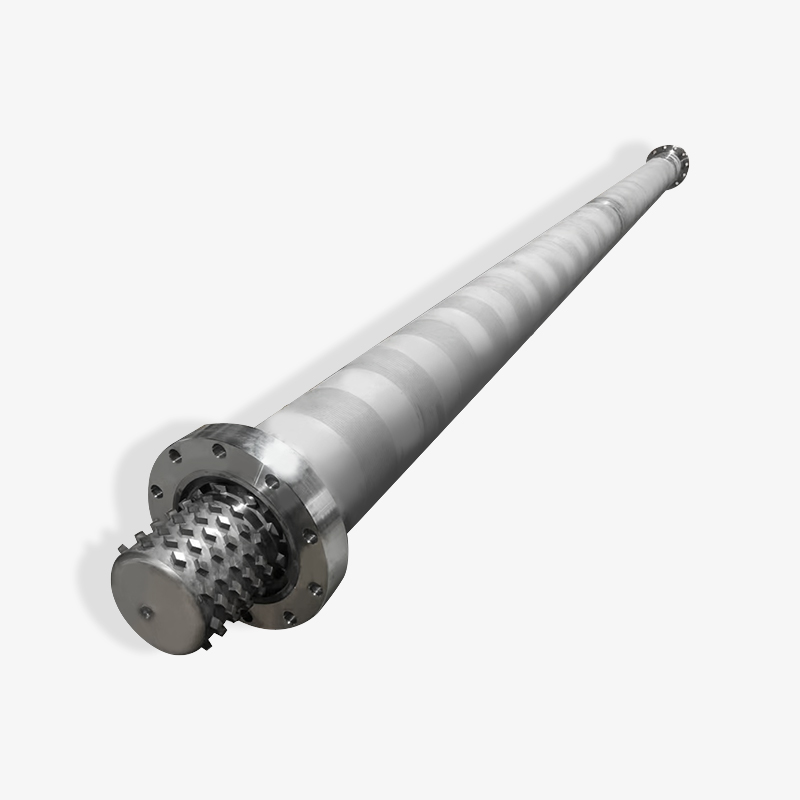
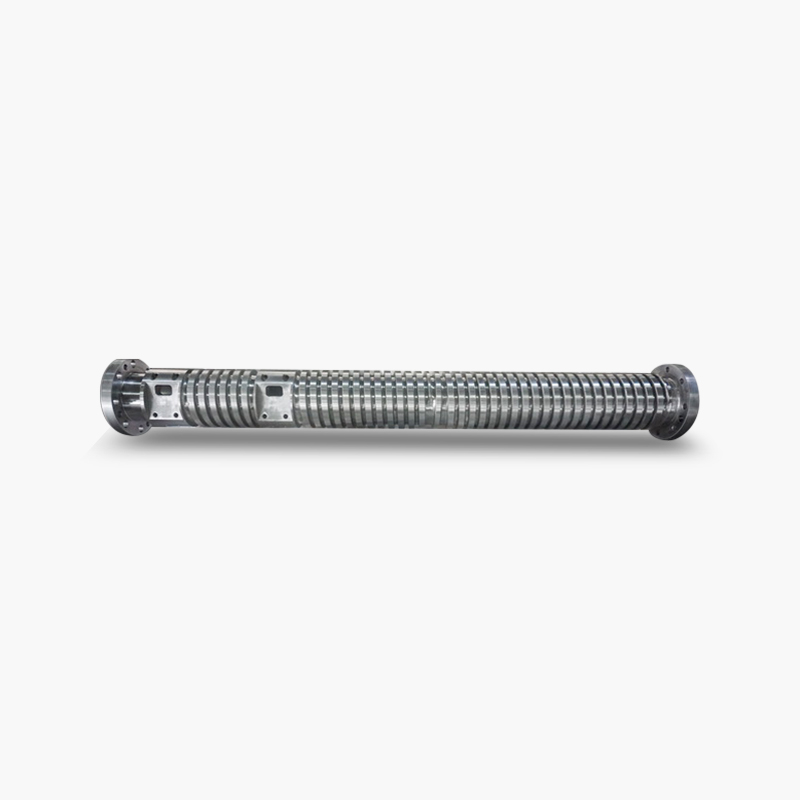 Modular Single Screw Barrel for Extruder with Wear-Resistant AlloyThis single screw barrel offers modular components for easier maintenance and upgrade. It is available in many diameters and features high-performance screws and precise temperature control, making it relevant when planning screw-to-barrel fit for consistent melt quality.View Product →
Key point: Extruders are continuous melt-processing machines whose output quality depends on precisely matched screw and barrel geometry.
How an Extruder Works: From Pellet to Profile
An extruder does not merely melt plastic; it performs five distinct tasks in sequence. Each task places different demands on the screw, barrel, and die. Understanding these stages helps you diagnose flow problems, select the right screw design, and specify a barrel length that gives the polymer enough residence time to become homogeneous.
The first stage is feeding. Raw material enters the hopper and falls into the feed throat, where it contacts the rotating screw. The feed section of the screw has deep flights that pull pellets forward and prevent bridging. From there, the material enters the compression zone, where the flight depth decreases. This squeezing action forces air out and starts generating frictional heat. The melting section follows, usually occupying the middle third of the screw. Here, a combination of barrel heaters and shear heat brings the polymer to its processing temperature. Once the material is molten, the last screw section, called the metering zone, evens out flow and builds pressure to push the melt through the die. In twin-screw extruders, additional mixing elements such as kneading blocks or gear elements may be placed along the screw to improve dispersion of fillers and additives.
Barrel design is equally important. The barrel provides the containment surface and is machined to a precise inside diameter. Heating and cooling zones are attached to the outside, and a breaker plate with screens can be placed between the screw tip and the die to filter contaminants and equalize melt pressure. The clearance between the screw flights and the barrel wall is measured in fractions of a millimeter; as clearance grows from wear, backflow increases, reducing output and raising melt temperature.
| Stage | What happens | Critical screw/barrel contribution |
|---|---|---|
| Feeding | Pellets or powder move from hopper into the screw channel | Deep feed flights prevent slip; barrel feed throat geometry ensures consistent packing |
| Conveying and compression | Material is compacted and air is expelled | Reducing flight depth raises pressure and density |
| Melting | Solid pellets become a viscous melt | Shear from screw rotation and barrel heaters combine; temperature profile is controlled by barrel zones |
| Mixing | Additives, colors, and fillers are dispersed evenly | Mixing flights and kneading elements create repeated reorientation of the melt |
| Pumping | Melt is forced through the die at a constant rate | Metering section and screw tip geometry build and stabilize pressure |
The relationship between screw speed, barrel temperature, and die resistance determines the actual throughput. Most operators rely on a torque-limited drive, not just a fixed RPM, because the melt pressure fluctuates with feed variations. A good screw design will minimize those fluctuations. That is why suppliers such as Zhoushan Microwave Screw Machinery invest in measuring the flow-length profile and compression ratio of every screw they cut, especially when the application involves recycled material or high-fill compounds.
Key point: Every extrusion problem — surging, poor mixing, overheating, or output loss — can be traced back to one of the five process stages.
What Are the Main Types of Extruders?
Extruders exist in many mechanical forms, but the plastic extrusion industry focuses on four main categories: single-screw, parallel twin-screw, conical twin-screw, and planetary screw extruders. Each type has a distinct operating principle that makes it suitable for particular materials and products. Choosing the wrong type can lead to poor melt quality, low output, or excessive energy use.
Single-screw extruders are the most common and are used for standard thermoplastic processing, such as pipe, profile, sheet, and film. They are simpler, lower in cost, and easier to maintain. Twin-screw extruders, both parallel and conical, provide intense mixing and are ideal for compounding, blending, and devolatilizing. Parallel twin screws usually have a longer L/D ratio and higher screw speed, while conical twin screws have a more compact compression section and are widely used for PVC pipe and profiles. Planetary screw extruders use multiple small screws around a central sun screw, offering high surface area for temperature-sensitive materials.
| Type | Screw configuration | Best suited for | Typical L/D ratio |
|---|---|---|---|
| Single-screw | One screw rotating in a barrel | Standard pipe, profile, sheet, film, pelletizing | 20–35 |
| Parallel twin-screw | Two screws arranged side-by-side, co-rotating or counter-rotating | Compounding, blending, devolatilizing, reactive extrusion | 24–48 |
| Conical twin-screw | Two conical screws converging toward the die | PVC pipe, profile, and sheet; powder processing | 18–30 |
| Planetary screw | One central sun screw with several planetary screws around it | Temperature-sensitive polymers, film, and sheet with high surface quality | 10–16 |
The L/D ratio is one specification that immediately tells you about the machine’s mixing capacity and residence time. A higher ratio gives more length for melting and mixing, but it also increases the screw torque required and the number of heating zones. When a screw and barrel supplier presents a line of extruder components, they will always ask about L/D ratio because it affects the screw flight design and the barrel length.
To illustrate the differences, we have prepared a simple bar chart comparing the typical L/D ratios we encounter in industrial extrusion, based on commonly used machinery from manufacturers and replacement-component suppliers.
The L/D ratio is a fundamental number printed on every extruder datasheet. It defines the working length of the barrel divided by the screw diameter. For example, a 60 mm screw with a 30:1 L/D ratio has a barrel working length of 1800 mm. This value tells you how much time the plastic spends in the hot zone and, therefore, how completely it melts and mixes.
A longer L/D ratio generally provides better homogenization and higher pressure build-up, but it also raises the mechanical load on the thrust bearing and the drive. Shorter ratios are used for low-shear applications or when the polymer is easily melted. Each extruder type has its own optimal L/D envelope. Twin-screw machines often use longer ratios for reactive tasks, while conical twin screws are designed with a natural compression that removes the need for a very long barrel.
The chart above shows why parallel twin-screw extruders are preferred for demanding mixing tasks. Their higher L/D ratio gives screw designers more space to insert mixing elements while still maintaining enough residence time for devolatilization. Single-screw extruders, on the other hand, are usually limited to 20–35:1 because beyond that range, the screw becomes too flexible for the torque, and the melt film at the barrel wall becomes excessively hot. Conical twin screws sit closer to the single-screw range, but their converging flight depth creates an additional compression action that is particularly useful for dry-blend PVC. The planetary screw extruder has the shortest L/D ratio because it achieves surface contact and thermal exchange through many small screws rather than a long barrel.
It is important to note that these numbers are not rigid standards. Some single-screw machines are built with 40:1 ratios for barrier screws or high-speed applications, and some parallel twin-screw extruders can be as long as 52:1 when used for large-scale devolatilization. Nevertheless, the chart gives you a practical baseline when you are comparing quotes from different equipment makers. If you see an L/D ratio outside the expected range, you should ask the screw and barrel manufacturer how they maintain low melt temperature and proper mixing without sacrificing throughput.
From a maintenance perspective, the L/D ratio also influences how easy it is to change a worn barrel or screw. A longer barrel means more heating zones and more bolts to remove, but it also gives you access to more surface area for inspection. Conical twin screws are often easier to pull from the barrel because the taper reduces friction once the screw is loosened. Planetary screws require more careful handling because the planet pins must be removed in a specific order.
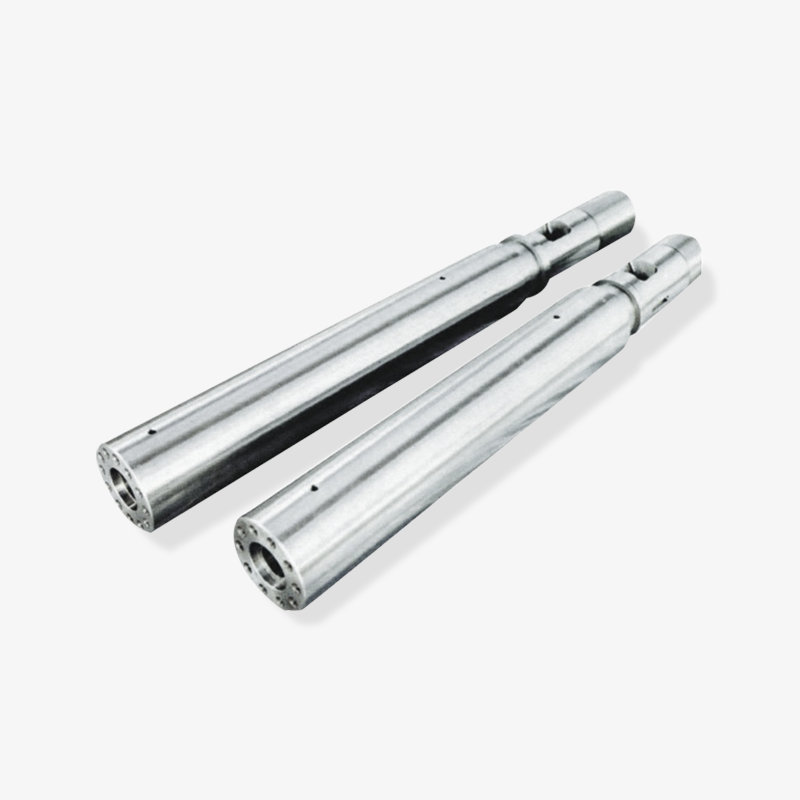
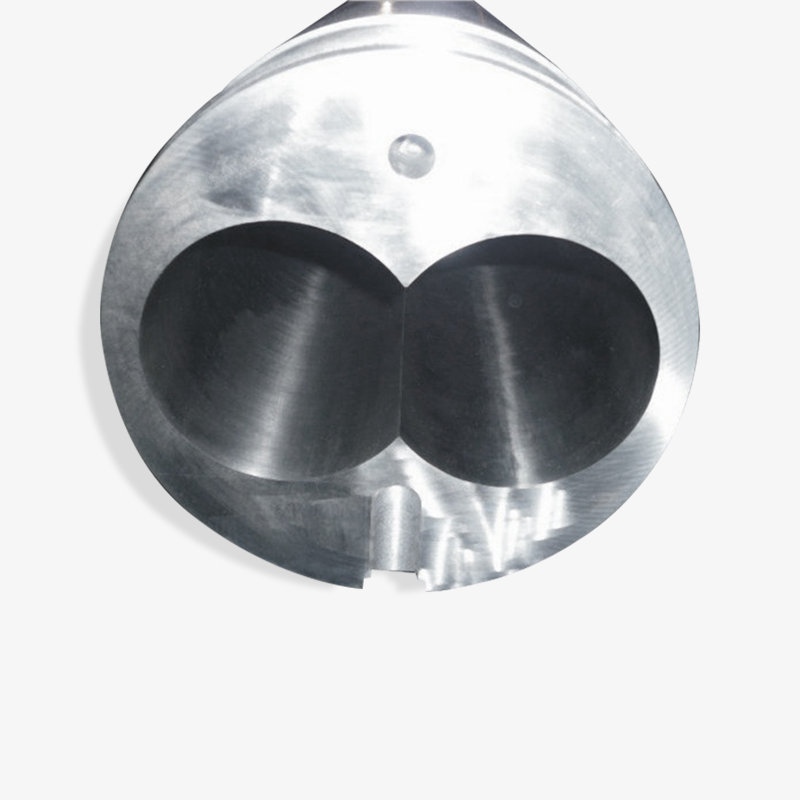 Conical Twin Screw and Barrel in Nitride Steel 38CrMoAlAThis conical twin screw and barrel set is made from nitride steel 38CrMoAlA and comes in several size options. It is designed for mixing, drying, and separation duties, and its geometry can be adjusted via compression ratio, fitting the discussion on screw design and maintenance.View Product →
Key point: The L/D ratio and screw type you choose define not only melt quality but also the practicality of maintenance and the eventual wear pattern on the barrel.
The Screw and Barrel: Why Geometry and Material Matter
Screw and barrel geometry goes beyond simple flight depth and L/D ratio. The pitch angle, number of flights, barrier and mixing elements, and the clearance between screw and barrel all contribute to the final product. For example, a barrier screw separates the solid bed from the melt pool, enabling faster melting without overheating. A pineapple or gear mixing section breaks up the melt and redistribits temperature peaks. These features are cut directly into the screw, so the machine shop must have precise CNC ability and grinding capacity.
The barrel must match the screw in size, straightness, and hardness. Most modern extruder barrels are made from nitrided steel (e.g., 38CrMoAl) or from bimetallic linings where a high-alloy layer is centrifugally cast onto a mild steel tube. Nitrided barrels are suitable for non-abrasive polymers like PE and PP. Bimetallic barrels offer superior wear resistance when processing filled materials such as glass-fiber-reinforced nylon or calcium carbonate compounds.
Screw material selection is equally critical. Standard screws use nitriding steel with a surface hardness of 900–1100 HV. High-torque twin-screw applications may require tool steels like 42CrMo with hardened flights. For extremely corrosive or abrasive service, screws can be coated with tungsten carbide or made from ceramic-reinforced alloys. The cost of these materials increases rapidly with the alloy content, so you should base the choice on the chemical formulation of the compound, not just the total tonnage the extruder will process.
Wear on the screw and barrel is usually a combination of three mechanisms: abrasion from solid particles, corrosion from acid gases released during polymer degradation, and fatigue cracking caused by repeated thermal cycling. A bimetallic barrel with a cobalt-nickel base alloy can withstand many of these conditions, but the screw flights still need adequate hardened surfaces. Many processors choose a softer screw that is easier to replace, while making the barrel more durable because it is more expensive to change. The chart below clarifies the typical material trade-offs, but the final decision should always be validated with a wear test.
Clearance is the next factor to understand. In a new extruder, the flight-to-barrel clearance is typically 0.1% of the screw diameter for small machines, decreasing to 0.05% for very large screws. If the clearance becomes too large, melt flows backward over the flights, reducing output and creating hotspot rings. If it is too small, the screw may touch the barrel, causing galling. When you order a replacement screw from a specialty supplier, they will always ask for the current barrel diameter and the expected clearance so the new screw is cut to fit the existing barrel.
Barrel heating and cooling zones interact with the screw geometry as well. An extruder barrel is usually divided into 4 to 8 zones, each with its own heater and cooling fan. The setpoint temperatures are selected to match the melt profile required by the polymer and the screw design. If a screw has a high compression ratio, it generates more shear heat, so the external heaters in the melting zone may need to be set lower. A well-designed barrel and screw pair allows the extruder to reach the target melt temperature with minimal energy input and no polymer degradation.
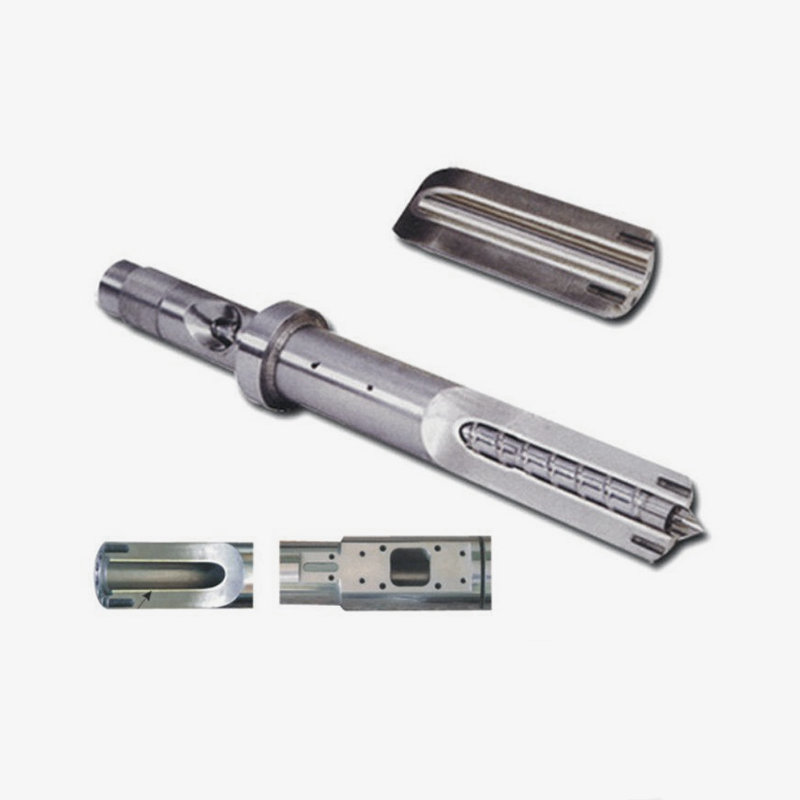
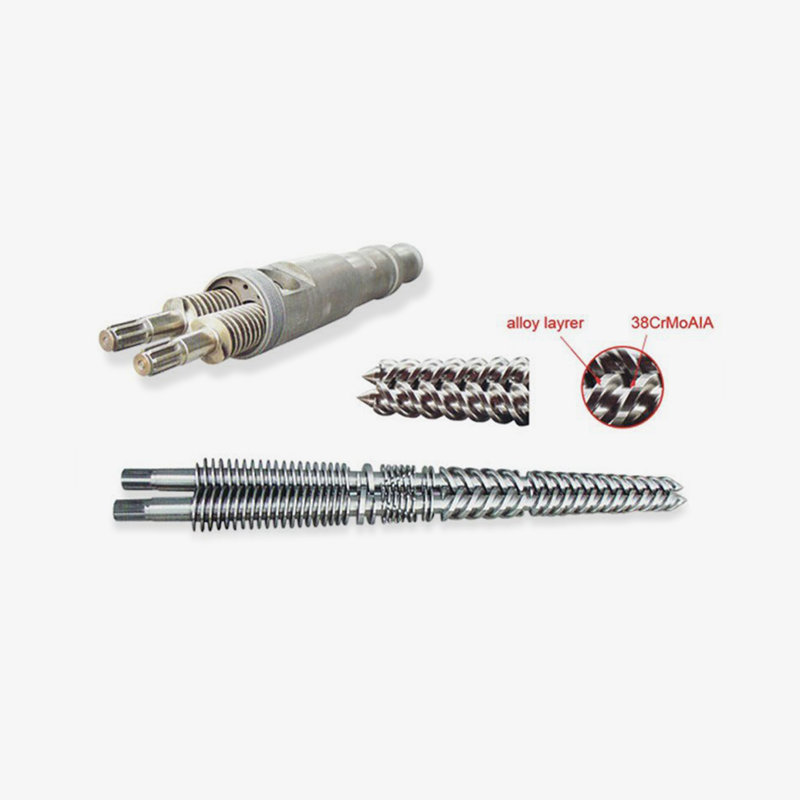 Bimetallic Barrel with Wear-Resistant Inner Alloy CoatingThis bimetallic barrel features a 2-3mm high-temperature alloy layer on the inner wall, offering longer service life than nitriding barrels. It suits engineering plastics and special polymers, and its precision CNC machining reduces friction and energy consumption, aligning with the context on barrel heating and cooling.View Product →
Key point: Screw and barrel material selection is not an afterthought; it is the main factor that decides whether your production line runs for years with stable quality or fails prematurely from preventable wear.
How to Choose an Extruder: Output, Torque, and Life
Choosing an extruder for a new production line is a structured engineering decision. You start with the product and its quality requirements, then work backward to determine the screw configuration, barrel material, drive power, and control system. A useful way to organize this is to ask three questions: what polymer and output do you need, what mixing and temperature sensitivity does the product have, and how many hours per year will the machine run?
The first question defines the screw diameter and speed. Output in kilograms per hour is roughly proportional to screw diameter squared, but it also depends on the material density and screw speed. A high-speed single-screw extruder with a barrier screw can achieve more than 1000 kg/h for small-diameter pipe, while a twin-screw compounder might run at a lower RPM but with much higher torque. Torque is often more important than RPM because it allows the screw to push through a highly viscous melt without stalling.
The second question defines whether you need special mixing elements or a devolatilization section. For example, if you are compounding carbon-black masterbatch, you need kneading blocks and a large volumetric feed area. If you are processing PVC dry blend, a conical twin-screw machine with a gentle compression profile is recommended. For optical film, you might need a screw with very low shear and a long barrel to ensure melt uniformity without degradation.
The third question defines the replacement and maintenance interval. An extruder that runs 24/7 will wear faster than one running two shifts. In that case, bimetallic barrels and hardened screw flights are usually justified. You should also consider the barrel length in terms of heating zone cost and the availability of spare parts. A supplier that stockpiles identical screw blanks and barrels can shorten downtime drastically.
| Application | Typical polymer | Recommended extruder type | Barrel recommendation |
|---|---|---|---|
| Pipe and profile | PVC, PE, PP | Conical twin-screw or single-screw | Nitrided or bimetallic |
| Compounding and masterbatch | PE, PP with fillers | Parallel twin-screw | Bimetallic, high-wear grade |
| Film and sheet | LLDPE, HDPE, PET | Single-screw with barrier screw | Nitrided |
| Temperature-sensitive polymers | PVC, TPE | Planetary screw | Nitrided with accurate cooling |
The vendor’s experience matters as much as the component specification. A screw and barrel manufacturer that also builds extrusion lines will understand how the mechanical design of the screw affects the drive sizing and heating load. They can advise you on whether a 32:1 screw is truly better than a 28:1 for your recipe, or whether the extra length will only cause polymer retention and discoloration. This is why many buyers look for a supplier who is involved in the whole extruder assembly, not just a machining shop.
Let us also consider the economics. A high-alloy screw can cost three times as much as a standard nitrided screw, but if it doubles the time between maintenance stops, the payback is often less than six months. Similarly, a bimetallic barrel costs about 30% more than a nitrided barrel, yet it can extend barrel life by 2–5 times when processing glass-filled polymers. When you calculate the total cost of ownership, include the cost of lost production during a barrel change, the labor cost of removing a seized screw, and the cost of rejected product caused by inconsistent melt temperature.
Key point: The best extruder choice is the one that matches your polymer, output, and duty cycle — not necessarily the most expensive screw material or the longest barrel.
FAQ: What Buyers and Operators Often Ask
This section collects answers to common questions that machine operators, maintenance engineers, and purchasing managers bring to us at Microwave Screw Machinery. The questions are based on real inquiries from plastics factories around the world, including customers in the United States, Germany, the UAE, Vietnam, and Thailand.
What are extruders and how do they work?Extruders are continuous processing machines that melt plastic and force it through a die to create a fixed-cross-section product. They work by rotating a screw inside a heated barrel. The screw’s flights push pellets forward through zones of increasing temperature and pressure, melting the polymer and mixing it uniformly. The molten material then enters the die, which shapes it. The same principle applies to single-screw and twin-screw machines; only the screw arrangement and mixing intensity differ. |
What is the difference between single-screw and twin-screw extruders?A single-screw extruder has one screw and relies mostly on thermal conduction and shear for melting. It is simpler, less expensive, and widely used for standard products like pipe, profile, and sheet. A twin-screw extruder has two screws that can be parallel or conical, co-rotating or counter-rotating. Twin screws create stronger mixing, better control of residence time, and higher output per unit length. They are preferred for compounding, blending, devolatilizing, and processing rigid PVC. |
What screw-to-barrel clearance should I specify?The standard clearance for a new screw and barrel set is usually 0.001 to 0.002 inches, or about 0.1% of the screw diameter. For a 50 mm screw, that means 0.05 mm to 0.10 mm. Always confirm the exact clearance with the supplier based on your barrel material and screw speed. Too tight a clearance can cause seizure; too loose a clearance reduces output and increases melt temperature. |
When should I use a bimetallic barrel instead of a nitrided barrel?Use a bimetallic barrel when the polymer compound contains abrasive fillers, such as glass fiber, talc, calcium carbonate, or titanium dioxide. Also choose bimetallic for corrosive processes where flame retardants or recycled materials release acidic gases. Bimetallic barrels have a centrifugally cast alloy lining that resists wear and corrosion far better than surface-hardened steel. The extra cost is justified when the line operates continuously or when a barrel change would cause long downtime. |
How often should I inspect screw and barrel wear?Inspect the screw and barrel every year, or every 2000 operating hours, whichever comes first. For a heavily filled compound, the interval should be shortened to 1000 hours. Measuring the barrel inside diameter and the screw flight OD at several points tells you whether the clearance has doubled from the original spec. If it has, you should plan a replacement barrel or screw. A useful rule is to check the melt temperature trend: a gradual rise in melt temperature suggests growing shear from excess clearance and premature wear. |
Key point: Asking the right questions before buying a screw or barrel can eliminate most extrusion process problems. Experienced suppliers are an essential resource for those answers.
Further Reading and Resource Links
Extruder technology is broad, and the topics above only scratch the surface of screw and barrel engineering. If you want to explore one technical area in more detail, the following resources from our engineering team and company news archive provide reliable, machine-level information.
- How parallel twin-screw technology achieves efficient material mixing, conveying, and processing — an in-depth look at screw kinematics and mixing element layout.
- How modular design improves maintenance efficiency of the extruder barrel system — explains the practical benefits of segmenting a barrel for easier service.
We regularly publish technical articles on screw wear, barrel finishing, and extrusion line commissioning. These guides are written for both OEMs and replacement buyers, with an emphasis on reproducible details and field-tested advice. If you are comparing offers from different screw and barrel suppliers, our content will help you ask sharper questions about hardness, heat treatment, and manufacturing tolerances.
Key point: A better understanding of extruder components leads to lower maintenance costs and more confident purchasing decisions.
Selected Bearing Display


 浙公网安备33090202000520号