


 English
 中文简体
中文简体
Author: WeiBo
Date: Mar 27, 2026
How to Utilize Single Screw Barrel?
Content
Optimizing Single Screw Barrel Performance
To utilize a single screw barrel effectively, you must prioritize the ratio between screw compression and barrel temperature profiling. The primary function is not merely to melt material but to generate sufficient viscous dissipation (frictional heat) to create a homogenous melt with consistent pressure. For standard polyolefins (PE, PP), a compression ratio between 2.5:1 and 3.5:1 yields optimal throughput and melt quality. Failure to match the screw geometry with the material’s specific heat capacity results in 20-30% loss in energy efficiency and increased screw wear.
The Function of Single Screw Barrel: From Solid to Homogeneous Melt
The single screw barrel operates on a fundamental principle of polymer processing: converting rotational mechanical energy into thermal energy. It accomplishes this across three distinct zones. Over 70% of the energy required for melting comes from shear heating, not external barrel heaters, which primarily serve to start the process and maintain stability.
The Three Functional Zones
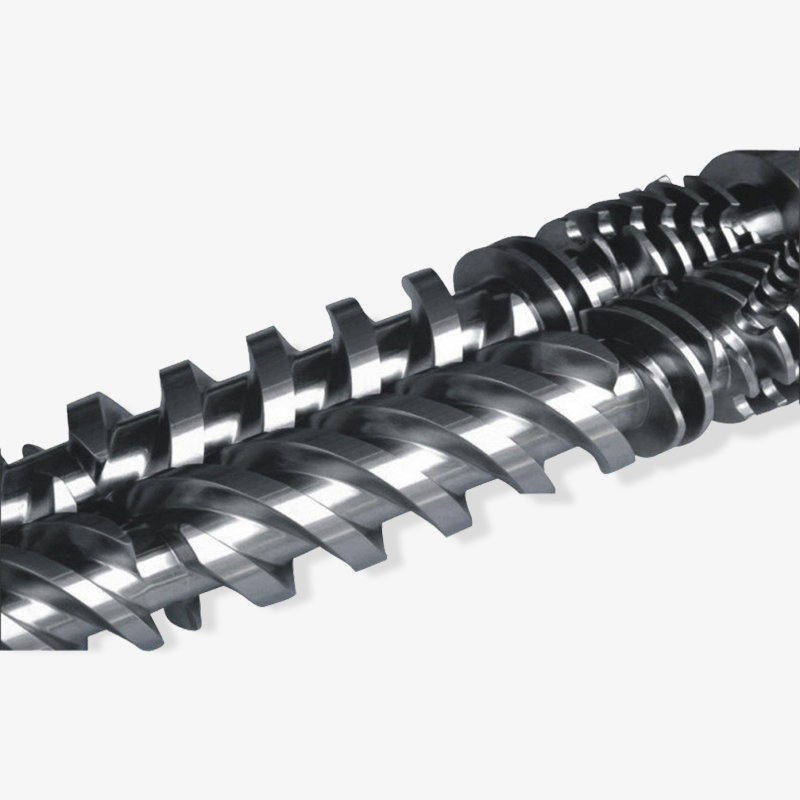
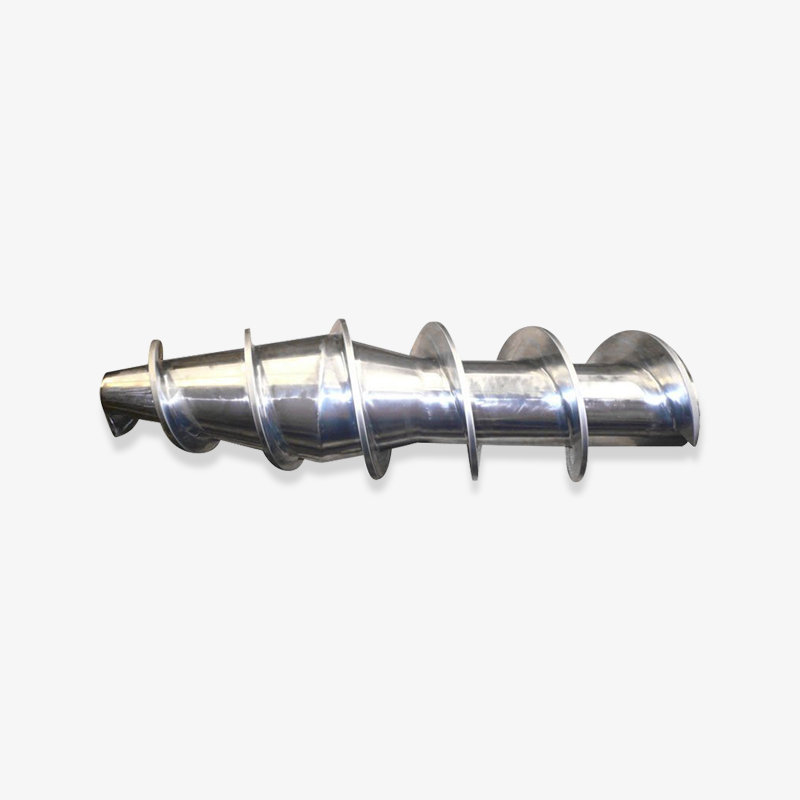
- Feed Zone (Solid Conveying): Transports solid resin from the hopper. The screw depth is deepest here. Channel depth typically ranges from 10 mm to 25 mm depending on diameter. The function is to push solids forward without premature melting.
- Compression/Transition Zone (Melting): The screw flight depth gradually decreases. This compresses the solid bed against the barrel wall, creating a melt film. The compression ratio defines the volumetric reduction. For amorphous materials like ABS, a lower ratio of 1.8:1 to 2.2:1 is used to prevent degradation.
- Metering Zone (Pumping): A constant shallow depth homogenizes the melt and builds pressure to overcome die resistance. A standard metering depth for a 90 mm screw is between 4 mm and 7 mm.
| Polymer Type | Recommended Compression Ratio | Typical L/D Ratio |
|---|---|---|
| LDPE / LLDPE | 2.5:1 - 3.5:1 | 24:1 - 30:1 |
| HDPE / PP | 3.0:1 - 4.0:1 | 24:1 - 32:1 |
| PVC (Rigid) | 1.5:1 - 2.0:1 | 20:1 - 28:1 |
| Engineering Plastics (PC, PA) | 1.8:1 - 2.5:1 | 25:1 - 35:1 |
Practical Utilization: Precision Control and Maintenance
Utilization extends beyond installation; it involves active process control to maximize lifespan and output. Implementing a "cooling screw" start-up procedure reduces thermal shock cracking by up to 40%. Instead of heating the barrel to setpoint before rotation, operators should heat zones to 80% of setpoint, rotate the screw at low RPM (10-15% of max), and then allow final heating to complete while rotating.
Key Operational Data Points
- Melt Temperature Consistency: A well-utilized screw-barrel system should maintain melt temperature variation within ±3°C across the die head. Variations exceeding ±8°C indicate improper screw design or excessive screw speed.
- Screw Speed (RPM): For optimal mixing and minimal wear, operate between 60% and 80% of the maximum rated screw speed. Running consistently below 30% causes poor melt homogeneity; running above 90% accelerates barrel wall abrasion by 200% due to boundary layer failure.
- Barrel Venting: For moisture-sensitive materials (PET, Nylon), a vented barrel (two-stage screw) with a vacuum rating of -0.08 to -0.1 MPa is essential to prevent hydrolytic degradation, which can reduce tensile strength by 15-25%.
FAQ about Single Screw Barrel: Common Challenges Solved
1. Why is my output rate dropping despite constant screw RPM?
This is classic indicator of worn screw flights or barrel liner. The radial clearance between the screw flight and barrel wall in a new unit is typically 0.15 mm to 0.25 mm. When this clearance exceeds 0.5 mm (for general purpose screws), the pressure leakage backflow increases exponentially, reducing volumetric efficiency. A 0.3 mm increase in clearance can result in a 15-20% drop in output. The solution is to either rebuild the screw (hardfacing flights) or replace the barrel liner.
2. How do I choose between a grooved feed throat and a smooth feed throat?
The choice depends on the material's coefficient of friction. Grooved feed throats increase solid conveying capacity by preventing slippage. For high-output HDPE pipe extrusion, grooved feed sections can increase output by 30-40% compared to smooth bores. However, they require more torque and are not recommended for soft materials like thermoplastic elastomers (TPE) where high friction can cause bridging in the hopper.
3. What are the signs of corrosive wear vs. abrasive wear?
Differentiating is crucial for selecting materials (e.g., Nitrided steel vs. Bimetallic barrels). Abrasive wear (from glass-filled or mineral-filled compounds) appears as uniform, smooth polishing or honing marks on the screw flight tips. Corrosive wear (from PVC, FR agents) manifests as pitting, rough surfaces, and intergranular corrosion. If processing 30% glass-filled nylon, a bimetallic barrel with a tungsten carbide lining extends lifespan by 4 to 6 times compared to a standard nitrided barrel.
4. How critical is the screw alignment?
Extremely critical. Misalignment between the screw thrust housing and the barrel flange creates bending stress. An alignment tolerance of less than 0.05 mm per meter (0.002 in/ft) is required. Misalignment beyond this is the leading cause of premature thrust bearing failure and uneven screw wear, often causing asymmetrical melt temperatures differing by 10-15°C across the die.
Conclusion: Strategic Maintenance and Performance Monitoring
Effective utilization of a single screw barrel is a balance of thermodynamics, material science, and mechanical precision. By adhering to predictive maintenance schedules (screw pull-outs every 18-24 months for high-wear applications) and monitoring specific energy consumption (SEC), operators can maintain efficiency. A target SEC for extrusion is typically between 0.20 and 0.35 kWh/kg. If SEC increases by 15% while throughput remains constant, it is a definitive indicator of screw/barrel wear requiring immediate intervention to prevent catastrophic failure and scrap rates exceeding 10%.
Selected Bearing Display


 浙公网安备33090202000520号