


 English
 中文简体
Author: WeiBo
Date: Nov 03, 2026
Injection Machine Parts: Screw and Barrel Guide for Builders and Suppliers
Content
- 1 Grouping Injection Machine Parts by the Job They Do
- 2 Inside the Plasticizing Group: Where Wear Concentrates
- 3 Matching Part Builds to the Resin You Actually Run
- 4 Reading a Screw and Barrel Drawing Like a Buyer
- 5 Where Service Calls Really Come From
- 6 Measuring Wear Before You Authorise a Replacement
- 7 Sourcing Risks: Tolerance, Interchangeability and Lead Time
- 8 Spare Parts Worth Stocking, and What to Order Just in Time
- 9 Failure Patterns and What They Mean Before You Replace Anything
- 10 Questions That Separate a Real Manufacturer From a Trader
- 11 Installation, Break-In and Everyday Habits
- 12 Frequently Asked Questions
- 12.1 Which injection machine parts wear out fastest?
- 12.2 How do I know whether to replace the screw, the barrel, or both?
- 12.3 Can I replace just the screw without replacing the barrel?
- 12.4 When is a bimetallic screw and barrel worth the extra cost?
- 12.5 Why does my machine lose cushion even with new heater bands?
- 12.6 Can a supplier make injection machine parts to my original drawing?
- 12.7 What lead time should I plan for?
- 12.8 Do parallel twin screw and conical twin screw parts follow the same rules?
- 13 Where to Go Next
A 250-tonne press that has run the same glass-filled nylon job for four years rarely fails without warning. It starts losing cushion, screw recovery time drifts up by two or three seconds, and a thin trail of black specks appears on the third shot of every cycle. By the time the maintenance log catches up, the flights near the metering zone are rounded over and the barrel bore has grown by 0.15 mm at exactly the same point.
Anyone who buys injection machine parts has watched this happen. The frustrating part is that the cost is rarely the part itself. It is the six weeks of drifting dimensions, the rejected batch that nobody can trace, and the emergency order placed at a premium because the spare was never on the shelf. The short version up front: on a moulding machine, wear concentrates in the plasticizing group, meaning the screw, barrel, check ring and nozzle, so that is where specification effort and spare stock pay back fastest.
Grouping Injection Machine Parts by the Job They Do
Machine manuals often list hundreds of line items, which is useless when a shift supervisor needs to know where to look. A more practical way to sort injection machine parts is by the function they perform during one cycle: holding the mould shut, melting and injecting, delivering power, and controlling the sequence.
That grouping matters because symptoms map onto it cleanly. Flash and uneven clamp force belong to the clamping group. Short shots, black specks and cushion variation belong to the plasticizing group. Slow screw recovery with normal heaters points at the drive or hydraulic group. When the alarm log jumps between unrelated faults, the control and instrumentation group is usually the place to start.
| Function group | Parts you will actually order | Job in the cycle | First sign it needs attention |
|---|---|---|---|
| Clamping | Platens, tie bars, toggle linkage, clamp cylinder, ejector pins and ejector plate, mould height adjustment | Holds the mould closed against injection pressure and ejects the part | Flash at the parting line, uneven clamp force left to right, ejector marks |
| Plasticizing and injection | Screw, barrel, check ring, screw tip, nozzle, heater bands, thermocouples, hopper and feed throat | Conveys, melts, mixes, meters and injects the shot | Cushion variation, black specks, short shots, recovery time creeping up |
| Drive and hydraulics | Pump, servo motor, proportional valves, accumulator, hoses, seals, hydraulic oil and filters | Delivers torque to the screw and force to the clamp | Slow recovery, oil temperature rise, pressure drop under load |
| Control and instrumentation | PLC, I/O cards, HMI, pressure and position sensors, limit switches, thermocouple inputs | Sequences the cycle and holds parameters repeatable | Cycle time drift, random alarms, parameters that will not hold |
| Mould side consumables | Sprue bush, hot runner tips, core pins, water fittings, seals | Shapes and cools the part | Gate blush, sticking parts, unbalanced cooling |
For a machine builder, this table doubles as a purchasing map. Clamping parts are largely structural and ordered once per machine design. Plasticizing parts are the ones that come back as repeat orders, which is why their drawings, tolerances and material certificates deserve the most attention in your supplier file.
Parts that touch molten polymer wear out first; parts that only carry load rarely do. Budget your attention in that order.
Inside the Plasticizing Group: Where Wear Concentrates
The plasticizing unit is a small, hot, high-pressure machine inside the bigger one. A screw turning at 80 to 200 rpm drags solid pellets through a heated barrel, compresses them, melts them against the bore wall, homogenises the melt and then acts as a piston to push it through a nozzle. Every one of those steps puts abrasive filler, corrosive gas or thermal stress against the same two surfaces.
The screw
Most injection screws run a length-to-diameter ratio between 20:1 and 24:1, divided into a feed zone, a transition or compression zone, and a metering zone. The feed zone is deep to swallow pellets; the metering zone is shallow to build pressure and shear. Between them the channel depth tapers, and that taper defines the compression ratio, typically 2.0 to 2.5 for general purpose work and lower for heat-sensitive materials such as rigid PVC.
Wear shows up first on the flight lands, not in the channel. The flight tip is the surface that rubs the bore, and once the land width grows and the flight outside diameter shrinks, melt slips backward over the flights instead of moving forward. That slip is what operators feel as longer recovery time and unstable cushion; it is not a heater problem even though it looks like one on the temperature display. Glass-filled compounds at 30 to 50 percent loading accelerate this dramatically because the fibres act like a slow grinding paste.
The barrel
Barrels fall into two broad families. Nitrided barrels use a gas-nitrided layer of roughly 0.4 to 0.7 mm on a suitable base steel, which gives a hard surface at moderate cost and is correct for unfilled commodity resins. Bimetallic barrels use a centrifugally cast alloy liner, often 2 to 5 mm thick and loaded with carbide particles, which resists abrasion far better and tolerates far more heat cycles before the surface breaks down.
The wear pattern in a barrel is rarely uniform. Bore growth typically concentrates at the end of the metering zone and just before the nozzle, where pressure and shear peak. That is why measuring the bore at only the feed opening tells you almost nothing. A three-point check across the length is the minimum useful inspection.
Check ring, screw tip and nozzle
The check ring is the cheapest part in the group and the one most often left in service too long. It slides on the screw shank and seals during injection. A sliding clearance that starts at 0.05 to 0.15 mm opens up with wear, and once it passes roughly 0.25 mm the machine can no longer hold a stable cushion because melt leaks backward during the injection stroke. Replacing a ring and tip on schedule is one of the few genuinely cheap wins in moulding maintenance.
The nozzle is the last restriction before the mould. Its spherical radius must match the sprue bush, and its orifice affects shear history. Heater bands and thermocouples are consumables too, and a band that has drifted 15 degrees cooler than the setpoint quietly changes the whole melt profile.
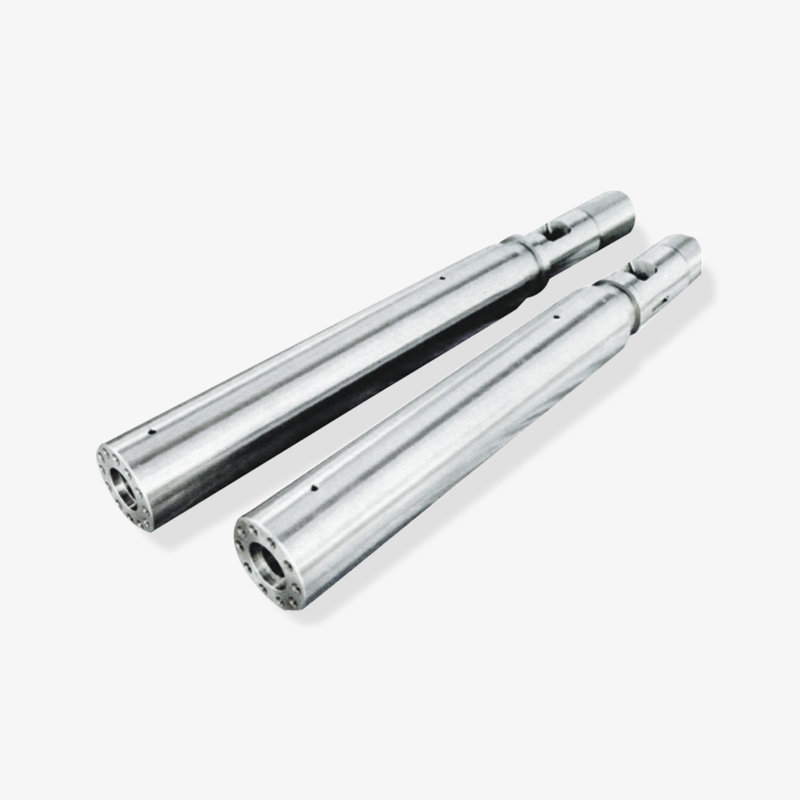
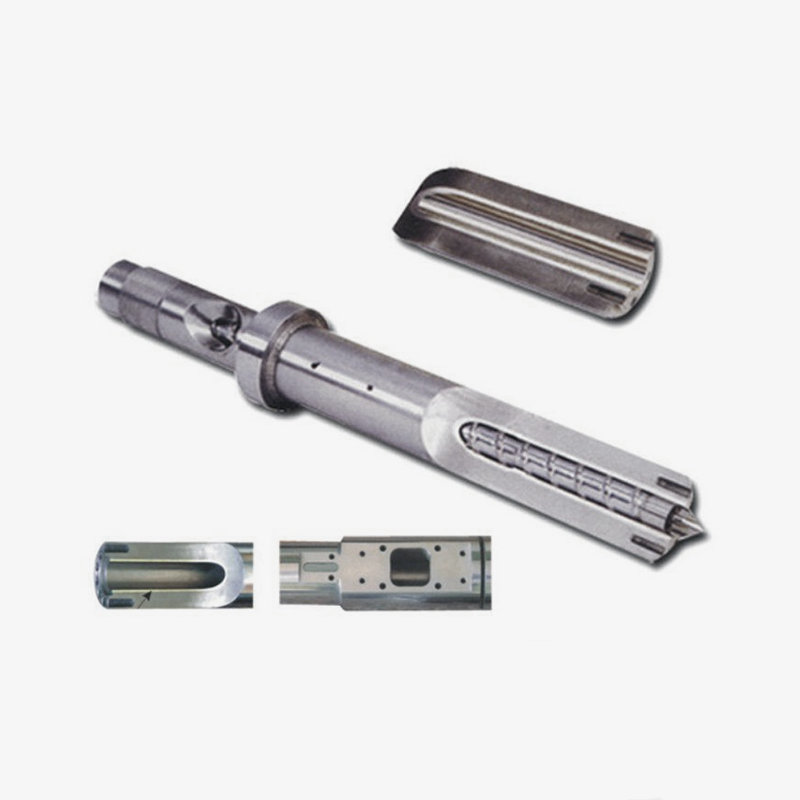
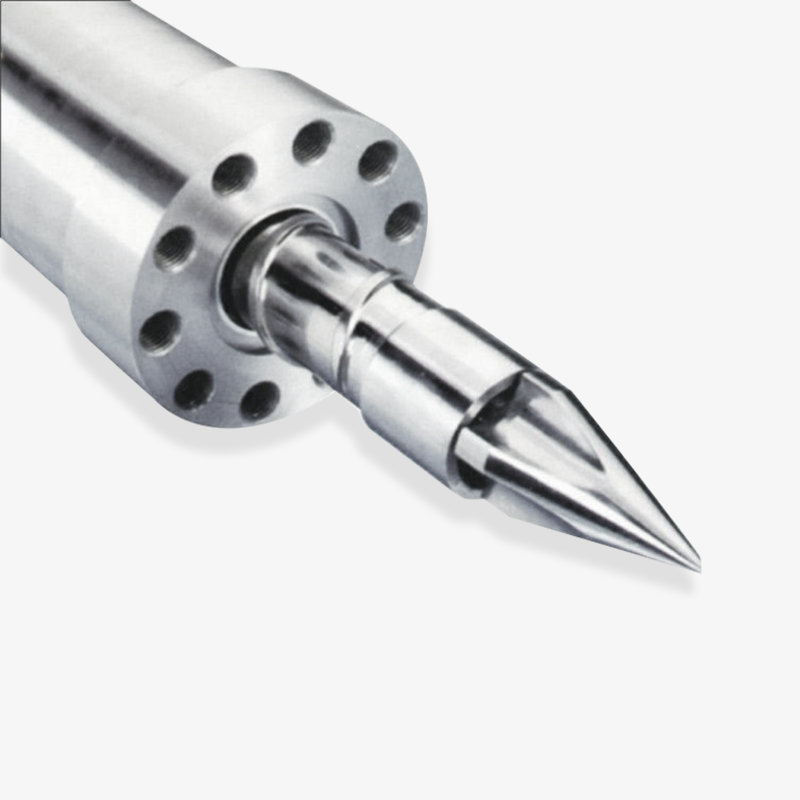 Custom Injection Molding Screw and BarrelThe screw and barrel form the plasticizing unit; a matched set helps maintain stable material transport and reduces fit-related leakage.View Product →
When you source this group as a matched set rather than as separate items, the fit between screw, ring and bore is checked by the supplier before shipping, which removes the most common cause of a "new part that still does not hold cushion".
A worn check ring mimics a worn screw almost perfectly. Replace the ring and tip before you authorise a screw order.
Matching Part Builds to the Resin You Actually Run
The most common specification mistake is buying the build that suits the machine rather than the resin. Two 180-tonne machines running identical shot sizes may need completely different screw and barrel builds if one moulds unfilled polypropylene and the other moulds 40 percent glass-filled polyamide.
Wear mode should drive the choice. Abrasive fillers cause mechanical erosion of flight lands and bore walls. Corrosive melts, particularly PVC and some flame-retardant grades, attack the nitrided layer chemically and produce pitting rather than smooth polishing. High-temperature resins oxidise the steel surface and shorten heater band life. Each of those needs a different answer.
| Resin or filler | Dominant wear mode | Barrel direction | Screw direction | What to watch |
|---|---|---|---|---|
| Unfilled PP, PE, PS, ABS, PC | Mild adhesive wear | Nitrided bore, standard liner | Nitrided steel, 20:1 to 22:1 L/D | Slow loss of metering repeatability after several years |
| Glass-filled PA, PBT, POM at 20 to 50 percent | Severe abrasion | Bimetallic liner with carbide phase | Bimetallic or welded hard facing on flights, mixing section | Rounded flight corners and rising screw torque |
| Rigid and plasticised PVC | Corrosion plus thermal degradation | Corrosion-resistant bimetallic or chrome-plated bore | Chrome-plated, low compression, no dead spots | Black lines and pitting on nitrided surfaces |
| PPS, PEI, PEEK, LCP | High-temperature oxidation with abrasive fillers | Bimetallic with heat-stable alloy | High-temperature alloy with protected tip | Heater band burnout and discoloured screw surfaces |
| Foaming EPE and EPP | Low wear, unstable pressure | Standard nitrided bore is usually sufficient | Screw with dedicated mixing and decompression zone | Density variation and uneven cell structure |
| Recycled flake with filler and metal traces | Mixed abrasion and impact | Bimetallic bore | Bimetallic screw with reinforced tip | Sudden torque spikes and feed zone damage |
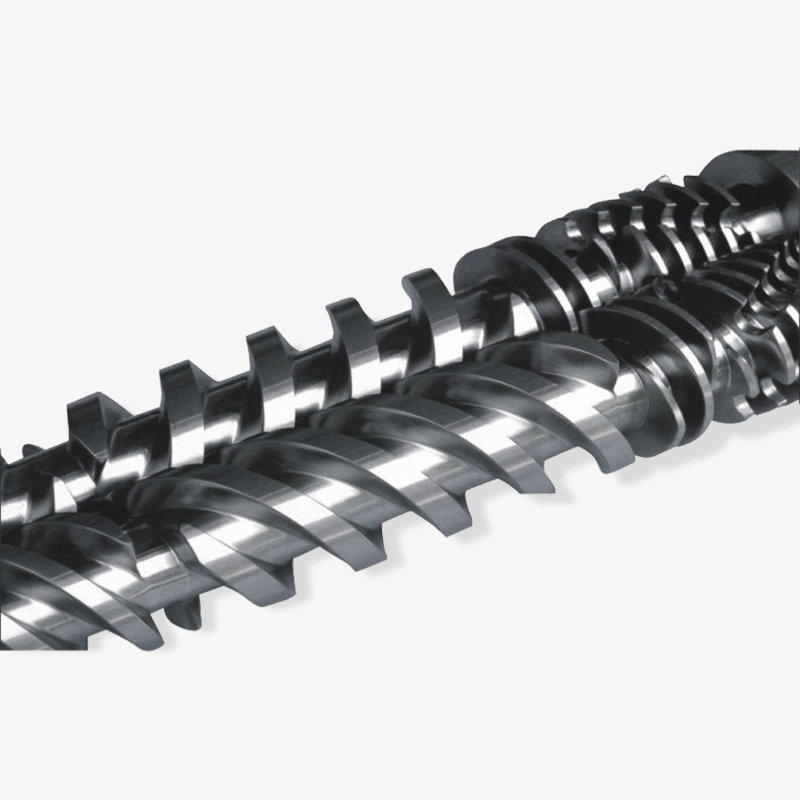
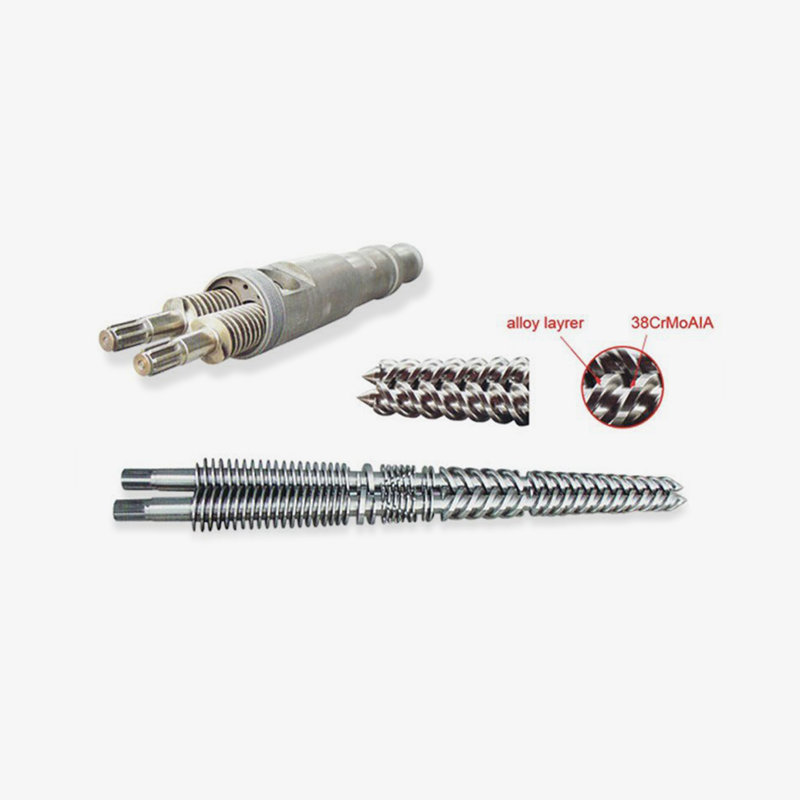 Bimetallic Screw for Filled and High-Temperature ResinsA bimetallic screw combines a tough base with a wear- and corrosion-resistant alloy surface for filled and high-temperature engineering resins.View Product →
A bimetallic build costs more than a nitrided one, and for a machine running unfilled polypropylene on a 20-second cycle that extra cost buys very little. For a glass-filled job running three shifts, it usually pays back within the first year of avoided downtime. The honest answer depends on filler loading, cycle count and how tolerant your customer is of a quality drift before it becomes a complaint.
Specify the wear build from the filled or corrosive job the machine will run most, not from the easiest job it will ever run.
Reading a Screw and Barrel Drawing Like a Buyer
Purchase engineers who can read a screw drawing catch most supply problems before the order is placed. The drawing is not just a shape; it is a set of commitments about geometry, heat treatment and fit. Here is the sequence worth checking every time.
- Diameter and fit class. Nominal screw diameter plus tolerance, matched against the barrel bore tolerance. A screw and barrel ordered from two different suppliers is the single most common source of excessive initial clearance.
- Length-to-diameter ratio and zone lengths. Feed, transition and metering lengths should be shown as percentages or absolute dimensions. Vague drawings produce screws that run but do not plasticise the same way as the original.
- Compression ratio. Confirm the ratio suits the resin. A 3:1 screw dropped into a PVC job will shear-degrade material regardless of how well it is machined.
- Flight geometry. Pitch, flight width, channel depth profile and any barrier or mixing flights. These determine melt homogeneity and output, not just wear life.
- Base material and heat treatment. Base steel grade, nitriding depth and surface hardness, or bimetallic liner thickness and carbide content. Ask for the actual values, not the phrase "high quality material".
- Straightness and surface finish. Straightness per unit length and bore roughness. Both affect clearance in ways that only appear after the machine is hot.
- Interface details. Screw shank coupling, keyway or spline, thread specification, check ring seat dimensions. These are the dimensions that decide whether the part fits at all.
- Nozzle interface. Spherical radius, orifice diameter and seat angle, matched to the sprue bush on the mould side.
A drawing that answers all eight points can be quoted accurately by any competent manufacturer. A drawing that answers three of them will produce a part that fits, runs, and slowly convinces everyone that the machine is the problem.
Every dimension missing from your drawing becomes an assumption your supplier has to make on your behalf.
Where Service Calls Really Come From
Before deciding what to stock, it helps to see how plasticizing-unit complaints typically distribute. The chart below is an illustrative pattern drawn from common shop-floor reports rather than a formal survey, so treat the shape as guidance and the exact percentages as approximate.
Illustrative split of plasticizing-unit service calls
Screw flight wear
34%
Check ring and screw tip
22%
Barrel bore wear at metering end
18%
Heater band and thermocouple faults
14%
Nozzle blockage or seat damage
7%
Feed throat bridging and starvation
5%
The first three categories add up to roughly three quarters of the total, which is why screw and barrel geometry deserves the most detailed drawing in your parts library. It also explains why a maintenance team that keeps only heater bands in stock will still lose days whenever cushion drifts.
The two smallest categories are the ones most often misdiagnosed. Nozzle seat damage and feed throat bridging both show up as short shots, and both get blamed on the screw. A quick pressure check at the nozzle and a look at the feed throat temperature will separate them before anyone orders a replacement.
For a machine builder shipping equipment into export markets, this distribution has a second implication. Spare kits sold alongside a new machine should mirror the larger bars, not the cheapest ones, because a customer who receives a screw tip but no check ring will still call the service line.
Spare kits should follow the failure distribution, and two thirds of the failures sit inside the screw and barrel assembly.
Measuring Wear Before You Authorise a Replacement
Replacing a screw on suspicion is expensive. Replacing it on measurement is a decision you can defend. The measurements below are the ones that actually settle the question, and they take less than an hour on a stopped machine with the screw removed.
| Measurement | Where to take it | Typical new condition | Decision threshold |
|---|---|---|---|
| Screw flight outside diameter | Feed, transition and metering sections | Drawing nominal within tolerance | 0.25 to 0.4 mm below nominal |
| Barrel bore diameter | Feed opening, middle, metering end | Drawing nominal, fine finish | 0.15 to 0.25 mm above nominal |
| Radial clearance at metering | Metering zone only | Typically 0.10 to 0.20 mm | Above 0.35 mm |
| Check ring sliding clearance | Ring against screw shank | 0.05 to 0.15 mm | Above 0.25 mm |
| Straightness | Full screw length on V blocks | Within 0.02 mm per 300 mm | Visible bend or runout over 0.05 mm |
| Bore surface condition | Metering section | Fine, uniform finish | Scoring, pitting or roughness above 1.6 micrometre Ra |
Two practical notes. First, measure the bore at temperature if you can, because a hot barrel is not the same shape as a cold one. Second, keep the previous measurement sheet in the machine file. A single reading tells you the clearance; two readings six months apart tell you the wear rate, and the wear rate is what predicts the next failure date.
Two measurement sheets are worth more than one inspection report, because only the trend tells you when to order.
Sourcing Risks: Tolerance, Interchangeability and Lead Time
Most complaints about replacement parts are not about machining quality. They are about the gap between what the buyer assumed and what the supplier assumed. These are the risks worth writing into a purchase order.
- Clearance stacking. A screw at the top of its tolerance and a barrel at the bottom of its tolerance can leave a clearance twice the design value before the machine ever runs.
- Hardness claims without certificates. Nitriding depth and surface hardness should arrive as measured values with the shipment, not as a marketing sentence on a website.
- Interchangeability of the interface end. Screw shanks, keyways and coupling threads vary between machine generations. A drawing of the flights without a drawing of the drive end is incomplete.
- Lead time quoted for the wrong product. Custom screws and bimetallic barrels are made to order and typically need weeks rather than days. Standard nitrided screws may sit in stock. Confirm which schedule you are being quoted against.
- Packing and transport damage. Long slender parts bend. Export packing should support the screw along its length, and the receiving inspection should include a straightness check, not just a visual look.
- Documentation for export customers. Material certificates, dimensional reports and heat treatment records are often required by the machine builder's own end customer, especially in European and North American markets.
For buyers comparing a manufacturer, a trading supplier and a wholesaler, the distinction usually appears in exactly this area. A producer can show you the process route for nitriding or centrifugal casting and can adjust a drawing. A trader forwards your drawing and returns a quotation. That is not automatically worse, but it changes who carries the risk when a tolerance is missed.
Put clearance, hardness and drive-end dimensions in writing, and most replacement-part disputes disappear before they start.
Spare Parts Worth Stocking, and What to Order Just in Time
Stock decisions are usually made by cost per item rather than cost of downtime, which is exactly backwards. The right question is how many hours of production a missing part costs, and how predictable its failure timing is.
Check rings, screw tips, nozzles, heater bands, thermocouples and seals belong in stock. They are inexpensive relative to downtime, they fail predictably, and their dimensions are stable across production runs. A single shelf drawer covering these items can turn a two-day stoppage into a two-hour changeover.
Screws and barrels belong to a planned-order category rather than a stock category. They are made to a specific geometry, they are expensive to hold idle, and they last long enough that holding three variants ties up capital for years. The right approach is a measured wear trend plus a known supplier lead time, so the order goes out when the trend crosses a threshold rather than when the machine stops.
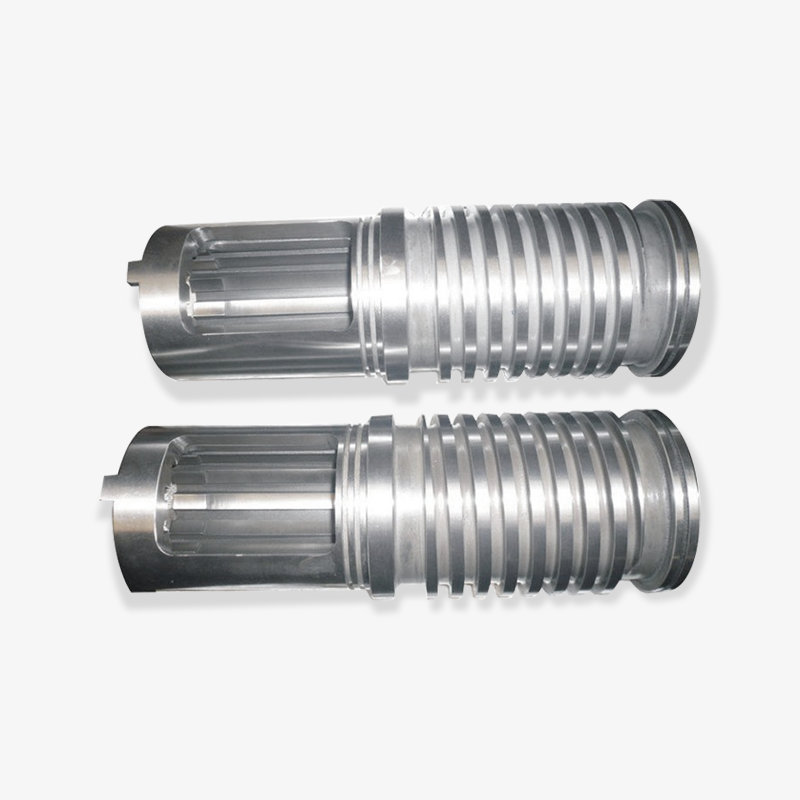
 SKD61 Injection Molding Machine AccessoriesFront body, screw small parts and nozzle in SKD61, with optimized flow paths for stable melt flow and wear resistance.View Product →
Consumable accessories are worth consolidating with the same supplier that produces the screw and barrel, because the ring, tip and seat dimensions are matched to that specific screw rather than to a generic standard.
For machine builders running a spare kit programme, a sensible structure is one consumable kit per machine shipped and one replacement kit per two years of expected service. That keeps the end customer supported without asking them to warehouse an entire plasticizing unit.
Stock the parts that fail predictably and cheaply; plan the parts that fail slowly and expensively.
Failure Patterns and What They Mean Before You Replace Anything
Reading a failure correctly saves more money than buying well. Four patterns cover most of what a moulding floor actually reports.
Cushion drift with normal temperatures
When the cushion wanders and heater zones are holding, suspect the check ring first, then screw flight wear. A quick test is to run the screw forward on a blocked nozzle and watch whether the screw keeps creeping. If it does, melt is slipping past the ring or the flights, and no amount of temperature adjustment will recover repeatability.
Black specks that appear mid-run
Specks that come and go usually mean degraded material held in a dead spot rather than a worn screw. Check the check ring seat, the nozzle seat and any step between the barrel and nozzle. If the specks are consistent and grow over weeks, then surface breakdown of the bore or a cracked nitride layer becomes the more likely cause.
Rising screw torque and slower recovery
Torque rise with a stable setpoint points to either a worn barrel creating a rough bore, or a feed zone problem starving the flights. Check the feed throat temperature and the hopper throat cooling before ordering anything. Starvation mimics wear surprisingly well.
Short shots on a machine that used to fill easily
Short shots have many causes, but when they appear together with a longer recovery time, the plasticizing group is the place to look. When they appear alone with stable cushion, the problem is more likely in the nozzle, the mould temperature or the injection profile. Separating these two cases takes ten minutes and prevents an expensive misdiagnosis.
Keeping a simple log of cushion, recovery time and torque per shift turns all four patterns from anecdote into evidence. It is the least glamorous maintenance habit and the one that pays back most consistently.
A shift-level log of cushion, recovery and torque identifies a worn plasticizing group long before parts are damaged.
Questions That Separate a Real Manufacturer From a Trader
When you compare suppliers for injection machine parts, the answers to a handful of questions tell you more than a catalogue does.
- Can you show the process route for the nitriding or the centrifugal casting, and do you control it in house?
- Which base steel grade do you stock, and can you supply the mill certificate with the shipment?
- How do you measure flight outside diameter, and at how many points along the screw?
- Can you machine to a customer drawing that differs from your standard series, and what is the minimum order quantity?
- What tolerance do you hold on straightness, and how is the part supported during packing and shipping?
- What is your realistic lead time for a custom bimetallic screw and barrel rather than a standard nitrided screw?
- Which export markets do you already ship to, and what documentation do those customers require?
The pattern in the answers matters. A producer describes operations, inspection points and lead times in specific terms. A reseller describes products and prices. Neither is automatically wrong, but only one of them can adjust a drawing when your machine builder changes the feed zone length.
For procurement teams working across borders, it also helps to ask who handles the technical questions after the order. An experienced manufacturer will put an engineer on the specification discussion, which is exactly where most replacement-part problems originate.
Ask about process and inspection, not about product categories; the answers separate a producer from a reseller immediately.
Installation, Break-In and Everyday Habits
A correctly specified screw and barrel can still fail early through installation. Three habits prevent most of it.
First, check alignment and seating before heating. The screw should rotate freely by hand at ambient temperature, and the barrel flange should seat flat against the housing. Second, apply a proper heat soak. Bring the barrel up in stages and hold at temperature long enough for the whole assembly to stabilise before running material, because a cold screw forced into a hot barrel is where galling begins.
Third, run a controlled break-in. Keep the first few hundred shots at moderate back pressure and moderate screw speed, and watch the torque trend rather than the shot appearance. If torque climbs steadily during break-in, stop and recheck clearance rather than pushing through it.
Day to day, the habits that extend life are unglamorous: keep the hopper and feed throat cool, avoid running regrind with metal contamination, keep the purge routine honest at shutdown, and never leave PVC sitting hot in the barrel over a long stoppage. Each of these removes one mechanism of wear without costing anything except discipline.
Most early screw failures are installation or shutdown habits, not machining defects.
Frequently Asked Questions
Which injection machine parts wear out fastest?
The check ring and screw tip wear fastest in terms of hours, because they seal against melt pressure thousands of times per shift. The screw flights and barrel bore wear more slowly but cost far more to replace, which is why the ring is usually the first replacement and the plasticizing unit the biggest planned expense.
How do I know whether to replace the screw, the barrel, or both?
Measure radial clearance at the metering zone and compare it with the original drawing. If the screw diameter is worn beyond the threshold while the bore is still within tolerance, a screw alone may restore performance. If the bore has grown, replacing only the screw leaves you with excessive clearance from day one and the new part will wear quickly.
Can I replace just the screw without replacing the barrel?
It is possible and sometimes sensible, but only with measurement evidence. A new screw running inside a worn bore loses the designed clearance and often performs worse than expected. Suppliers who produce both parts can check the fit before shipping, which is the safer route for anything other than a low-cost commodity machine.
When is a bimetallic screw and barrel worth the extra cost?
It pays back when the machine runs abrasive fillers, corrosive melts, or high cycle counts where downtime is expensive. For unfilled commodity resins on moderate cycles, a correctly specified nitrided build performs well and costs less. The decision should follow filler loading and expected service life rather than habit.
Why does my machine lose cushion even with new heater bands?
Cushion loss with correct temperatures almost always means melt slipping backward, either past the check ring or over worn flights. Test by pushing the screw forward against a blocked nozzle and watching for creep. If the screw creeps, the answer is in the plasticizing group rather than the heating system.
Can a supplier make injection machine parts to my original drawing?
Yes, and this is the normal route for machine builders and for replacement work on older equipment. Supply a complete drawing including drive end, flight geometry, material specification and heat treatment. Suppliers who ask for those details before quoting are usually the ones who will check them after machining as well.
What lead time should I plan for?
Standard nitrided screws may be available from stock, while custom geometry and bimetallic builds are made to order and typically run in weeks rather than days. Plan the purchase from your wear trend rather than from the failure date, and confirm which schedule applies to the exact specification you are ordering.
Do parallel twin screw and conical twin screw parts follow the same rules?
The logic is similar but the geometry is not. Intermeshing twin screws rely on precise flight profiles and centreline distance, so interchangeability tolerances are tighter than on a single screw. Wear measurement still focuses on flight lands and bore surfaces, but the acceptable clearance values are smaller and should always come from the machine builder's drawing.
Most cushion, short shot and speck problems trace back to one measured clearance, so measure before you order.
Where to Go Next
If you are working through a wear decision now, two resources are worth opening before you request a quotation. One walks through the symptoms and causes that show up most often on moulding machines; the other shows the standard range of plasticizing components available for injection equipment.
Common problems with injection moulding machine screws and barrels Injection moulding machine screw and barrel range
Zhoushan Microwave Screw Machinery has produced screws, barrels and plastic machinery components since 1990 from a production base of more than 10,000 square metres, supplying machine builders and replacement-part buyers in the United States, Germany, Dubai, Vietnam and Thailand. Custom geometry, matched screw and barrel sets, and consumable accessories can be quoted from your drawing.
Selected Bearing Display


 浙公网安备33090202000520号
