


 English
 中文简体
Author: WeiBo
Date: Nov 09, 2026
Two Platen Injection Molding Machine: Clamp Design, Screw Barrel and Buying Checks
Content
- 1 How a Two Platen Injection Molding Machine Builds Clamp Force
- 2 Two Platen vs Toggle Clamp: Which Fits Your Molding Floor
- 3 Sizing Clamp Force, Platen and Mold Space Before You Buy
- 4 Where Two Platen Machines Change Plant Layout and Energy Use
- 5 The Injection Unit Still Decides Part Quality on a Two Platen Machine
- 6 Screw and Barrel Specifications That Match Large Clamp Units
- 7 Wear, Materials and the Cost of Getting the Barrel Wrong
- 8 RFQ Checklist for Buyers Working With a Screw and Barrel Manufacturer
- 9 Price, Lead Time and Supplier Selection
- 10 FAQ: Two Platen Injection Molding Machine Questions
- 10.1 Is a two platen injection molding machine better than a toggle machine?
- 10.2 How do I calculate the clamp force I need?
- 10.3 Does the injection unit differ on a two platen machine?
- 10.4 How often do screws and barrels need replacing?
- 10.5 Can I fit a new screw and barrel to an older machine?
- 10.6 What should I check on delivery?
- 11 Related Reading and Next Steps
When a molder in Vietnam priced a 1,300-tonne cell for battery housings, the number that decided the project was not the machine price. It was floor space. The toggle-clamp layout needed a little over eleven metres of bay length, and the building only had nine. Moving to a two platen injection molding machine brought the same clamp force into a footprint the factory could actually accommodate, which kept the crane, the cooling runs and the existing mould trolleys exactly where they were.
That is the usual reason buyers start looking at two platen designs: not novelty, but space, oil volume and the cost of maintaining a toggle linkage once tonnage climbs. Above roughly 800 tonnes of clamp force, a two platen clamp normally wins on machine length and on parts count. Below about 400 tonnes, a toggle machine is usually cheaper to buy and quicker in dry cycle. Between those two points the decision rests on mould height range, cycle time targets, and how much of your maintenance budget you want to spend on pins, bushes and lubrication lines.
There is a second half to the decision that receives far less attention: the injection unit. A two platen machine with the wrong screw diameter, the wrong barrel lining or a check ring that wears out in eight months will not deliver the productivity the clamp design promised. This article covers both halves, because they are ordered together and they are quoted together.
A two platen clamp earns its price mainly above 800 tonnes, where saved bay length and fewer wear parts outweigh the higher capital cost.
How a Two Platen Injection Molding Machine Builds Clamp Force
The clamp unit of a two platen machine contains only two large platens: one fixed to the machine frame, one moving on the tie bars or on a linear guide. There is no third platen and no toggle linkage behind the moving platen. Force comes directly from hydraulic cylinders, and the tie bars are used for guidance and for locking rather than for multiplying force through a mechanical linkage.
The moving platen travels the full opening stroke under low pressure and high flow from the long-stroke cylinders. Once the mould faces meet, split nuts inside the moving platen close onto the grooves machined into the tie bars. Short-stroke cylinders then pull the moving platen forward a few millimetres against the fixed platen, stretching the tie bars and building clamp force. Opening reverses the sequence: pressure is released, the nuts retract, and the long-stroke cylinders take the platen back.
The clamp cycle in four steps
- Rapid close: long-stroke cylinders move the platen at low pressure until the mould protection zone is reached.
- Mould protection: closing force is limited so that a misplaced insert or a stuck part stops the platen instead of crushing the mould.
- Locking: split nuts engage the tie bar grooves, and short-stroke cylinders build the set clamp force.
- Release and open: clamp pressure drops, nuts retract, and the platen returns at controlled speed to protect the part and the ejection system.
Why the tie bar locking system is the detail that matters
Because clamp force is applied over a very short stroke, the accuracy of nut engagement decides how evenly the force reaches the four corners of the platen. If one nut engages a fraction late, the platen tilts, and a tilted platen shows up as flash on one side of the mould and short shots on the other. Better controls measure tie bar strain directly and trim the individual cylinder pressures, which keeps platen parallelism inside a working tolerance usually quoted around 0.1 to 0.2 mm per metre.
The practical maintenance consequence is straightforward. You no longer service toggle pins, bushes and a lubrication distribution block every few weeks, but you do need to keep the tie bar grooves clean, check nut tooth wear and verify the strain calibration once a year. In plants with dusty regrind or heavy glass-filled compounds, groove contamination is the most common cause of a clamp that suddenly refuses to build full tonnage.
Two platen clamp force comes from short-stroke cylinders, so the tie bar nut engagement, not a toggle linkage, becomes the maintenance-critical item.
Two Platen vs Toggle Clamp: Which Fits Your Molding Floor
Most buyers comparing these two architectures are really comparing three things: how much building the machine consumes, how much maintenance labour it absorbs, and how much flexibility it leaves for future moulds. The table below sets out the differences that show up in real quotations.
| Consideration | Two platen clamp | Toggle (three platen) clamp |
|---|---|---|
| Machine length for the same tonnage | Shorter, often 15 to 25 percent less bay length at high tonnage | Longer, because the toggle support platen adds length behind the moving platen |
| Wear parts in the clamp | Few: nut teeth, guide bushes, cylinder seals | More: toggle pins, bushes, linkage plates, lubrication lines |
| Dry cycle speed | Good, but usually slightly slower than a well-tuned toggle at small tonnage | Fast, especially below 500 tonnes where moving mass is low |
| Mould height flexibility | Wide, because stroke is hydraulic and mould height adjustment is simple | Limited by toggle geometry and the motorised mould height range |
| Capital cost below 400 tonnes | Higher per tonne of clamp force | Lower, which is why small machines are mostly toggle |
| Capital cost above 1,000 tonnes | Competitive, and often lower once building and foundation work are counted | Higher, plus more steel and more floor loading |
| Oil volume and hydraulics | Low oil movement during clamping because the stroke is short | Clamp cylinder is small, but the linkage needs separate lubrication |
| Service and spare parts | Fewer parts, but large cylinders and nuts are expensive when they fail | Cheap individual parts, replaced more often |
The dry cycle gap is worth quantifying rather than assuming. On a 300-tonne machine running a 12-second cycle, a toggle may hold a half-second advantage, which is around four percent output. On a 1,300-tonne machine running a 45-second cycle for a large part, that half second is closer to one percent, and the saved bay length plus reduced maintenance are worth far more than the cycle difference.
Mould height range deserves more attention than it usually gets, particularly for job shops. A hydraulic two platen clamp accepts a wider spread of mould stack heights without changing the machine configuration, which matters when a moulder wins a contract with a mould that was built for a different press. Toggle machines handle this through motorised mould height adjustment, and on very tall moulds the toggle may not fully straighten, which reduces the achievable clamp force.
There is also the question of foundations. A 2,000-tonne toggle machine concentrates load differently from a two platen machine of the same rating, and in older buildings the difference can decide whether you need a new pit or a reinforced slab. Ask both suppliers for floor loading and pit depth drawings before signing anything.
Compare two platen and toggle machines on bay length, mould height range and five-year maintenance cost, not on dry cycle alone.
Sizing Clamp Force, Platen and Mold Space Before You Buy
Clamp force is not a number you pick because the machine next door has it. It is calculated from the projected area of the part and runners, multiplied by the cavity pressure needed to fill and pack the mould. A workable estimation formula in metric units is clamp force in tonnes equal to projected area in square centimetres multiplied by cavity pressure in bar, divided by 1,000. Many moulders simply use a rule of thumb of 0.5 to 0.8 tonnes per square centimetre of projected area for commodity parts, which lands in the same place.
Four checks that decide whether the machine fits the mould
- Clamp force with margin: calculate the requirement, then add 10 to 20 percent for packing, off-centre cavities and future moulds with larger projected area.
- Tie bar spacing and platen size: the mould body, clamp plates and any hydraulic core pull must physically pass between the tie bars and land inside the platen bolt pattern.
- Mould height and daylight: the closed stack height must sit between the minimum and maximum mould height, and the open daylight must clear the part plus the robot gripper.
- Ejection: ejector stroke and ejector force must suit the part depth, especially for deep drawn housings where a short stroke leaves the part hanging on the core.
| Part and material type | Cavity pressure for estimation (bar) | Comment |
|---|---|---|
| PE or PP, thick wall, short flow length | 300 to 400 | Easy fill, generous wall section |
| General ABS, PS, HDPE parts | 400 to 500 | Standard working range for estimation |
| Thin wall PP packaging | 600 to 800 | High flow length to wall thickness ratio |
| Glass filled PA or PBT technical parts | 700 to 1,000 | High viscosity plus filler loading |
| Precision parts with tight tolerance | 800 to 1,200 | Full packing and low shrinkage required |
Platen deflection is the second number that decides part quality. A platen that bends under load lets the mould faces separate in the centre, and the result is a part with flash in the middle and short shots at the edges. Machine builders quote deflection limits, and it is fair to ask for the value at rated clamp force. It is equally fair to ask how the value changes when the mould is mounted off centre, which is normal in job shops running mixed work.
For very large moulds, tie bar spacing rather than tonnage often becomes the limiting factor. It is common to find a machine with enough clamp force but not enough space between the bars for the mould base, which forces a jump to the next size and a much larger capital commitment. Drawing the mould envelope on paper before the machine enquiry saves weeks of negotiation later.
Calculate clamp force from projected area and cavity pressure, then confirm tie bar spacing, mould height and ejector stroke before the machine is ordered.
Where Two Platen Machines Change Plant Layout and Energy Use
Layout changes are easiest to see when machine length is drawn to scale for a whole bay. The chart below compares indicative overall machine lengths for the same clamp force class, using typical catalogue dimensions rather than a specific builder's drawing. It is meant to show the trend, not to replace a quotation drawing.
Indicative machine length by clamp force class (metres)
Toggle clampTwo platen clamp
450 t toggle
7.2
450 t two platen
6.0
900 t toggle
9.4
900 t two platen
7.8
1,300 t toggle
11.2
1,300 t two platen
9.1
2,000 t toggle
14.5
2,000 t two platen
11.6
The gap widens as tonnage rises, which is exactly why two platen layouts dominate new high-tonnage installations. Saving two to three metres of bay length is rarely just a building cost; it often decides whether an extra machine fits into an existing crane span, and that extra machine may be worth more than the price difference between clamp designs.
Energy behaviour follows the same pattern. Because clamp force is generated over a short stroke, the volume of oil moved during clamping is small, and the pump does less work per cycle at high tonnage. That advantage is easiest to capture with a servo-driven pump or a closed-loop variable displacement system, paired with an accumulator where the clamp and injection peaks overlap. On machines without that control strategy, the theoretical saving can disappear.
Cooling, hydraulics and service access also shift. A shorter machine usually means shorter hydraulic runs and fewer leak points, but the cylinders sit close to the tie bars, so access for seal replacement needs thinking about at the layout stage. Leave at least a metre of clear space at the non-operator side, and check that the crane hook can reach the barrel for screw removal without dismantling the safety fence.
Above 900 tonnes, the saved bay length and reduced oil movement are the two layout benefits that most often justify a two platen machine.
The Injection Unit Still Decides Part Quality on a Two Platen Machine
Buyers spend months on the clamp and then accept whatever injection unit is in the standard catalogue. That is a mistake, because on a large two platen machine the injection unit is where most quality problems appear once production starts. Shot weight, injection rate, plasticising capacity and melt homogeneity all come from the screw, barrel and nozzle combination, and none of those are decided by clamp design.
Screw diameter is the first trade-off. A larger screw delivers more shot weight for the same stroke, but for a given hydraulic pressure it produces lower specific injection pressure at the nozzle. Going up one screw size to gain shot capacity can cost twenty to thirty percent of available injection pressure, which is enough to turn a comfortable process window into a marginal one on a thin-wall part. The correct approach is to size the screw on shot weight and then confirm that the resulting injection pressure, multiplied by the intensification ratio, still covers the mould's requirement with margin.
Plasticising capacity is the constraint that catches high-cavitation jobs. The screw must melt and homogenise the shot during the cooling time of the previous cycle, so recovery rate sets the ceiling on output. A screw with a proper barrier section and a well-designed feed zone recovers faster at lower screw speed, which reduces melt temperature variation and protects the polymer from shear damage.
Barrel length and heating zone count follow the screw. A general-purpose unit may run with four or five zones; a wide-processing machine handling engineering resins often needs more zones plus a separate nozzle heater and a melt pressure sensor at the nozzle. The sensor position matters, because a transducer mounted too far from the tip reads a delayed pressure that the controller then over-corrects.
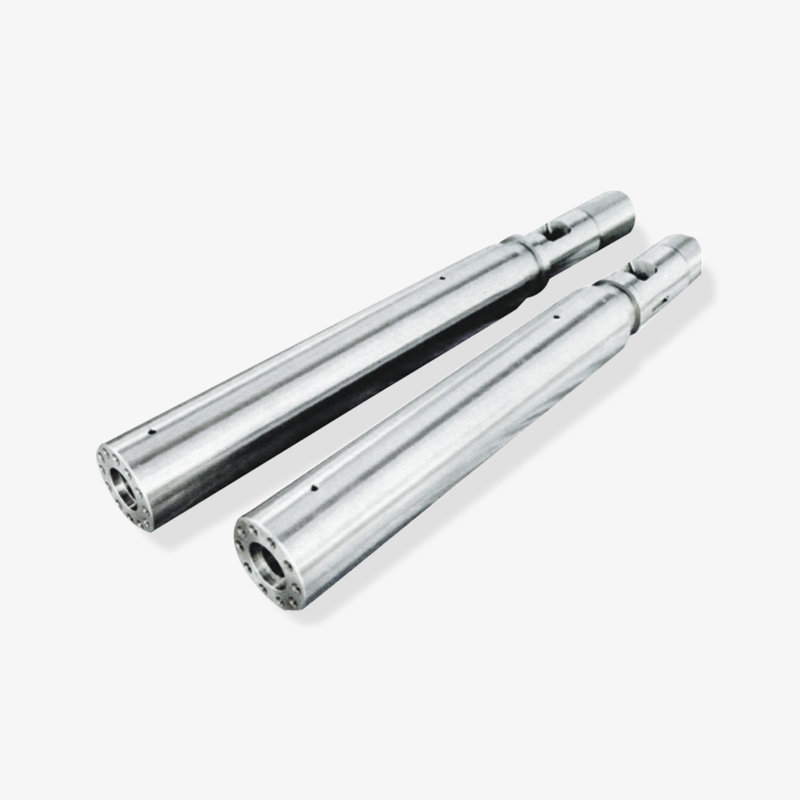
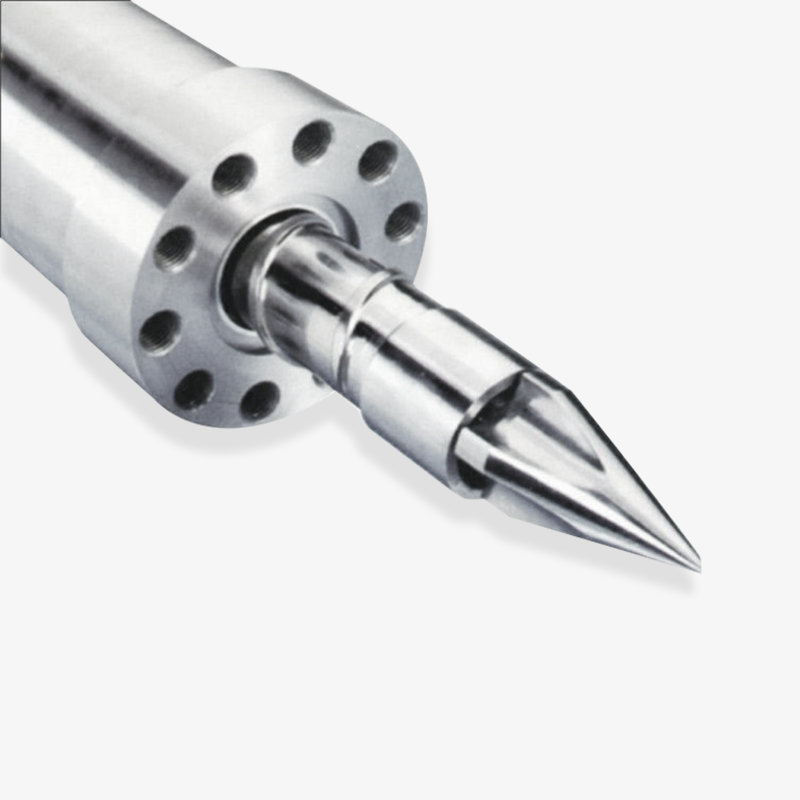 Custom Injection Molding Machine Screw BarrelMatched screw and barrel assembly with customizable specifications and treatments for stable plasticization; review dimensions and handling details when configuring large machines.View Product →
On machines in the 1,000-tonne class, screws commonly run from 90 to 130 mm in diameter, and the barrel is a long, heavy component that is difficult to handle without proper lifting points. Specify those lifting points and the removal direction at the ordering stage. It sounds trivial until the first screw change happens on a Friday night shift with the crane already committed to a mould change.
Clamp tonnage sets the machine size, but screw diameter, plasticising capacity and nozzle pressure decide whether the machine actually holds tolerance in production.
Screw and Barrel Specifications That Match Large Clamp Units
Once clamp force passes the 700-tonne mark, the injection unit is ordered separately in many projects, either as a replacement for a worn unit or as a custom configuration. The table below gives approximate shot weights for general-purpose screws, useful as a first sanity check when a quotation arrives with a screw diameter that looks too small or too large for the part.
| Screw diameter (mm) | Approximate shot weight, PS (g) | Clamp force class usually paired (t) | Typical application |
|---|---|---|---|
| 45 | 230 | 100 to 180 | Small technical parts, multi-cavity work |
| 60 | 540 | 250 to 400 | Appliance parts, automotive trim |
| 75 | 1,070 | 450 to 650 | Crates, bins, large housings |
| 90 | 1,840 | 700 to 1,000 | Automotive and logistics parts |
| 110 | 3,370 | 1,100 to 1,600 | Battery housings, pallets, large technical parts |
| 130 | 5,560 | 1,800 to 2,500 | Very large parts, low cavitation |
Length to diameter ratio controls how much residence time the polymer gets and how stable the melt becomes. A ratio of 20:1 to 22:1 covers most commodity work, while 24:1 and above suits engineering resins and compounds where mixing and temperature uniformity matter. Compression ratio usually falls between 2.0 and 3.0 for injection screws, lower for shear-sensitive materials and higher for crystalline resins that need a rapid transition.
The metering section deserves its own decision. A plain metering zone and a barrier design behave differently in recovery stability, and on a two platen machine running a big shot, recovery stability directly affects part weight consistency across cavities. Where the part has a tight weight tolerance, a screw with a mixing section in the metering zone often pays for itself faster than any downstream inspection equipment.
The non-return valve, or check ring, is the cheapest component on the injection unit and the one that causes the most scrap. A worn ring lets melt slip back during injection, so the machine holds position by pushing more material, and shot weight drifts between cycles. Specify the ring material for the filler loading in your compound, and keep a spare on the shelf. On glass-filled work, the ring can be the first item to be replaced, sometimes within a year.
Size the screw on shot weight and required injection pressure, then confirm L/D, compression ratio and check ring material against the actual compound.
Wear, Materials and the Cost of Getting the Barrel Wrong
Barrel selection is where a purchasing team can save money quickly and lose it even more quickly. A nitrided barrel is the standard choice for unfilled commodity resins: a nitriding layer of roughly 0.4 to 0.7 mm with a surface hardness around 900 to 1,000 HV, applied to a nitriding steel body. It performs well for polyolefins, PS, ABS and general purpose work with modest filler content.
Once the compound carries more than about 20 to 25 percent glass fibre, mineral filler or abrasive pigment, the wear mechanism changes from slow polishing to rapid erosion. A bimetallic barrel with a centrifugally cast lining containing carbide particles resists that erosion far better, and the cost premium typically lands between two and three times the price of a nitrided barrel of the same size. Whether that pays back depends on tonnage, cycle time and filler loading, and the calculation is straightforward: compare the replacement interval of a nitrided barrel with the bimetallic one, add the downtime cost, and see which number is smaller.
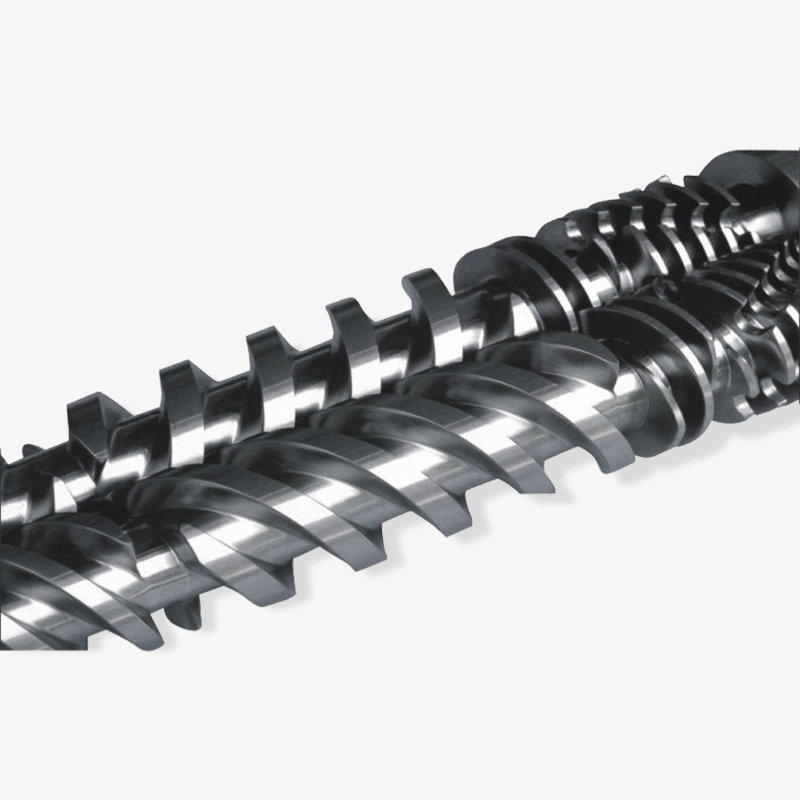
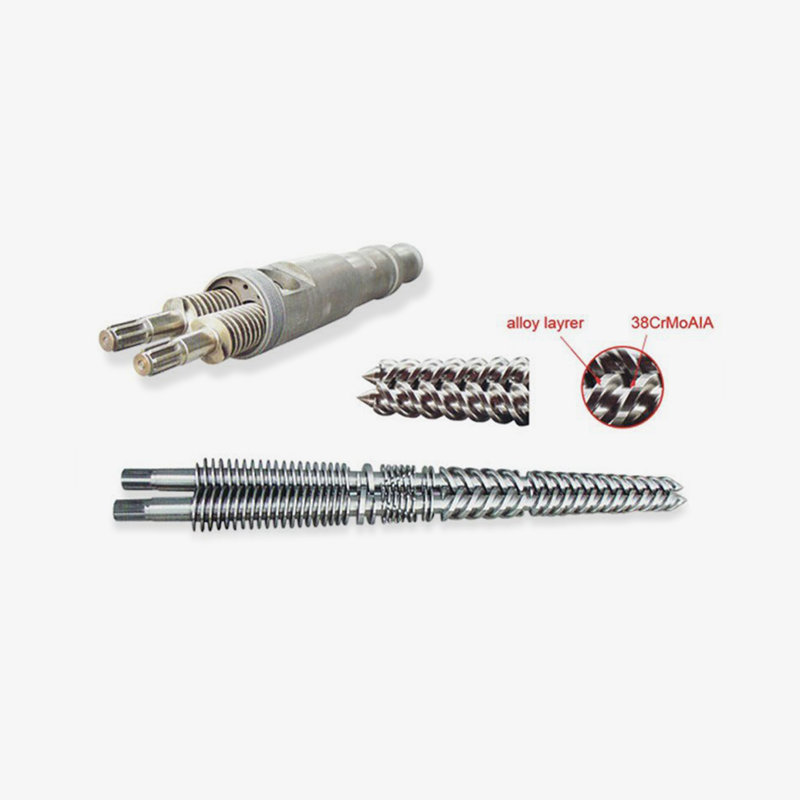 Custom Bimetallic Screw Barrel for Plastic MachineryBimetallic barrel and screw options aimed at wear and corrosion resistance, with CNC-matched components and custom alloys for filled or special engineering plastics.View Product →
Corrosion is a separate problem from abrasion and needs a separate answer. PVC, POM, flame-retardant grades and materials with acidic residue attack the barrel wall and the screw surface even when there is no filler present. In those cases, a corrosion-resistant lining or a properly matched barrel and screw material matters more than hardness alone.
Where wear actually shows up first
- The check ring and seat, because they see the highest pressure and the most sliding contact.
- The feed zone of the screw, where flight depth gradually increases and the solids conveying rate drops.
- The metering section, where the barrel bore grows and the flight tips lose their sharp edge.
- The nozzle, particularly with filled materials and small orifice diameters.
Measuring wear is simple and rarely done often enough. A bore gauge at three positions along the barrel, a micrometer on the screw flights, and a visual check on the ring seat will tell you whether the unit is due for replacement or just for a new ring. Recording those numbers each year turns maintenance from guesswork into scheduling, and gives a supplier enough information to quote a replacement accurately.
Choose nitrided steel for clean commodity resins and a bimetallic lining once filler content passes roughly 20 percent, but check corrosion separately from abrasion.
RFQ Checklist for Buyers Working With a Screw and Barrel Manufacturer
Most delayed screw and barrel orders are not delayed by production capacity. They are delayed by missing information, and the missing item is usually a flange dimension or a thermocouple hole that only shows up when the new barrel is offered up to the machine. Assembling the data below before the enquiry goes out removes most of that risk.
Data to include in the enquiry
- Machine make, model and rated clamp force, plus the original screw part number if available.
- Screw diameter, overall length and the effective length to diameter ratio, with a drawing if the original is non-standard.
- Barrel length, flange outside diameter, flange thickness, bolt circle and bolt hole count.
- Feed throat shape and position, whether a feeding sleeve is included, and the throat opening dimensions.
- Heating zone count, heater band widths and voltages, plus thermocouple hole positions and depths.
- Nozzle type, radius, orifice diameter, and whether a shut-off or spring-loaded nozzle is required.
- Material to be processed, filler content and any flame retardant or corrosive additive.
- Required surface treatment, hardness specification and whether a dimensional report is expected.
It is worth being explicit about inspection. A serious supplier will provide a dimensional report, hardness readings, a straightness record and a pressure test result for the barrel. If those documents are not offered, ask whether they can be, because a supplier that measures its own output is usually a supplier that can hold a tolerance on the second order as well as the first.
There is also a commercial point that experienced buyers raise early. Ask whether the company is a manufacturer with in-house machining, nitriding and grinding, or a wholesaler assembling parts from several workshops. A manufacturer can usually control lead time and resolve a tolerance question directly, while a trading company adds a communication layer. Both models can work, but the purchasing decision should reflect which one you are dealing with.
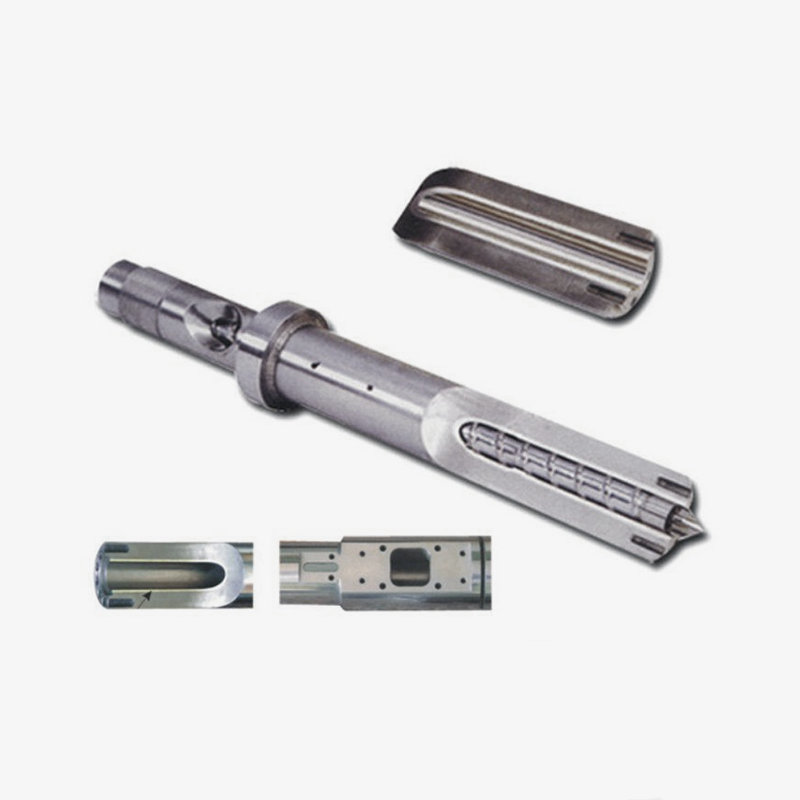
 Custom Injection Molding Machine Screw Components and NozzleSKD61 front body, screw components and nozzle for plasticizing stability; useful for specifying matched wear parts and keeping critical spares with main components.View Product →
Finally, order the small parts with the big ones. Screw tips, check rings, seats, nozzle tips and heater bands are cheap relative to the main components and are the items that stop a line when they fail. A single shipment containing a spare ring and a spare nozzle costs far less than an air freight emergency three months later.
A complete RFQ with flange dimensions, thermocouple positions and filler details removes most lead time risk before the order is placed.
Price, Lead Time and Supplier Selection
For a two platen machine project, the screw and barrel package is a small share of the total cost but a large share of the schedule risk. A standard nitrided screw and barrel for a mid-size injection unit typically takes several weeks from drawing approval, and a bimetallic unit or a custom flange can take longer. Those weeks sit between machine installation and first saleable part, so they belong in the project plan, not in a follow-up email.
Three factors move the price more than anything else. Material and treatment come first, with a bimetallic barrel and screw costing substantially more than a nitrided pair. Size comes second, because a 130 mm barrel consumes a lot more steel and machining time than a 60 mm one. Complexity comes third: a non-standard flange, an unusual feed throat or a screw with a specialised mixing section all add engineering time before the first chip is cut.
Supplier selection usually comes down to evidence. Ask how long the company has been producing screw and barrel sets, how many square metres of machining space it operates, and which export markets it already serves. A manufacturer that has supplied plastic machinery builders in North America, Europe and Southeast Asia for decades has already been through the supplier audits that your own quality team would run.
Zhoushan Microwave Screw Machinery has been producing screws and barrels for plastic machinery since 1990, operating from a workshop of more than 10,000 square metres and exporting to markets including the United States, Germany, Dubai, Vietnam and Thailand. The product range covers single screws, conical and parallel twin screw barrels, planetary screw barrels, bimetallic screw barrels, rubber extrusion screws and injection molding machine screw barrels and accessories, which means a buyer assembling an injection unit for a large two platen machine can source the complete wear package from one technical contact instead of coordinating several workshops.
Treat the screw and barrel order as a schedule item with its own lead time, and select a supplier on documented manufacturing capability rather than price alone.
FAQ: Two Platen Injection Molding Machine Questions
Is a two platen injection molding machine better than a toggle machine?
It is better above roughly 800 tonnes, where the shorter clamp unit, wider mould height range and reduced wear parts outweigh the higher capital cost. Below about 400 tonnes, a toggle machine is usually cheaper and slightly faster in dry cycle, so the two platen advantage narrows considerably.
How do I calculate the clamp force I need?
Multiply the projected area of the part and runner in square centimetres by the cavity pressure in bar, then divide by 1,000 to get tonnes. Add 10 to 20 percent margin for packing and future moulds, and confirm the figure against the mould maker's filling analysis before committing to a machine size.
Does the injection unit differ on a two platen machine?
Not in principle, but in scale. Large clamp units pair with screws in the 90 to 130 mm range and shot weights from roughly 1.8 to 5.5 kilograms for polystyrene, so plasticising capacity, barrel heating zones and screw recovery become more critical to cycle time than on a small machine.
How often do screws and barrels need replacing?
For clean commodity resins on a well-run machine, a nitrided screw and barrel can last many years. With glass-filled compounds, the check ring may need replacement within a year and the barrel itself considerably sooner, which is why abrasive applications usually justify a bimetallic lining from the start.
Can I fit a new screw and barrel to an older machine?
Usually yes, provided the flange dimensions, feed throat, screw length and drive connection are measured accurately. Many older machines have non-standard flanges, so a dimensional drawing or a site measurement is essential before the replacement is manufactured.
What should I check on delivery?
Confirm the dimensional report against the drawing, check the hardness readings, inspect the bore and flight surfaces for scores, and verify that the thermocouple holes and heater band positions match the machine. Run the unit through a low-temperature heat-up before production to confirm heater coverage and sensor response.
Most two platen purchasing questions come back to three numbers: required clamp force, shot weight, and confirmation that the mould fits between the tie bars.
Related Reading and Next Steps
The clamp design and the injection unit are specified in the same project meeting but maintained by different people, and both deserve a documented decision. Before the purchase order goes out, put the clamp force calculation, the mould envelope drawing and the screw and barrel specification into one file, and send that file to every supplier involved.
Useful pages on this site
If the machine is still being selected, ask the machine builder for the injection unit drawing early. That single document tells a screw and barrel manufacturer the flange size, screw length, heating zone layout and nozzle interface, and it lets the wear parts order run in parallel with machine installation instead of after it.
For buyers running a mixed portfolio of large two platen machines and smaller toggle presses, it also helps to standardise screw diameters where the part range allows. Fewer sizes mean fewer spare rings, fewer heater band variants and a shorter response time when a line stops.
Order the screw and barrel package alongside the machine, using one document that combines clamp data, mould envelope and injection unit dimensions.
Selected Bearing Display


 浙公网安备33090202000520号
