


 English
 中文简体
中文简体
Author: WeiBo
Date: Sep 21, 2026
What Does Extruder Mean? Types, Screw Barrels, and Complete Selection Guide
Content
- 1 The Short Answer: What "Extruder" Means in Plain Language
- 2 The Four Jobs Every Extruder Performs
- 3 What the Word Covers in Different Industries
- 4 Common Extruder Types and What They Are Good At
- 5 Extruder vs Injection Molding Machine: The Difference Buyers Confuse
- 6 Throughput in Practice: How Much an Extruder Really Pushes
- 7 Screws and Barrels: The Parts That Decide What an Extruder Can Do
- 8 How to Select an Extruder for a Specific Job
- 9 Where Extruders Are Used: Applications and Real Products
- 10 Buying Screws and Barrels: What B2B Buyers Should Verify
- 11 Maintenance and Troubleshooting Essentials
- 12 Frequently Asked Questions
- 12.1 What does extruder mean in one sentence?
- 12.2 Is an extruder a machine or a part?
- 12.3 What is the difference between an extruder and an injection molding machine?
- 12.4 What does L/D mean on an extruder screw?
- 12.5 Why do twin screw extruders cost more than single screw machines?
- 12.6 How long does an extruder screw and barrel last?
- 12.7 Can I replace only the screw without changing the barrel?
- 12.8 What materials are extruder screws and barrels made from?
- 12.9 What is a bimetallic screw and barrel?
- 12.10 Do I need a custom screw or a standard one?
- 13 Reference Module: Screw and Barrel Families
- 14 Conclusion
Walk through a pipe or sheet plant and you will hear an extruder before you see it: a long barrel hums, plastic pellets disappear into a hopper at one end, and a warm continuous pipe slides out of a die at the other. That machine in the middle is the extruder, and it is the reason a factory can turn loose pellets into a product with a constant cross-section, hour after hour, without stopping.
Ask what does extruder mean and the honest answer has two layers. In engineering terms, an extruder is a machine that melts or softens a material and forces it through a shaped opening called a die, so the material leaves as a continuous strand with a fixed profile. In everyday purchasing language, the same word often refers to the screw-and-barrel assembly that does the melting and pumping. A plant manager buying a complete production line and a maintenance engineer ordering a replacement screw can both say "extruder" and mean two different things.
That double meaning matters commercially. It decides whether you are quoting a machine, a spare part, or a service, and it decides which specifications actually apply to the order.
An extruder is best understood as a heated pump with a shaping die: it conveys, melts, pressurizes, and forms material continuously rather than filling a mold shot by shot.
The Short Answer: What "Extruder" Means in Plain Language
The verb "to extrude" comes from the Latin extrudere, which means to push or thrust out. A pasta press, a sausage stuffer, a caulking gun, and a clay brick machine all extrude material. Plastic extrusion does exactly the same thing, except that the material being pushed is a polymer melt at 160 to 300 degrees Celsius.
A machine earns the name extruder when it combines five functional elements:
- A barrel, a thick-walled steel cylinder that contains the process.
- One or more screws inside the barrel, which convey, shear, and pressurize the material.
- A feed system, usually a hopper with a metering or gravimetric feeder.
- A heating and cooling system, typically ceramic or cast-aluminum heaters with air or water cooling.
- A die at the discharge end, plus a drive and gearbox that turn the screw.
What an extruder is not is equally useful to understand. It is not a molding machine, because it has no cavity and no cycle: material leaves continuously instead of being injected in discrete shots. It is not a mixer in the classical sense, although compounding extruders do mix aggressively. And it is not simply a pipe with a screw in it, because screw geometry, compression ratio, and temperature control determine whether the output is uniform or full of unmelted specks.
Output is normally expressed in kilograms per hour, and quality is normally expressed as melt homogeneity, pressure stability, and dimensional tolerance. Those three numbers, not the physical size of the machine, tell you what a given extruder can actually do.
If a machine delivers a continuous stream of melted material through a die, it is an extruder; if it fills a closed cavity in cycles, it is a molding machine.
The Four Jobs Every Extruder Performs
Whether the screw is 45 mm or 200 mm in diameter, whether the machine processes PVC powder or recycled polyethylene flakes, the same four jobs happen in sequence along the barrel. Understanding them makes specification conversations much shorter.
1. Solid Conveying
Pellets or powder drop through the feed throat and are dragged forward by the rotating screw flights. In this zone the channel is deepest and the polymer is still solid, so the screw behaves like a conveyor. Feed sections can be smooth-bored or grooved; a grooved feed section grips material more firmly and raises output on polyolefins, while a smooth bore is gentler and is often preferred for heat-sensitive PVC.
Feed problems rarely come from the screw alone. Moisture, pellet shape, fines content, and hopper temperature all change how consistently material enters the first flights. A bridged hopper or a starved feed zone shows up downstream as surging output that no temperature adjustment can fix.
2. Melting and Plasticating
As the channel depth decreases, the solid bed is compressed against the barrel wall. Friction and shear generate most of the melting energy, with barrel heaters contributing a smaller share. This is why drive power and screw geometry matter more than heater wattage when output is pushed up.
Melting must be complete before the material reaches the die. Unmelted particles appear as gels, specks, or weak points in the finished product, and they are the most common complaint from extrusion lines that have been pushed past their design point.
3. Metering and Pressure Build-Up
In the metering section, the channel is shallowest and the melt is pumped like a viscous fluid. Pressure builds from near zero at the feed throat to anywhere from 100 to 400 bar at the die, depending on the die resistance and the material's viscosity. That pressure must be built smoothly, because pressure fluctuation translates directly into thickness variation in the final product.
Mixing elements are often added here: Maddock or barrier sections for dispersive mixing, pineapple or pin mixers for distributive mixing. They cost some output but buy consistency, which is usually the better trade.
4. Shaping at the Die
The die gives the melt its final shape. Die design controls wall thickness distribution, surface finish, and the amount of die swell, the phenomenon in which the melt expands slightly as it leaves the die lip. Downstream equipment such as sizing sleeves, vacuum tanks, cooling baths, haul-off units, and cutters then locks in the dimensions.
A perfectly built extruder with a poorly designed die still produces bad product. Conversely, a modest extruder with a well-designed die and stable downstream equipment can hold tight tolerances for years.
Conveying, melting, metering, and shaping happen in one continuous pass, so a weakness in any single zone limits the performance of the whole line.
What the Word Covers in Different Industries
Plastic processing is the largest user of the term, but the same word appears in several unrelated industries. A buyer moving between sectors can be surprised by how much the vocabulary shifts.
- Plastics extrusion: pipe, sheet, film, profile, wire coating, filament, and compounding. Output is measured in kilograms per hour.
- Rubber extrusion: strainers, hot-feed and cold-feed extruders that push rubber compounds through dies for hoses, seals, and profiles.
- Food extrusion: snack and cereal extruders use a screw to cook and expand starch under pressure, then flash off moisture at the die.
- Metal and clay extrusion: aluminum profiles and brick or ceramic shapes are extruded in a comparable way, usually at much higher pressures.
- Additive manufacturing: the "extruder" on a 3D printer is the hot end plus the drive that feeds filament. It performs the same conveying and melting functions at a very small scale.
The practical consequence is that specifications do not transfer between sectors. A snack extruder and a pipe extruder can share a screw-and-barrel architecture while sharing almost no design values. When someone asks what does extruder mean in a technical meeting, the useful follow-up question is always which material and which product.
"Extruder" is a functional description rather than a single machine type, so material and product always define the real specification.
Common Extruder Types and What They Are Good At
The most useful classification is by screw configuration, because that single choice determines mixing capability, shear level, feeding behavior, and cost. The table below summarizes the main families used in plastics and rubber processing.
| Extruder type | How it works | Typical materials | Typical products |
|---|---|---|---|
| Single screw | One screw conveys, compresses, and pumps the melt | PE, PP, PS, ABS, PC, recycled flakes | Pipe, sheet, blown film, wire coating, rod, filament |
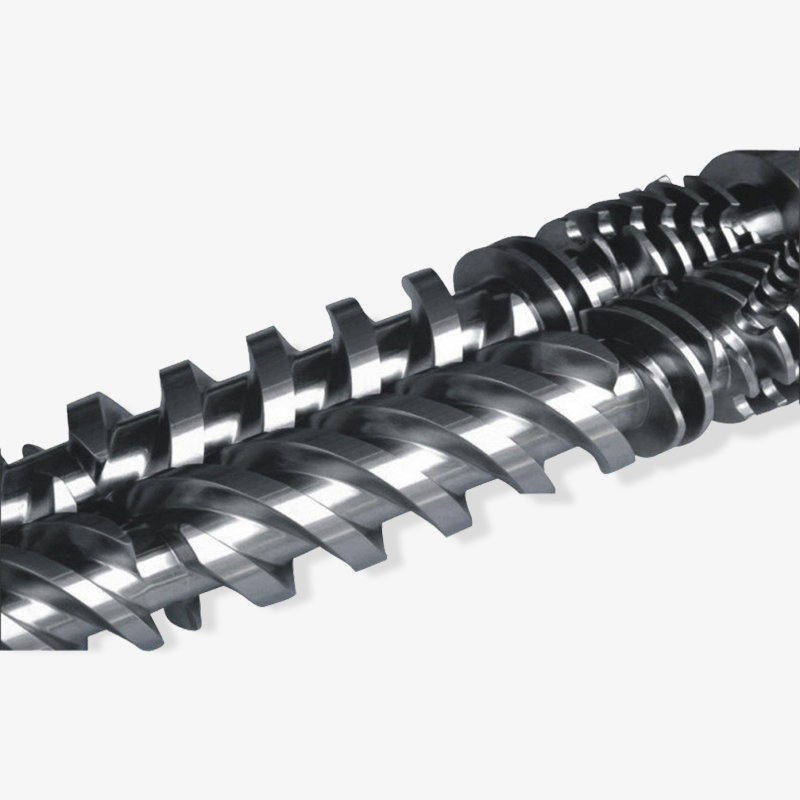
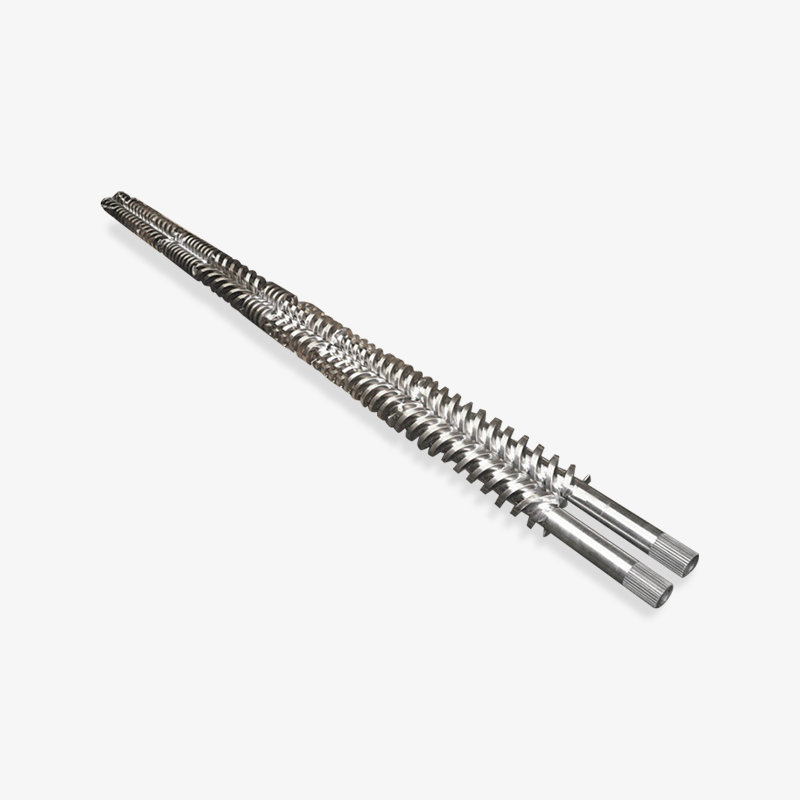
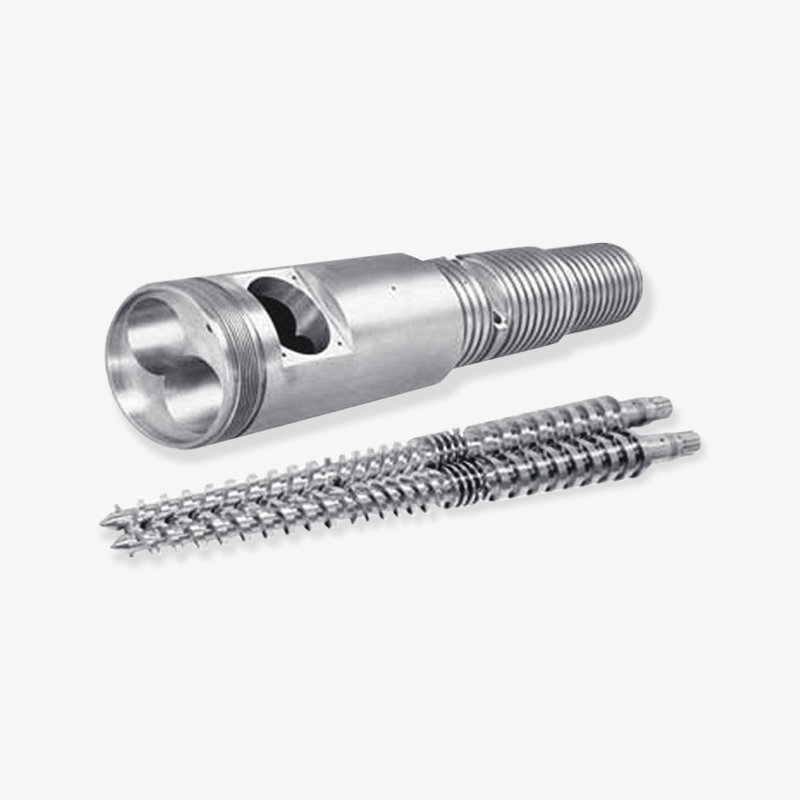
| Conical twin screw | Two intermeshing conical screws with a large feed area and gentle shear | Rigid and soft PVC, wood-plastic composites | Pipe, window profile, siding, sheet, cable duct |
| Parallel twin screw | Two parallel intermeshing screws, often with modular conveying and mixing elements | PVC, PE, PP, filled and reinforced compounds | Pipe, profile, sheet, pelletizing, compounding |
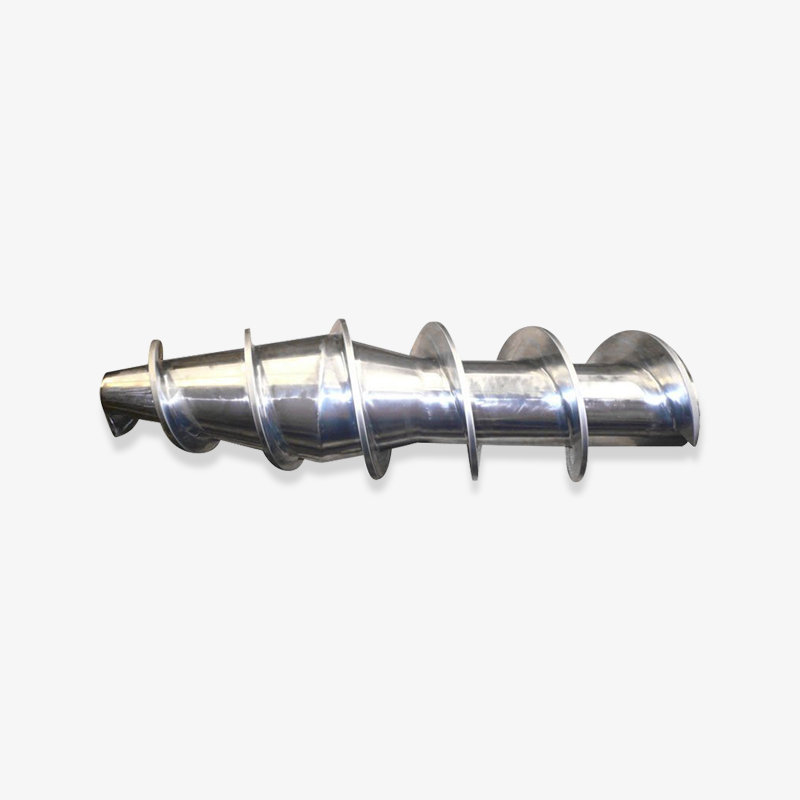
| Planetary roller extruder | One central screw with multiple planetary screws rolling inside a grooved barrel | PVC, PVC foam, heat-sensitive compounds | Sheet, foam board, film, calendered stock |
| Multi-screw and ring extruders | Three or more screws arranged symmetrically for very high surface renewal | Highly filled and shear-sensitive compounds | Compounding, devolatilizing, specialty sheet |
Two trade-offs sit behind that table. Twin screw machines mix and feed better, but they cost more per kilogram of output and need more careful maintenance because the screws intermesh with tight clearances. Single screw machines are simpler, cheaper to run, and remarkably reliable, but they depend heavily on pellet quality and consistent feeding.
For PVC, the choice is usually settled quickly: conical twin screw extruders dominate rigid PVC pipe and profile because their large feed area accepts powder and their gentle shear profile limits degradation. For polyolefin pipe, a single screw machine with a grooved feed section is often the most economical route. For compounding and highly filled systems, parallel twin screw or planetary designs are the standard answer.
Screw configuration, not machine size, is the decision that determines whether an extruder suits a given material and product.
Extruder vs Injection Molding Machine: The Difference Buyers Confuse
Because both machines use a screw inside a heated barrel, they are frequently mixed up in quotations and spare-part enquiries. The operating principle is completely different, and so are the wear patterns and the replacement parts.
| Characteristic | Extruder | Injection molding machine |
|---|---|---|
| Process mode | Continuous | Cyclic, shot by shot |
| Screw motion | Rotates continuously in one direction | Rotates to plasticate, then reciprocates to inject |
| Output measure | Kilograms per hour | Shots per hour, or grams per shot |
| Shaping element | Open die, material leaves continuously | Closed mold cavity, material solidifies inside |
| Typical screw feature | Long metering section, mixing elements, high L/D | Non-return valve, shorter L/D, high compression ratio |
| Wear pattern | Gradual, spread along the metering zone and die | Concentrated near the non-return valve and feed zone |
The maintenance consequence is practical. An extruder screw often wears most heavily in the metering section and at the tip, because that is where shear and pressure peak. An injection screw usually wears first around the non-return valve and the check ring, because of the repeated axial movement. Ordering the wrong screw for the wrong machine produces a part that fits badly and performs worse.
This is also why a spare-part supplier has to confirm the machine type, the screw diameter, the L/D ratio, and the mounting geometry before quoting. A screw that is dimensionally close is not the same as a screw that is functionally correct.
Extrusion and injection molding share screw-and-barrel hardware but not screw geometry, so replacement parts are never interchangeable.
Throughput in Practice: How Much an Extruder Really Pushes
Throughput is the first number most buyers look for, and the one most often misunderstood. Published figures usually describe a best-case material with a well-matched die and a stable feed. Real output falls when the material is filled, when the die is restrictive, when the feed is inconsistent, or when the cooling system cannot remove enough heat. Screw diameter alone explains only part of the picture, because channel depth, L/D ratio, screw speed, and drive power all interact. A larger barrel running slowly can move less material than a smaller barrel running fast, and a machine running at its maximum speed may produce unacceptable melt quality. The chart below places the main extruder families side by side using indicative output ranges, which is a useful starting point for early-stage planning rather than a final specification.
Indicative Throughput Ranges by Extruder Type
Single screw, 45 mm, 25:1 L/D
Single screw, 90 mm, 30:1 L/D
Conical twin screw, 55/110 mm
Parallel twin screw, 62 mm
Planetary roller extruder, 150 mm
Bar length is proportional to the upper end of each typical range on a 1,100 kg/h scale. Actual output depends on material, screw geometry, die resistance, and drive power.
The most obvious trend in the chart is the span between the small single screw machine and the planetary roller extruder, which is roughly a twentyfold difference in output. That gap is not caused by diameter alone. The planetary unit spreads the work across many small screws with a very large contact surface, so it can plasticate a large volume gently, while a single 45 mm screw has one narrow channel and limited room for heat transfer.
The second trend is that the two twin screw families sit close to each other in the middle of the range despite very different geometry. A conical twin screw compensates for its shorter length with a large feed area, which is why it handles PVC powder so well. A parallel twin screw achieves similar output with a longer, more modular screw that can accept mixing and venting sections.
A third observation is that output ranges are wide, and the width is meaningful. The 250 to 600 kg/h band for the 62 mm parallel twin screw reflects how strongly the formulation changes performance: a lightly filled PVC compound runs near the top of the band, while a heavily filled compound with abrasive filler can drop toward the bottom and consume much more of the available drive power.
Comparing the two single screw entries shows how misleading diameter comparisons can be. Doubling the diameter from 45 mm to 90 mm raises output by roughly a factor of eight rather than a factor of two, because both channel cross-section and achievable screw speed increase. Buyers who scale up based on linear assumptions often oversize the drive or undersize the downstream cooling section.
Output alone never justifies a purchase. A machine running at the top of its range with an unstable melt produces scrap at a rate that erases any throughput advantage. In practice, the usable output is the highest figure at which pressure stability, melt temperature, and dimensional tolerance all remain inside specification.
The same logic applies to spare parts. A replacement screw with a different compression ratio or a shallower metering channel changes the output curve of the whole machine. When a plant upgrades a screw, the extrusion line's cooling and haul-off capacity should be reviewed at the same time, because the bottleneck frequently moves downstream once the screw is improved.
Finally, throughput figures should always be tied to a stated material, a stated screw speed, and a stated die. A quotation that lists output without those three conditions cannot be compared against a competing quotation, and the difference usually appears only during the first week of production.
Published output figures are only meaningful when the material, screw speed, and die are specified together, because usable output is limited by stable melt quality rather than by maximum speed.
Screws and Barrels: The Parts That Decide What an Extruder Can Do
Two components do most of the work inside any extruder: the screw and the barrel. They are also the two components that wear out first, which makes them the center of both engineering and procurement discussions.
Screw Geometry
A standard three-zone screw divides into feed, compression, and metering sections. The compression ratio, calculated from the feed channel depth divided by the metering channel depth, typically falls between 2:1 and 4:1 depending on bulk density and melt behavior. Barrier screws separate solid and melt channels to improve melting stability. Mixing sections such as Maddock, Egan, or pin mixers improve color dispersion and melt homogeneity, at some cost in output.
L/D ratio, the barrel length divided by the screw diameter, is the other headline number. General-purpose machines often run 25:1 to 30:1, while vented machines and compounding screws can reach 36:1 or more. A longer screw offers more residence time and more room for mixing and venting, but it also adds torque load and cost.
Barrel Construction
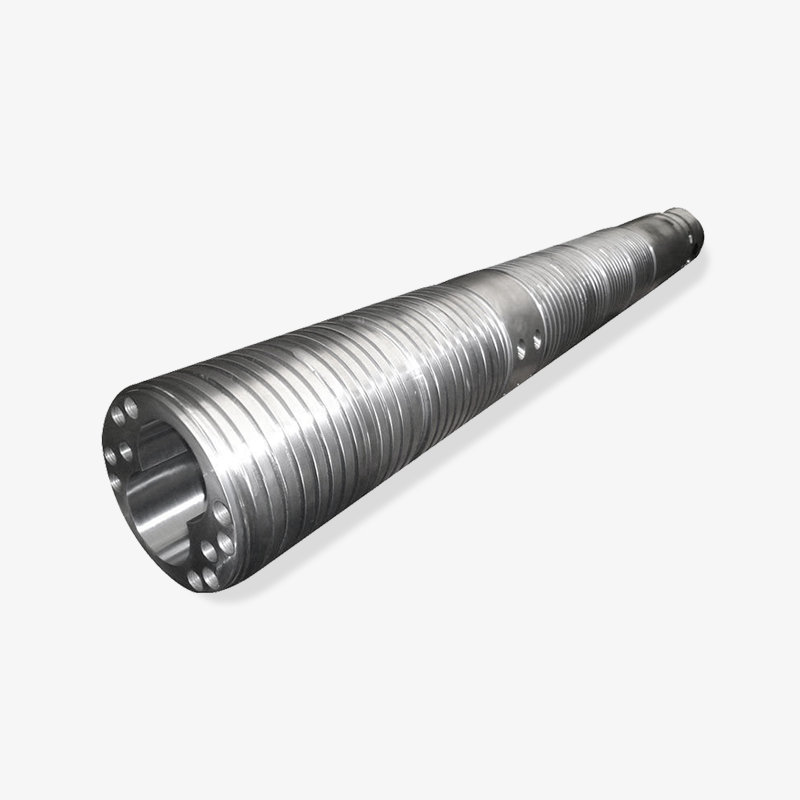
Barrels are usually built from nitrided steel, bimetallic liners, or tool steel sleeves. Nitrided barrels suit unfilled polymers such as PE and PP. Bimetallic barrels, in which a wear-resistant alloy is centrifugally cast into the bore, handle glass-filled, mineral-filled, and highly abrasive compounds far better. The liner thickness typically ranges from 1.5 to 2.5 mm, and hardness values in the range of 55 to 65 HRC are common for wear-resistant grades.
Product Families in Practice
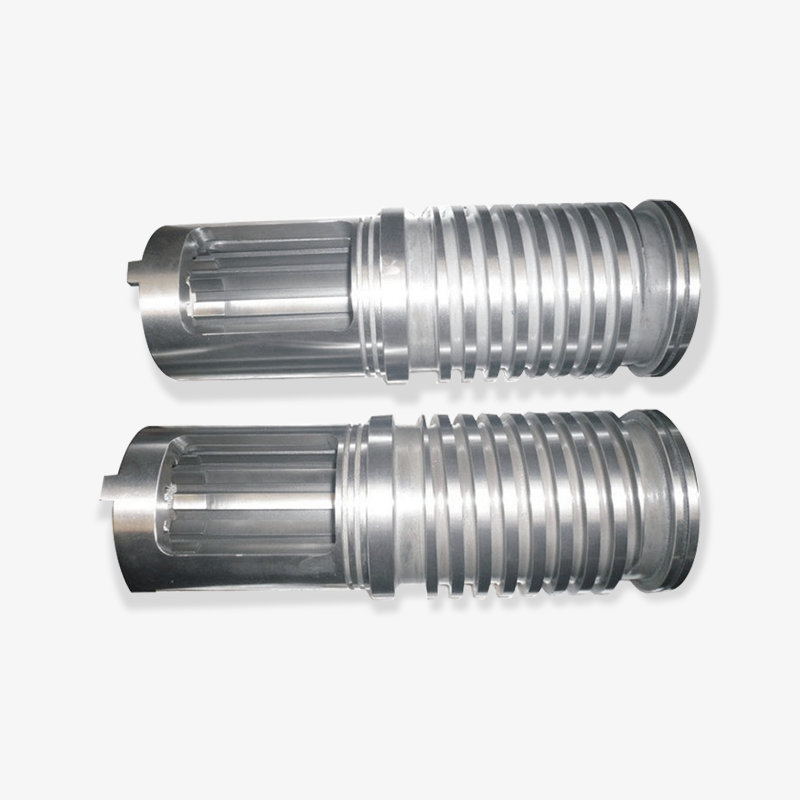
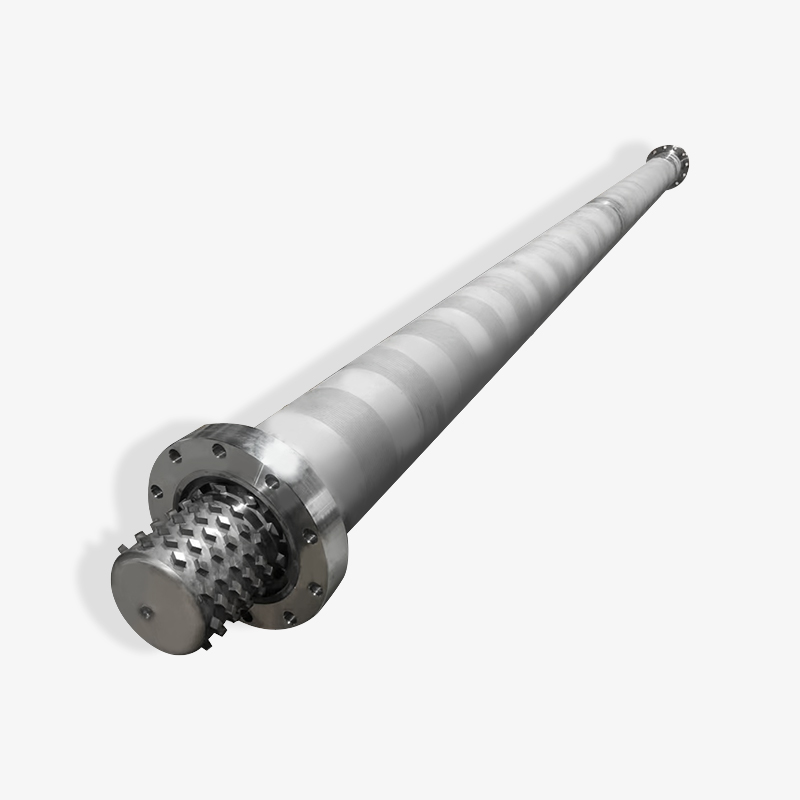
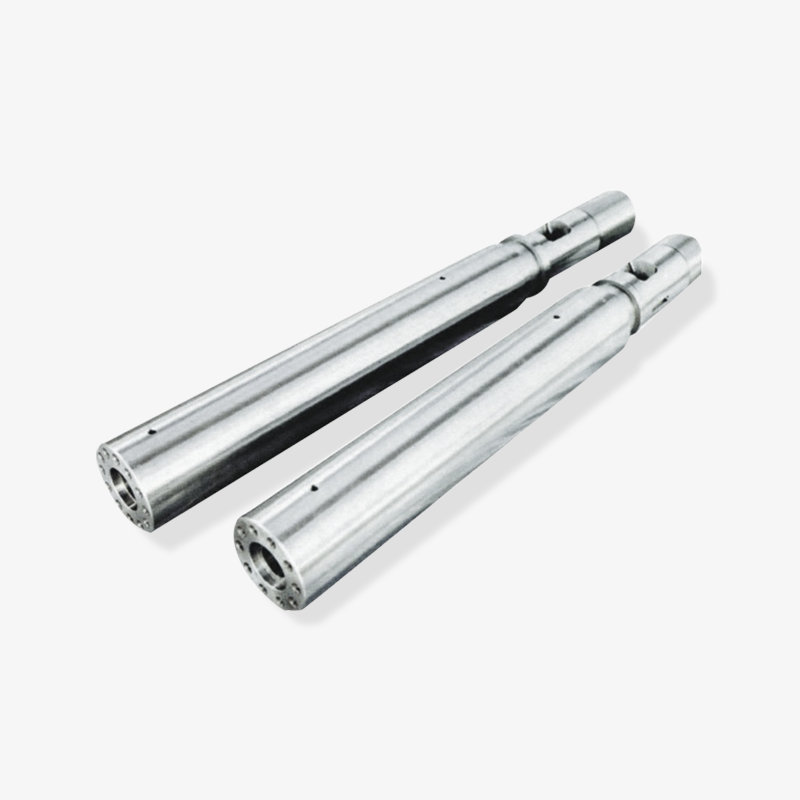
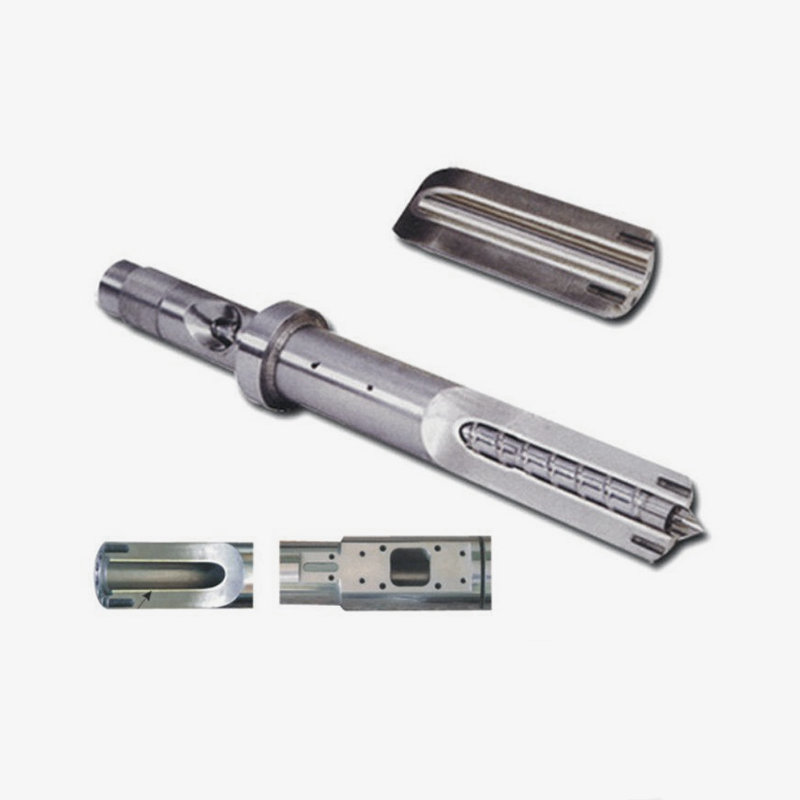
For machine builders and processors, screw-and-barrel supply breaks down into recognizable families. Single screw and barrel sets in the SJ series cover general pipe, sheet, and profile extrusion. SJS series conical twin screw and barrel sets serve rigid and soft PVC lines. Parallel twin screw barrels handle high-output PVC and compounding duties. WB-WE planetary screws, barrels, and complete planetary extruders suit gentle, high-output plasticating. Bimetallic screw and barrel sets address abrasive formulations. Injection molding machine screw and barrel assemblies cover the cyclic side of the industry, while rubber extruder screws and EPE foam screw and barrel sets serve rubber processing and expanded polyethylene foam production.
Manufacturers in this segment typically work as both component supplier and problem solver. Zhejiang-based Zhoushan Microwave Screw Machinery, founded in 1990, operates more than 10,000 square meters of workshop space and positions itself as a combined precision screw-and-barrel maker and machining plant, exporting to markets including the United States, Germany, Dubai, Vietnam, and Thailand. That profile is typical of the specialty suppliers that machine builders rely on when a standard catalogue screw will not match a specific material or output target.
Screw geometry sets the melting and mixing capability, while barrel material sets the wear life; both must match the material being processed.
How to Select an Extruder for a Specific Job
Selection starts with the product and works backward. The table below lists the parameters that most often decide whether a quotation will succeed in production.
| Parameter | Typical range | Why it matters |
|---|---|---|
| Screw diameter | 30-200 mm | Sets the output window together with speed and channel depth |
| L/D ratio | 20:1 to 36:1 | Controls residence time, mixing, and venting capability |
| Compression ratio | 2:1 to 4:1 | Must match bulk density of pellets or powder |
| Drive power | Material and output dependent | Determines achievable output without torque stall |
| Barrel construction | Nitrided or bimetallic | Wear life with filled or corrosive compounds |
| Die and downstream | Sizing, cooling, haul-off, cutting | Tolerance and surface finish are set here, not in the barrel |
Two failure modes recur in practice. The first is undersizing the drive in order to lower cost: the machine reaches the required output only at maximum screw speed, where melt temperature becomes unstable and product quality drifts. The second is choosing a nitrided barrel for an abrasive formulation, which produces visible wear within months and a slow decline in output that is difficult to diagnose.
Material behavior should drive the rest. PVC needs low shear and short residence time, which points to conical twin screw designs. Polyolefin pipe favors a single screw machine with a grooved feed section. Glass-filled engineering resins need bimetallic barrels and wear-resistant screw hardfacing. Foam applications need precise control of gas injection and melt pressure, which usually means a dedicated screw profile rather than a general-purpose one.
Start from material, product tolerance, and required output; screw geometry and barrel material follow from those three, not from catalogue convenience.
Where Extruders Are Used: Applications and Real Products
The reach of extrusion is wider than most buyers expect, because almost any product with a constant cross-section can be made this way.
- Pipe and tube: water supply, drainage, gas, cable conduit, medical tubing.
- Sheet and board: packaging sheet, signage, construction board, foam board.
- Film: blown film for bags and liners, cast film for laminating.
- Profiles: window frames, door profiles, furniture edging, cable ducts.
- Wire and cable: insulation and jacketing applied at high line speed.
- Foam: EPE and other expanded polyethylene products, where a dedicated foam screw and barrel manage gas-laden melt.
- Rubber: hoses, seals, weather strips, and preforms for molding.
- Compounding: filled, reinforced, and color-masterbatch pellets.
- Recycling: washing-line output converted into reusable pellets.
- Filament: 3D printing filament drawn from an extruded strand.
Each application carries its own tolerance culture. Medical tubing may require wall thickness variation below a few hundredths of a millimeter, while a drainage pipe can tolerate far more. Those differences ripple back into screw design, die quality, and the stability of the drive system.
The same extrusion principle covers pipe, sheet, film, profile, foam, rubber, and compounding; only the screw, barrel, and die change.
Buying Screws and Barrels: What B2B Buyers Should Verify
Procurement in this industry is relationship-heavy but should still be specification-driven. Whether you are working with a manufacturer, a supplier, or an export-oriented wholesaler, the same verification list applies.
- Confirm the machine type, screw diameter, L/D ratio, and mounting dimensions against a drawing, not a photograph.
- Request material specification for the screw and barrel, including base steel grade and treatment process.
- Ask for hardness values and, where relevant, nitriding depth or bimetallic liner thickness.
- Check straightness, concentricity, and surface finish tolerances in writing.
- Clarify whether the screw is a drop-in replacement or requires matching to an existing barrel.
- Review wear allowance and expected service life for your specific filler content.
- Confirm lead time, packing method, and export documentation if the parts are shipping internationally.
Custom and standard supply paths differ in cost and risk. A standard screw can be delivered quickly and priced predictably, but it may not match an unusual material. A custom screw costs more and takes longer, yet it can eliminate a persistent quality problem that has been absorbing scrap for years. Experienced buyers usually ask for a standard option and a custom option in the same enquiry, then compare both against the cost of poor output.
MOQ and stocking policy also affect the decision. Machine builders that support many customers benefit from a supplier who will produce one or two pieces to drawing, while high-volume processors may prefer to hold a spare set. Keeping one spare screw and barrel on the shelf is inexpensive compared with a week of lost production.
Verify material grade, hardness, and dimensional tolerances in writing before ordering, because a screw that fits is not automatically a screw that performs.
Maintenance and Troubleshooting Essentials
Extruders fail gradually, and the early signs are easy to miss because the line keeps running. Watching output, melt pressure, and motor load together usually reveals wear before product quality collapses.
| Symptom | Likely cause | Check first |
|---|---|---|
| Gradual output drop | Screw or barrel wear, increased clearance | Measure screw diameter and barrel bore |
| Unmelted specks or gels | Melting capacity exceeded, wrong profile temperature | Barrel temperature profile, screw speed, back pressure |
| Surging output and pressure fluctuation | Inconsistent feeding, bridging, or moisture | Hopper, feeder, drying, feed zone temperature |
| Overheating melt | Excessive shear, worn screw, blocked cooling | Screw speed, cooling circuit, thermocouple accuracy |
| Short screw life | Abrasive filler, wrong barrel grade | Filler content, barrel material, hardfacing option |
Preventive routines are simple. Check heaters and thermocouples monthly, because a failed heater forces the screw to generate more shear heat and accelerates wear. Inspect the feed throat and hopper for fines and bridging. Pull the screw at planned intervals and record diameters so wear trends are visible rather than guessed. Keep purge material matched to the polymer being processed, and never allow a machine to sit with PVC at temperature.
When output drops, the instinct is to raise screw speed. That usually raises melt temperature instead of restoring throughput, and it shortens screw life. Measuring clearance first is faster and cheaper.
Record screw and barrel dimensions at every planned shutdown; wear trend data prevents most unplanned line stoppages.
Frequently Asked Questions
What does extruder mean in one sentence?
An extruder is a machine that melts or softens material and pushes it continuously through a die to produce a product with a fixed cross-section, such as pipe, sheet, film, or profile.
Is an extruder a machine or a part?
Both usages are correct. In production planning, an extruder is the complete machine including drive, barrel, screw, and die. In maintenance and spare-part purchasing, "extruder" often refers specifically to the screw-and-barrel assembly. Always confirm which meaning applies before quoting.
What is the difference between an extruder and an injection molding machine?
An extruder works continuously and pushes melt through an open die, so output is measured in kilograms per hour. An injection molding machine plasticates with a screw but then injects discrete shots into a closed mold, so output is measured in shots or grams per shot.
What does L/D mean on an extruder screw?
L/D is the effective screw length divided by its diameter. A 25:1 screw on a 45 mm barrel has an effective length of about 1,125 mm. Higher ratios give more residence time for melting, mixing, and venting but require more torque and cost more to produce.
Why do twin screw extruders cost more than single screw machines?
Twin screw machines require two matched screws, a more complex gearbox with synchronized shafts, and tighter manufacturing tolerances. They also feed and mix better, especially powders and filled compounds, which justifies the cost in PVC and compounding applications.
How long does an extruder screw and barrel last?
Service life depends mainly on filler content, processing temperature, and maintenance discipline. Unfilled polyolefins on a nitrided screw and barrel can run for many years, while glass-filled compounds may wear a nitrided set noticeably within a year or two. Bimetallic barrels and wear-resistant screw hardfacing extend life substantially in abrasive duty.
Can I replace only the screw without changing the barrel?
Yes, but only if the barrel bore is still within tolerance. Once clearance between screw flights and barrel wall exceeds the specification limit, a new screw alone will not restore output, because melt slips backward over the flights. Measuring both components before ordering avoids an expensive mistake.
What materials are extruder screws and barrels made from?
Common screw steels include nitriding grades such as 38CrMoAlA and tool steels such as SKD61 or D2. Barrels are typically nitrided steel or bimetallic, where a wear-resistant alloy is cast into the bore. The correct choice depends on abrasiveness and corrosion potential of the polymer being processed.
What is a bimetallic screw and barrel?
Bimetallic refers to a barrel with a centrifugally cast wear-resistant alloy liner, often paired with a hardened or hardfaced screw. The combination resists abrasion from glass fibers and mineral fillers far better than a nitrided bore, at a higher purchase price.
Do I need a custom screw or a standard one?
Standard screws suit common materials and standard products. Custom screws make sense when the material is unusual, when a specialty filler is used, when output must be raised without changing the machine, or when an existing quality problem has resisted process adjustments.
Most extruder questions reduce to three facts: the material, the product, and the machine dimensions; those three answers define everything else.
Reference Module: Screw and Barrel Families
The following module summarizes the component families that appear most often in extrusion spare-part enquiries. It is intended as a quick orientation map for buyers and engineers who are preparing a specification or comparing quotations.
Single Screw and Barrel
General-purpose extrusion for pipe, sheet, rod, and profile. SJ series geometry with feed, compression, and metering zones.
Conical Twin Screw and Barrel
SJS series sets for rigid and soft PVC, with a large feed area and gentle shear for heat-sensitive compounds.
Parallel Twin Screw and Barrel
Modular geometry for high-output PVC, filled compounds, and compounding lines with venting and mixing sections.
Planetary Screw and Barrel
WB-WE series planetary screws, barrels, and complete extruders for gentle, high-volume plasticating.
Bimetallic Screw and Barrel
Wear-resistant sets for glass-filled, mineral-filled, and corrosive formulations where nitrided bores wear too quickly.
Specialty Screws and Barrels
Injection molding machine assemblies, rubber extruder screws, and EPE foam screw and barrel sets for foam extrusion.
Because these families overlap in geometry but differ in material, hardness, and treatment, the safest approach for a machine builder is to supply the machine drawing and the material specification together. That single step removes most of the risk from an overseas spare-part order.
A screw and barrel specification is only complete when geometry, base material, treatment, and hardness are all stated on the same drawing.
Conclusion
What does extruder mean? It means a machine that melts and pumps material continuously through a die, and it also means the screw-and-barrel assembly that makes that possible. The two definitions are connected by a single idea: controlled pressure and controlled temperature produce a stable cross-section, and stability is what customers pay for.
For machine builders and processors, the practical path is straightforward. Define the material and the product tolerance first. Choose the screw configuration that suits the material. Choose the barrel construction that suits the filler content. Size the drive so that the required output is reached below maximum screw speed. Then verify dimensions and hardness in writing before the order is placed.
Extrusion rewards preparation and punishes shortcuts. A well-matched screw and barrel set runs quietly for years and holds tolerance through long production runs. A mismatched set produces scrap, heat problems, and premature wear that no process adjustment can fully compensate for.
Match material, screw geometry, and barrel construction first; output and service life follow automatically from that match.
Selected Bearing Display


 浙公网安备33090202000520号